
Medical Device Injection Molding: Key Compliance and Material Risks
TIME
Click count
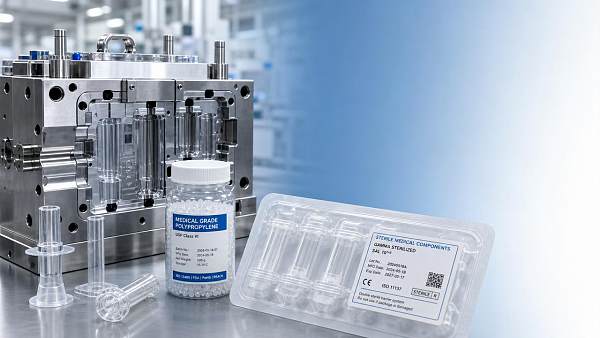
Medical device molding sits at an unusual intersection of precision manufacturing, patient safety, and regulatory scrutiny. In plastic injection molding for medical devices, dimensional accuracy is only one part of the decision. Material purity, lot traceability, sterilization stability, and process discipline often determine whether a component can move from prototype to validated production without costly rework.
That pressure is growing across the broader industrial landscape. As cross-border compliance rules tighten and supply chains become less predictable, organizations need the same kind of evidence-based evaluation used in other critical systems. This is why a benchmarking mindset, like the one associated with G-CSE’s focus on resilient engineering and standards-led verification, is increasingly relevant to medical molding programs.
Why this process draws so much scrutiny
Plastic injection molding for medical devices is widely used for housings, connectors, fluid-contact components, diagnostic cartridges, surgical handles, and single-use disposables. The process supports repeatability and scale, but it also compresses many risks into one manufacturing route.
A molded component may look acceptable and still fail later. The cause might be an extractables issue, a sterilization-induced crack, undocumented resin substitution, or contamination introduced during handling. In regulated environments, these are not minor quality escapes. They can become validation failures or post-market liabilities.
This is also why medical molding differs from general industrial molding. In many sectors, performance is judged mainly by fit, strength, and cost. In healthcare applications, the evaluation expands to biological interaction, packaging compatibility, shelf-life impact, and evidence that each process change remains controlled.
The real meaning of material risk
Material risk begins before the press starts running. Resin choice influences not only moldability, but also biocompatibility, sterilization resistance, chemical exposure tolerance, and long-term appearance. A technically strong polymer can still be unsuitable if its documentation chain is weak.
In plastic injection molding for medical devices, common candidates include polycarbonate, polypropylene, PEEK, PEI, ABS blends, and medical-grade silicone alternatives for overmolding programs. Each carries different tradeoffs in clarity, impact resistance, heat stability, and regulatory support.
Documentation matters as much as chemistry
A resin data sheet is not enough. Evaluation should include supplier change notification policies, lot-level traceability, additive disclosure, and supporting data for ISO 10993 or equivalent biological assessments where relevant.
More attention is needed when colorants, regrind restrictions, mold release agents, or masterbatches enter the process. These secondary inputs can alter compliance status even when the base polymer remains unchanged.
Sterilization can shift the risk profile
Ethylene oxide, gamma, e-beam, and steam sterilization do not affect materials equally. Some polymers discolor. Others embrittle, warp, or lose impact strength. In fluid-contact parts, surface changes may also alter performance.
This is a common blind spot in plastic injection molding for medical devices. A resin may pass molding trials but fail after repeated sterilization exposure or accelerated aging. Early testing should mirror the final use condition, not only the initial molded state.
Compliance risk is built into the process chain
Compliance is not a single certificate attached at the end of production. It is the accumulated result of controlled design inputs, validated tooling, documented processing windows, contamination controls, and disciplined records.
For plastic injection molding for medical devices, the main concern is often whether the manufacturing history can withstand audit-level review. If the answer depends on tribal knowledge or scattered supplier emails, the risk is already too high.
The table shows why compliance risk is operational, not abstract. Small deviations in resin handling or process records can have regulatory consequences far beyond normal production scrap.
Where failures usually begin
Most serious failures are not dramatic at first. They begin as assumptions that are never challenged. A processor assumes a commercial-grade colorant is acceptable. A buyer assumes a substitute resin is equivalent. A development team assumes a pilot mold proves long-run capability.
In practice, plastic injection molding for medical devices becomes unstable when design, materials, tooling, and compliance are evaluated in separate silos. The strongest programs connect these decisions from the beginning.
Common warning signals
- The resin supplier cannot provide clear change notification commitments.
- Material approvals rely on generic historical use, not current evidence.
- Mold trials are accepted without sterilization or aging correlation.
- Cleanroom claims exist, but environmental discipline is weak.
- Dimensional acceptance is prioritized over particulate and extractables review.
- Second-source plans are discussed late, after validation logic is fixed.
These issues are not unique to healthcare. They reflect a broader challenge seen in other critical sectors: materials and processes are often selected faster than they are governed. G-CSE’s wider cross-industry perspective is useful here because regulated resilience usually depends on disciplined verification, not optimistic assumptions.
How to evaluate a molding program more effectively
A sound review starts by treating material choice, mold design, and compliance evidence as one system. Plastic injection molding for medical devices should be assessed through linked checkpoints rather than isolated approvals.
Focus on these decision layers
- Application exposure: identify whether the part touches skin, fluids, drugs, or sterile barriers.
- Material evidence: confirm medical-grade designation, test history, and additive transparency.
- Process stability: review molding windows, cavity consistency, drying controls, and contamination prevention.
- Downstream compatibility: verify assembly, packaging, sterilization, and aging performance.
- Change control: define what triggers revalidation and how equivalence will be demonstrated.
This approach reduces surprises during scale-up. It also helps distinguish a supplier that can mold parts from one that can sustain a compliant manufacturing platform.
Why broader industrial signals now matter
Medical programs do not operate outside the global materials economy. Resin shortages, additive restrictions, energy costs, and regional compliance updates can directly affect plastic injection molding for medical devices. A technically valid design may still face disruption if its supply base is brittle.
This is where multi-sector intelligence becomes practical. Organizations that already monitor international standards, raw material volatility, and supplier reliability in other high-performance industries often respond faster when medical component risks start to shift.
The lesson is straightforward: evaluate the molded part, but also evaluate the ecosystem around it. Regulatory resilience depends on both.
What to do before scaling production
Before expanding volume, it is worth building a short decision framework. Map the exact use environment, confirm the material evidence package, test sterilization effects early, and review whether process documentation supports audit-ready traceability.
If questions remain around supplier changes, cleanroom discipline, or validation depth, those gaps should be addressed before launch pressure increases. In plastic injection molding for medical devices, late clarification is usually more expensive than early challenge.
A disciplined next step is to compare candidate materials and molding partners against a consistent set of compliance, processing, and lifecycle criteria. That kind of structured review turns a complex topic into a manageable decision and lowers the chance that hidden risks reach production unchanged.
Recommended News
 Sep 20, 2026When do industrial structural adhesives outperform welding for metal bonding?Industrial structural adhesives metal bonding: learn when adhesives outperform welding for precision, mixed materials, corrosion control, and fatigue-resistant assemblies.
 Jul 10, 2026Industrial Structural Adhesives High Strength: When Bonding Beats WeldingIndustrial structural adhesives high strength solutions can outperform welding in critical assemblies. Discover when bonding reduces weight, spreads stress, and improves durability.
 Jun 21, 2026Plastic Injection Molding Defects: Causes, Fixes, and Prevention Stepsplasticinjectionmolding defects explained: discover common causes, practical fixes, and prevention steps to reduce scrap, improve quality, and keep production stable.
 Jun 10, 2026Medical Device Injection Molding: Key Compliance and Material RisksPlastic injection molding for medical devices demands more than precision. Explore key compliance and material risks, from traceability to sterilization, to avoid costly validation setbacks.



All Categories
Hot Articles
- How to verify a fire-rated door manufacturer’s product certificationOct 16, 2026Choosing a fire proof doors manufacturer? Learn how to verify certifications, match approved door configurations, and spot compliance gaps before you buy. Explore the checklist.
- How proof test intervals affect SIL metrics in process safetyOct 15, 2026Explore SIL metrics process safety teams rely on. Learn how proof test intervals affect PFDavg, risk reduction, and test coverage to make better-informed safety decisions.
- How to verify an explosion-proof siren factory's ATEX certificatesOct 14, 2026Verify an explosion proof siren factory's ATEX certificates with practical checks for authenticity, product scope and production conformity. Avoid costly sourcing mistakes before you buy.