Industrial Structural Adhesives High Strength: When Bonding Beats Welding
TIME
Click count
Industrial Structural Adhesives High Strength: When Bonding Beats Welding
In extreme engineering, joining methods are judged by performance, not tradition.
That is why industrial structural adhesives high strength systems are gaining serious attention.
In many assemblies, bonding now competes directly with welding, riveting, and bolting.
The shift is not just about convenience.
It is about load paths, fatigue behavior, material compatibility, and compliance risk.
In real procurement work, that changes how joining options should be evaluated.
Welding remains essential in many heavy-duty structures.
But it is no longer the automatic answer for every high-strength connection.
More teams now compare industrial structural adhesives high strength options at the concept stage.
The reason is simple.
A well-selected adhesive can reduce weight, spread stress, seal gaps, and join dissimilar materials.
That combination matters in aerospace, electronics, transport, energy, and process equipment.
Why Bonding Is Advancing in Critical Manufacturing
Recent manufacturing trends make bonding more relevant than before.
Assemblies are lighter, more compact, and more mixed in material composition.
Welding struggles when heat distortion, galvanic corrosion, or surface damage become unacceptable.
This is where industrial structural adhesives high strength products stand out.
They create continuous joints across larger surface areas.
That lowers localized stress compared with spot welds or drilled fasteners.
The practical result is often better fatigue resistance under vibration and cyclic loading.
Another signal is surface sensitivity.
Coated metals, composites, ceramics, and engineering plastics can be difficult to weld effectively.
Bonding gives designers more freedom without forcing a major material compromise.
When Industrial Structural Adhesives High Strength Solutions Beat Welding
Bonding does not replace welding everywhere.
It wins in specific conditions where joint performance depends on more than ultimate strength.
1. Dissimilar materials must be joined
Steel to composite is a common example.
Aluminum to glass-ceramic is another.
Welding is usually impossible or highly impractical here.
Industrial structural adhesives high strength systems can bridge those material differences.
2. Heat must be avoided
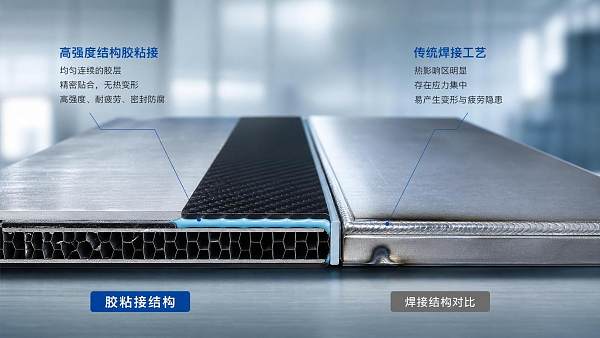
Welding introduces a heat-affected zone.
That can weaken thin metals, damage coatings, or distort precision parts.
Adhesive bonding avoids that thermal penalty.
3. Sealing and joining are needed together
A welded joint may still require sealing steps afterward.
Many industrial structural adhesives high strength formulations provide bonding and sealing in one process.
4. Fatigue performance matters more than static strength
Welds can create stress concentrations at defined points.
Bonded joints distribute load more evenly when designed correctly.
That can improve long-term durability in transport and rotating equipment structures.
What to Check Before Choosing a High-Strength Bonding System
Selection should start with the joint, not the product brochure.
That sounds obvious, but it is still where many evaluations go wrong.
A credible review of industrial structural adhesives high strength options should cover these points:
- Substrate pair: metal, composite, ceramic, glass, or polymer.
- Load type: shear, peel, cleavage, impact, or mixed loading.
- Operating environment: temperature, humidity, chemicals, UV, and pressure.
- Surface preparation needs: abrasion, cleaning, priming, and contamination control.
- Cure profile: room temperature, heat cure, fixture time, and full cure time.
- Certification path: ISO, UL, ATEX, SEMI, or customer-specific validation.
- Inspection method: destructive testing, witness coupons, or process traceability.
This also means the strongest adhesive on paper may be the wrong choice in practice.
For example, a brittle adhesive can fail early if the joint sees peel stress or thermal cycling.
Performance Criteria That Matter More Than Marketing Claims
Spec sheets are useful, but they can also be misleading when read in isolation.
A sound decision model compares properties in application context.
For industrial structural adhesives high strength decisions, fatigue and environmental resistance often carry more weight than headline strength.
That is especially true in regulated systems with long maintenance cycles.
Common Risks in Adhesive Selection
Bonding can outperform welding, but only with disciplined process control.
Most failures come from execution errors, not from the chemistry itself.
- Poor surface preparation reduces bond strength immediately.
- Joint geometry designed for welding may be unsuitable for adhesives.
- Cure conditions may be unrealistic for production throughput.
- Validation may ignore aging, fluids, or thermal shock.
- Documentation may be too weak for audits or customer approval.
This is where a technical benchmarking approach becomes valuable.
Teams need more than a product name and a test value.
They need verified data, application evidence, and a compliance-ready validation path.
A Practical Evaluation Framework
A practical selection process should stay simple and evidence-based.
This five-step approach works well for industrial structural adhesives high strength reviews.
- Define the real service conditions, including abuse cases and maintenance intervals.
- Map the joint loads and identify whether peel or impact loads exist.
- Shortlist adhesive chemistries that match substrates and regulatory needs.
- Run qualification tests using production-like surfaces and cure conditions.
- Compare lifecycle cost, not just unit price or assembly speed.
That last point is often missed.
Welding may look cheaper at first glance.
But distortion correction, finishing, sealing, corrosion control, and inspection can change the full cost picture.
In some cases, industrial structural adhesives high strength systems deliver a cleaner and more predictable total cost of ownership.
Final Decision Signals
The question is not whether bonding is better than welding in general.
The real question is whether the joint performs better with a bonded design.
If the assembly needs lighter weight, mixed materials, lower stress concentration, and sealed interfaces, bonding deserves serious priority.
If the environment is extreme, evidence matters even more.
That means verified testing, standards alignment, and process traceability should drive the final decision.
Industrial structural adhesives high strength solutions are not a trend headline anymore.
They are now a serious engineering option for critical assemblies.
The strongest decisions come from comparing joint behavior, lifecycle risk, and compliance burden side by side.
When that analysis is done properly, it becomes clear when bonding beats welding.
Recommended News
 Jul 10, 2026Industrial Structural Adhesives High Strength: When Bonding Beats WeldingIndustrial structural adhesives high strength solutions can outperform welding in critical assemblies. Discover when bonding reduces weight, spreads stress, and improves durability.
 Jun 21, 2026Plastic Injection Molding Defects: Causes, Fixes, and Prevention Stepsplasticinjectionmolding defects explained: discover common causes, practical fixes, and prevention steps to reduce scrap, improve quality, and keep production stable.
 Jun 10, 2026Medical Device Injection Molding: Key Compliance and Material RisksPlastic injection molding for medical devices demands more than precision. Explore key compliance and material risks, from traceability to sterilization, to avoid costly validation setbacks.
![]() Apr 24, 2026Material science factors behind better structural adhesivesMaterial science drives better structural adhesives for industrial engineering, aerospace engineering, and energy infrastructure. Learn how safety protocols, international standards, and regulatory compliance shape reliable performance in extreme environments.
Apr 24, 2026Material science factors behind better structural adhesivesMaterial science drives better structural adhesives for industrial engineering, aerospace engineering, and energy infrastructure. Learn how safety protocols, international standards, and regulatory compliance shape reliable performance in extreme environments.

All Categories
Hot Articles
- How to select hazardous area protection for offshore oil and gas sitesSep 12, 2026Hazardous area protection oil and gas guide for offshore sites—select certified, durable solutions that meet zoning, temperature, cable-entry, and maintenance demands.
- What to verify before choosing an electronics industry solutions supplierSep 11, 2026Electronics industry solutions supplier checklist: verify engineering expertise, traceability, compliance, quality controls, supply resilience, and lifecycle support before you buy.
- How to verify a supplier’s SIL metrics before selecting gas detectorsSep 10, 2026SIL metrics supplier guide: learn how to verify certificates, FMEDA data, proof tests, and lifecycle support before selecting gas detectors for safety-critical SIFs.