
Patient Lift Slings in Fire Suppression Evacuation Plans
TIME
Click count
In fire suppression evacuation planning, patient lift slings are no longer a secondary accessory but a critical component of safe, compliant emergency response. For project managers overseeing hospitals, care facilities, or complex industrial sites, integrating the right sling systems into evacuation protocols can reduce transfer risk, improve mobility under pressure, and strengthen coordination between safety engineering and operational continuity.
Why patient lift slings now matter in evacuation planning
The core issue is simple: if a person cannot self-evacuate during a fire event, the evacuation plan is only as strong as the transfer method available in the first minutes.
For project managers, that makes patient lift slings more than mobility accessories. They become part of life safety infrastructure, especially where suppression systems buy time but do not eliminate evacuation complexity.
In hospitals, long-term care facilities, rehabilitation centers, and some industrial medical units, evacuation often involves non-ambulatory patients, bariatric users, sedated occupants, or people connected to equipment.
Under these conditions, manual lifting increases the chance of caregiver injury, patient falls, delayed movement, and route congestion. A well-selected sling system helps standardize transfer under stress.
The search intent behind this topic is usually practical rather than academic. Decision-makers want to know whether patient lift slings belong in evacuation plans, what type to specify, and how to justify the investment.
The short answer is yes, but only when sling selection, lift compatibility, storage, staff training, infection control, and fire response procedures are integrated into one operational framework.
What project managers are really trying to solve
Most project leads are not looking for a generic product overview. They are trying to reduce operational risk while balancing procurement cost, compliance expectations, staffing realities, and emergency response speed.
The first concern is transfer reliability during a disruptive event. If suppression activation, smoke compartmentalization, or power interruption occurs, teams need a predictable way to move vulnerable occupants quickly.
The second concern is interoperability. Many facilities already use ceiling lifts, mobile lifts, evacuation chairs, transfer sheets, or stretchers. Patient lift slings must fit that ecosystem, not create a parallel process.
The third concern is liability exposure. If a facility identifies dependent occupants but lacks suitable evacuation transfer tools, the gap may become difficult to defend after an incident or audit.
The fourth concern is practical deployment. A sling that works in normal handling but is stored remotely, sized incorrectly, or confusing to apply offers little value during an alarm-driven response.
Finally, managers want to know where slings fit relative to fire suppression engineering. The answer is that they support the human movement layer of resilience while suppression protects time and route viability.
Where patient lift slings fit inside a fire suppression evacuation strategy
Fire suppression evacuation planning should not treat occupant movement and suppression design as separate disciplines. They interact directly through available evacuation time, route conditions, staffing load, and space constraints.
Suppression systems such as sprinklers, water mist, clean agents, and smoke control measures can slow fire growth, reduce thermal exposure, and preserve tenable conditions for longer periods.
That extra time only creates value if the facility can actually move vulnerable occupants within the available window. This is where patient lift slings become strategically important.
They help teams transfer individuals from bed to wheelchair, bed to evacuation device, chair to stretcher, or floor to transport platform with less physical strain and more consistency.
In phased evacuation models, slings may support horizontal relocation first, followed by vertical evacuation only if incident escalation requires it. This is especially relevant in compartmented healthcare environments.
In industrial settings with occupational health clinics, remote accommodation units, offshore facilities, or high-risk campuses, slings may also support emergency medical extraction before external responders arrive.
From a planning perspective, patient lift slings should be mapped to occupant dependency categories, evacuation routes, suppression zones, refuge spaces, and staffing assumptions.
How to decide whether your facility needs sling-based evacuation capability
Not every site needs the same level of sling integration, but many underestimate how quickly evacuation complexity rises when a small number of dependent occupants are involved.
Start with occupant profiling. Identify how many people cannot stand, cannot bear weight, require two-person assistance, use bariatric support, or depend on attached medical equipment during movement.
Then assess movement scenarios. Can these occupants be relocated horizontally behind smoke barriers, or must some travel through narrow corridors, door thresholds, ramps, or elevator exclusion zones?
Next, evaluate staffing under emergency conditions. Day-shift assumptions often fail at night, during maintenance shutdowns, or when part of the workforce is diverted to suppression or incident command duties.
If safe transfer currently depends on ad hoc manual lifting, improvised bedding drags, or waiting for a small specialist team, sling capability deserves serious review.
You should also examine whether existing lifts remain usable during fire scenarios. Power loss, route blockage, and equipment access may reduce the usefulness of standard patient handling systems.
A structured gap assessment often reveals that the issue is not lack of products, but lack of pre-assigned sling types, storage points, and patient-specific movement plans.
What to look for when selecting patient lift slings for emergency use
Choosing patient lift slings for evacuation planning requires different criteria than buying for routine patient handling alone. Emergency conditions change the priority order.
First, confirm compatibility with existing lift systems and transfer methods. A sling that fits one hoist model but not your installed fleet can create dangerous confusion.
Second, evaluate application speed. In a fire event, staff need slings that are intuitive to position, secure, and verify under noise, urgency, and reduced visibility.
Third, consider patient condition range. One facility may need standard seated slings, hammock styles, amputee support, hygiene access variants, and bariatric options.
Fourth, review material performance. Fabric strength, seam durability, labeling clarity, cleaning tolerance, and resistance to repeated laundering all affect real emergency readiness.
Fifth, check sizing strategy. A facility with mixed patient populations cannot rely on one universal sling if poor fit increases slipping risk or transfer instability.
Sixth, define whether slings are patient-dedicated or centrally stocked. Dedicated assignment improves speed and fit accuracy, while central stock may reduce purchasing cost but increase retrieval time.
Finally, verify compliance documentation, load ratings, inspection requirements, and manufacturer guidance for intended use. Procurement decisions should always be traceable to risk-based criteria.
Common planning mistakes that weaken evacuation performance
One common mistake is assuming that if a facility owns patient lifts, it is automatically prepared for evacuation. In reality, routine handling readiness does not equal emergency transfer readiness.
Another mistake is focusing only on device procurement. Without route planning, storage logic, competency drills, and incident command integration, even high-quality slings may remain underused.
A third issue is overstandardization. A single sling model may simplify purchasing, but it can fail the needs of bariatric, contracture-prone, or medically attached patients.
Facilities also underestimate labeling and identification. During a fast-moving event, unclear sizing, faded tags, or mixed compatibility systems slow decisions at the worst possible time.
Training gaps are equally serious. Staff may know normal patient handling procedures but not how to adapt them during smoke migration, partial power loss, or phased relocation.
Another weak point is maintenance discipline. Slings are soft goods, and soft goods deteriorate. Inspection cycles, replacement criteria, and contamination controls must be formalized.
Finally, some plans ignore cross-functional ownership. Fire safety, clinical operations, facilities engineering, procurement, and risk management must all align on sling-based evacuation protocols.
How to build a usable implementation framework
For project managers, the most effective approach is to treat patient lift slings as a defined workstream inside broader life safety and emergency continuity planning.
Begin with a site survey that links occupant dependency profiles to building zones, suppression coverage, egress constraints, and available transfer equipment.
Then create a movement matrix. For each dependent occupant type, define the preferred transfer method, fallback method, required staffing, route, and destination under alarm conditions.
Standardize sling categories by use case rather than by vendor catalog convenience. This keeps procurement focused on operational outcomes instead of fragmented product selection.
Storage placement should follow time-critical access logic. Slings should be available where vulnerable occupants actually are, not only in central equipment rooms.
Next, integrate sling protocols into evacuation drills. Testing reveals whether staff can locate, apply, and use the selected sling systems within the time assumptions of your fire model.
Training should include donning steps, patient communication, compatibility checks, contraindications, and escalation rules when standard lift equipment becomes unavailable.
Document everything in a way that supports audits and post-incident review. Decision records should show why the chosen patient lift slings fit the site’s risk profile.
How to think about ROI, risk reduction, and business value
Project leaders often need a business case, not just a safety argument. The value of patient lift slings in evacuation planning can be framed across several measurable dimensions.
First is injury reduction. Better transfer support can lower the chance of caregiver musculoskeletal strain and patient handling incidents during emergency movement.
Second is response efficiency. Standardized sling availability can reduce transfer delays, especially in units with repeated high-dependency movement scenarios.
Third is resilience credibility. Facilities that align human evacuation tools with suppression engineering present a stronger risk posture to regulators, insurers, and institutional clients.
Fourth is continuity protection. Faster, safer relocation can help preserve care delivery, reduce chaos during incident stabilization, and improve recovery after partial area shutdowns.
Fifth is procurement discipline. A defined sling strategy prevents fragmented emergency purchases after inspections, incidents, or stakeholder complaints expose planning gaps.
While exact return on investment varies, the strongest justification usually comes from avoided loss: fewer injuries, fewer transfer failures, stronger defensibility, and better emergency execution.
Questions to ask before procurement or retrofit approval
Before approving a sling-related project, managers should test whether the proposal solves a real evacuation problem rather than simply adding equipment.
Ask which occupant groups are currently at highest movement risk during a fire event. If no one can answer with data, start with assessment rather than procurement.
Ask whether existing patient lift slings are compatible with current lifts, evacuation devices, and staffing models. Incompatibility is one of the most common hidden failure points.
Ask where slings will be stored, how they will be identified, and how quickly they can be deployed during an alarm.
Ask who owns inspection, laundering, infection control, replacement, and training records. Undefined ownership usually leads to readiness drift over time.
Ask whether emergency drills have validated the planned use. If the sling process has never been tested in realistic movement scenarios, the paper plan remains unproven.
Finally, ask how the strategy aligns with your fire suppression design assumptions. The goal is not isolated compliance, but coordinated resilience across people, equipment, and infrastructure.
Conclusion: patient lift slings should be planned, not improvised
For facilities responsible for dependent occupants, patient lift slings deserve a clear place in fire suppression evacuation plans. They are not merely handling accessories, but operational risk controls.
Their value is highest when they are selected through a site-specific assessment, matched to realistic movement scenarios, integrated with suppression and egress planning, and supported by training.
For project managers and engineering leads, the decision is less about buying more equipment and more about closing a critical evacuation gap before an incident exposes it.
If your current plan depends on manual lifting, uncertain compatibility, or untested assumptions, sling integration is not a minor improvement. It is a resilience upgrade with direct safety and operational impact.
Recommended News
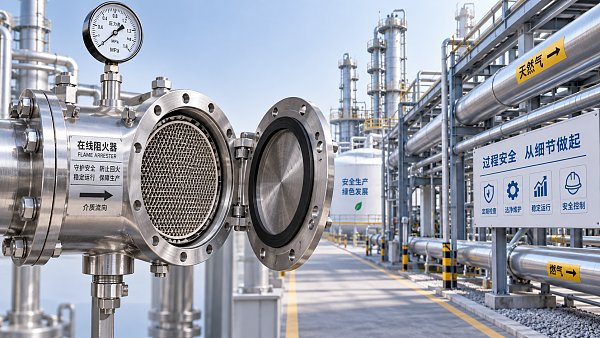
 Sep 17, 2026When does an inline flame arrestor need periodic inspection?Inline flame arrestor inspection: learn the key service conditions, event triggers, and practical maintenance strategies that protect safety and uptime.
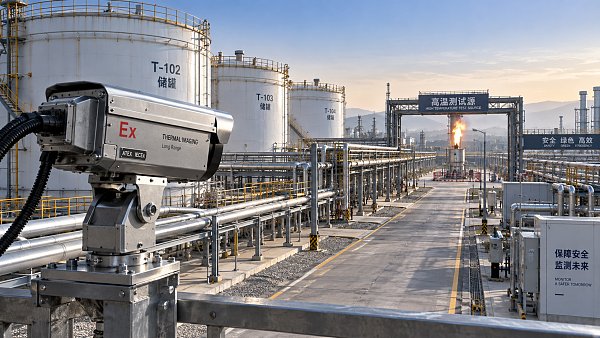
 Sep 16, 2026How to verify a thermal camera supplier’s fire detection distance claimsThermal camera fire detection distance supplier claims: learn how to validate lenses, targets, alarm analytics, and site tests before choosing a solution.
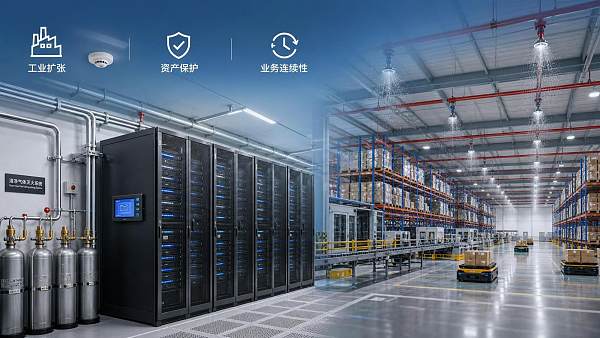
 Sep 01, 2026What is driving Southeast Asia's fire safety market?Explore the fire safety market Southeast Asia: industrial growth, data centers, regulation, insurance, and digital monitoring are reshaping demand and investment opportunities.
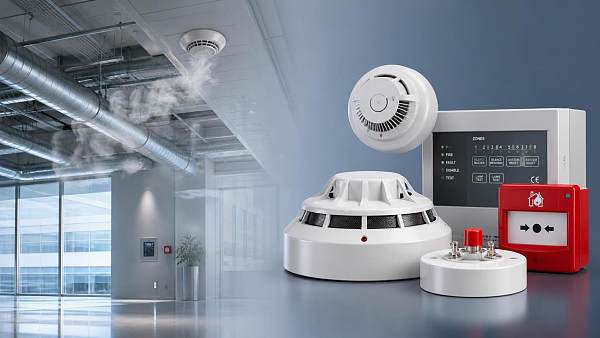
 Aug 26, 2026What drives smoke detector false alarm rates in EuropeSmoke detector false alarm rate Europe is shaped by technology, installation, environment, and maintenance. Discover what really drives nuisance alarms and how to reduce risk.
All Categories
Hot Articles
- How to verify a fire-rated door manufacturer’s product certificationOct 16, 2026Choosing a fire proof doors manufacturer? Learn how to verify certifications, match approved door configurations, and spot compliance gaps before you buy. Explore the checklist.
- How proof test intervals affect SIL metrics in process safetyOct 15, 2026Explore SIL metrics process safety teams rely on. Learn how proof test intervals affect PFDavg, risk reduction, and test coverage to make better-informed safety decisions.
- How to verify an explosion-proof siren factory's ATEX certificatesOct 14, 2026Verify an explosion proof siren factory's ATEX certificates with practical checks for authenticity, product scope and production conformity. Avoid costly sourcing mistakes before you buy.