
Safety Protocols for High-Risk Work Zones
TIME
Click count
In high-risk work zones, one overlooked step can become downtime, regulatory exposure, or catastrophic failure.
Effective safety protocols are not paperwork. They are operational controls that protect people, assets, schedules, and capital-intensive infrastructure.
This is especially true in semiconductor fabs, aerospace facilities, energy hubs, chemical processing sites, and extreme-environment maintenance programs.
Why High-Risk Work Zones Demand Structured Control
A high-risk work zone is not defined only by visible danger. It is defined by consequence, complexity, and exposure.
Pressurized systems, explosive atmospheres, toxic fluids, confined spaces, radiation fields, and precision production environments all change the risk equation.
In these settings, safety protocols turn uncertainty into controlled routines. They clarify who acts, when work stops, and what evidence confirms readiness.
The business impact is direct. Poorly controlled risk can interrupt production, trigger enforcement action, damage assets, or invalidate insurance assumptions.
Good safety protocols also improve coordination between design, procurement, construction, commissioning, operations, and emergency response teams.
That coordination matters because many critical assets are no longer simple mechanical systems. They are integrated industrial ecosystems.
What Safety Protocols Should Actually Control
The strongest safety protocols are built around hazards, not generic checklists. They connect operating conditions to specific barriers.
A barrier may be engineered, procedural, digital, human, or regulatory. In mature programs, these layers support each other.
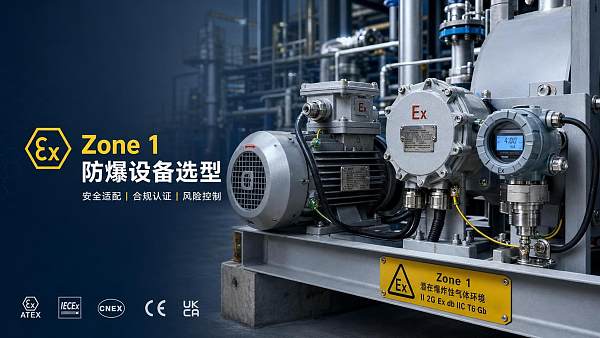
For example, explosion-proof equipment is not enough without ignition control, gas detection, ventilation, zoning discipline, and permit governance.
Likewise, advanced ceramic components or specialty glass assemblies require handling controls that reflect brittleness, thermal shock, and contamination risk.
Safety protocols should also define escalation. A worker must not need personal judgment to decide whether a critical alarm can be ignored.
Core control layers
- Hazard identification based on actual energy sources, chemicals, materials, and environmental exposure.
- Engineering controls such as isolation, guarding, filtration, containment, ventilation, and explosion protection.
- Administrative controls including permits, shift handovers, inspection routes, access rules, and stop-work authority.
- Emergency controls covering alarms, evacuation, rescue interfaces, spill response, and fire suppression readiness.
- Verification methods that prove controls are active before, during, and after high-risk tasks.
When these layers are missing, safety protocols become symbolic. When they are tested, documented, and updated, they become operational discipline.
Industry Pressure Is Raising the Standard
Several market forces are changing how organizations evaluate safety protocols in high-risk work zones.
Critical infrastructure now operates under tighter uptime expectations. Shutdown windows are shorter, while assets are more specialized and expensive.
At the same time, global supply chains expose projects to different compliance systems, documentation cultures, and certification requirements.
Standards such as ISO, SEMI, UL, and ATEX influence equipment selection, inspection expectations, and acceptable risk documentation.
This is why safety protocols must be traceable. A procedure should link clearly to standards, site conditions, and equipment limitations.
Traceability also protects decisions during audits, incident investigations, supplier qualification, and cross-border project reviews.
In extreme engineering environments, assumptions age quickly. A material change, vendor substitution, or process upgrade can introduce new hazards.
That makes safety protocols living systems rather than static binders stored after project approval.
Typical Work Zones and Their Risk Priorities
Different high-risk work zones require different operating controls. A single corporate template rarely captures these distinctions.
The table below shows how risk priorities often vary across critical industrial settings.
These examples show why safety protocols must be designed around actual work conditions, not only policy language.
A good protocol understands both the hazard and the asset. It also respects how work is really performed.
From Compliance Documents to Operational Evidence
Many organizations can produce procedures. Fewer can prove that safety protocols are functioning under pressure.
Operational evidence includes inspection records, test certificates, calibration data, access logs, permit histories, and incident trend analysis.
Evidence also includes supplier documentation. Certified components must match the risk classification and environmental conditions of the work zone.
For example, explosion protection decisions should consider zoning, temperature class, ingress protection, maintenance access, and local approvals.
Filtration systems require another type of evidence. Performance data should confirm compatibility with fluids, particle size targets, and process stability.
Fastening and connection systems also deserve attention. Failure at a joint can defeat otherwise strong safety protocols.
Extreme-environment robots introduce further questions. Remote operation reduces human exposure, but maintenance, recovery, and control failure must be planned.
This is where technical benchmarking becomes valuable. It compares equipment claims against standards, field limits, and documented performance.
Practical Elements of Reliable Safety Protocols
Reliable safety protocols are specific enough to guide action, yet flexible enough to survive real operational complexity.
They should make unsafe variation visible. If two shifts interpret a procedure differently, the protocol is not yet stable.
Risk assessment before work begins
Risk assessment should identify credible scenarios, not only routine hazards. Low-probability events can still carry unacceptable consequences.
The assessment should consider simultaneous operations, contractor interfaces, energy isolation, weather, fatigue, and emergency access constraints.
Strong safety protocols use this assessment to define permits, hold points, inspection steps, and stop-work triggers.
Engineering controls before administrative controls
Procedures should not compensate for weak design. Engineering controls usually provide more dependable protection than memory-based actions.
Examples include blast-rated enclosures, interlocks, pressure relief, automated isolation, sub-micron filtration, guarding, and remote inspection technology.
Administrative steps remain necessary, but they should reinforce engineered barriers rather than replace them.
Clear authority and communication
High-risk work fails when responsibility is fragmented. Safety protocols should define decision rights during preparation, execution, and abnormal conditions.
This includes who authorizes entry, who confirms isolation, who controls restart, and who communicates emergency changes.
The best communication rules are simple. They remove ambiguity when alarms, delays, or conflicting priorities appear.
Data, Benchmarking, and Regulatory Foresight
High-risk safety decisions increasingly depend on verified data. Opinion alone is not enough for critical infrastructure.
Benchmarking helps compare materials, systems, and suppliers against recognized standards and extreme operating requirements.
In practice, this may include specialty glass performance, advanced ceramics behavior, filtration skid validation, or fire suppression certification.
It may also include fastening reliability, corrosion resistance, robotic endurance, and compatibility with hazardous-zone classifications.
Safety protocols become stronger when this intelligence is available before procurement, installation, and commissioning decisions are locked.
Regulatory foresight matters for the same reason. Compliance requirements can shift between regions, sectors, and project phases.
A project that meets one local requirement may still face gaps against corporate standards or international customer expectations.
Data-driven safety protocols reduce this uncertainty by linking technical choices to documented risk positions.
Common Weak Points That Deserve Early Attention
Most incidents are not caused by a single dramatic failure. They often come from weak interfaces between otherwise acceptable controls.
These weak points deserve review before high-risk work begins.
- Temporary work changes that bypass approved safety protocols without formal review.
- Vendor equipment that carries certification but does not match site classification.
- Permit systems that record signatures but fail to verify actual field conditions.
- Emergency plans that assume access routes will remain available during an event.
- Maintenance tasks treated as routine despite exposure to stored energy or contamination.
- Digital monitoring systems that generate alarms without defined response ownership.
Each weakness can be corrected. The challenge is finding it before the work zone becomes active.
That requires field observation, document review, asset data, and honest feedback from the work interface.
How to Evaluate Whether Protocols Are Ready
Readiness is more than training completion. Safety protocols must be understandable, enforceable, measurable, and aligned with real hazards.
A practical readiness review can focus on a few decisive questions.
- Are hazards ranked by consequence, exposure, and control reliability?
- Do procedures reference current standards, certifications, and site classifications?
- Can the team prove that critical barriers are active before work starts?
- Are emergency roles tested under realistic timing and access constraints?
- Do procurement specifications support the same safety protocols used in the field?
- Is there a controlled process for deviations, substitutions, and design changes?
If any answer is unclear, the issue should be resolved before schedule pressure increases.
High-risk work zones rarely forgive late clarification. Decisions made early shape the reliability of every later control.
Building a More Resilient Safety Framework
A resilient safety framework combines technical discipline with organizational learning. It does not rely on perfect behavior.
Instead, it assumes that conditions change, people miss signals, and equipment can fail in unexpected ways.
Safety protocols should therefore include review cycles, incident learning, supplier requalification, and updates after process modifications.
They should also connect to commercial intelligence. Raw material volatility, supplier changes, and project tender requirements can affect risk exposure.
For critical systems, technical benchmarking and compliance tracking are not separate from safety. They are part of the same control environment.
The next useful step is to map each high-risk work zone against its hazards, standards, assets, and evidence gaps.
From there, safety protocols can be reviewed against real operating conditions rather than generic assumptions.
That approach supports safer execution, stronger compliance, and better decisions across demanding industrial environments.
Recommended News
 Jul 28, 2026Explosion Protection Zone 1: Key Equipment Selection RisksExplosion protection Zone 1 selection often fails at gas group, temperature class, and installation details. Learn the hidden risks and choose safer, compliant equipment with confidence.
 Jul 12, 2026When a Safety Shutdown System Reduces Downtime and RiskSafety shutdown system strategies can cut downtime, contain risk, and speed recovery. Learn how smarter shutdown design protects uptime, assets, and project performance.
 Jul 10, 2026Industrial Safety Systems Control Panels: Common Design Risks and FixesIndustrial safety systems control panels design risks can trigger trips, heat issues, and compliance gaps. Discover the most common failures and practical fixes to improve uptime and safety.
![]() Jul 07, 2026Regulatory Compliance Intelligence for Electronics: What to Track in 2026Regulatory compliance intelligence electronics leaders need for 2026: track traceability, cybersecurity, PFAS, batteries, and regional rules to cut launch delays and protect market access.
Jul 07, 2026Regulatory Compliance Intelligence for Electronics: What to Track in 2026Regulatory compliance intelligence electronics leaders need for 2026: track traceability, cybersecurity, PFAS, batteries, and regional rules to cut launch delays and protect market access.



All Categories
Hot Articles
- How to select hazardous area protection for offshore oil and gas sitesSep 12, 2026Hazardous area protection oil and gas guide for offshore sites—select certified, durable solutions that meet zoning, temperature, cable-entry, and maintenance demands.
- What to verify before choosing an electronics industry solutions supplierSep 11, 2026Electronics industry solutions supplier checklist: verify engineering expertise, traceability, compliance, quality controls, supply resilience, and lifecycle support before you buy.
- How to verify a supplier’s SIL metrics before selecting gas detectorsSep 10, 2026SIL metrics supplier guide: learn how to verify certificates, FMEDA data, proof tests, and lifecycle support before selecting gas detectors for safety-critical SIFs.