
When a Safety Shutdown System Reduces Downtime and Risk
TIME
Click count
When a Safety Shutdown System Reduces Downtime and Risk
For critical operations, a safety shutdown system is no longer just a final barrier. It has become a practical tool for protecting uptime, controlling incident costs, and supporting disciplined project delivery.
That shift matters more in facilities facing volatile loads, tighter compliance reviews, and expensive restart cycles. In those settings, every shutdown decision affects production, maintenance, and risk exposure.
A well-designed safety shutdown system isolates hazards fast, prevents damage from spreading, and creates clearer recovery paths. The result is often fewer major outages and shorter interruptions when problems do occur.
In practical terms, this means better operational resilience. It also gives engineering teams stronger evidence when justifying capital upgrades, retrofit scope, and lifecycle risk decisions.
Why a Safety Shutdown System Now Has a Wider Business Role
Industrial risk has changed. High-output lines now run with tighter process tolerances, more automation, and more interconnected equipment than many shutdown designs originally assumed.
Because of that, a single process upset can escalate quickly. Pressure imbalance, thermal drift, fluid contamination, or ignition hazards may move across systems before operators can respond manually.
A modern safety shutdown system reduces that exposure by detecting abnormal conditions and moving equipment into a predefined safe state. This limits secondary failures and protects adjacent assets.
More importantly, it supports continuity planning. When shutdown logic is segmented correctly, one event does not need to trigger a full plant-wide stop.
That is where the business case strengthens. Less collateral downtime usually means lower repair spend, fewer product losses, and less disruption to contractual delivery schedules.
Downtime reduction is often the hidden return
Many investment reviews focus first on compliance. That is necessary, but incomplete. The stronger argument is often the downtime avoided through earlier detection and cleaner isolation.
A safety shutdown system can reduce restart complexity. It can also preserve unaffected units, which matters in semiconductor, energy, aerospace, and specialty materials operations.
- It prevents minor faults from becoming destructive events.
- It narrows the outage footprint to the impacted process area.
- It speeds root-cause analysis through clearer event sequences.
- It lowers exposure to operator injury and environmental release.
How Shutdown Architecture Actually Cuts Risk
Not every shutdown design delivers the same result. A safety shutdown system works best when logic, sensors, valves, and final elements are aligned with real operating hazards.
This starts with hazard identification and consequence mapping. Teams need to understand what can fail, how fast it can escalate, and what state is truly safe for each asset.
From there, shutdown functions should be layered. Critical trips, permissives, interlocks, and emergency isolation must each have a defined role.
That structure is especially important in plants with high-pressure media, combustible dust, solvent handling, or precision thermal environments. Those conditions leave less room for delayed action.
Core design elements that matter most
- Reliable sensing: Inputs must detect real deviations without creating unnecessary nuisance trips.
- Clear voting logic: Redundancy should improve integrity while keeping response practical.
- Fast final elements: Valves, breakers, and dampers must move predictably under demand.
- Segregated shutdown zones: Isolation boundaries should protect unaffected operations.
- Verifiable testing: Proof testing and diagnostics must confirm real field performance.
When these elements are weak, shutdown events become slower, broader, or less predictable. That increases both operational loss and residual risk.
Where a Safety Shutdown System Delivers the Most Value
The strongest returns usually appear where process instability is costly and failure consequences are non-linear. In those environments, prevention and controlled shutdown have outsized value.
In advanced manufacturing, a safety shutdown system can protect vacuum integrity, thermal control, and chemical delivery assets. That reduces scrap, contamination, and long recommissioning cycles.
In energy infrastructure, it helps contain pressure excursions, fire scenarios, and rotating equipment stress. That improves both personnel safety and availability planning.
In specialty materials and fluid systems, shutdown logic can prevent cross-contamination and equipment damage. This is especially valuable where purity, heat transfer, or flow precision are critical.
Typical high-value use cases
- Pressure and temperature excursions in high-risk process lines.
- Combustible or explosive atmospheres requiring ATEX-aligned protection.
- Chemical filtration skids where contamination can shut down downstream tools.
- Fire and explosion protection zones needing rapid isolation.
- Remote or hazardous cells supported by specialized service robotics.
Across these cases, the same pattern appears. A targeted safety shutdown system reduces the size of the event, the duration of the outage, and the cost of recovery.
What to Evaluate Before Approving a Shutdown Upgrade
Approval decisions should go beyond hardware lists. The key question is whether the safety shutdown system matches current operating conditions, not just original design assumptions.
A useful review starts with consequence severity and downtime economics. How much production is lost per hour, and how much damage can develop during delayed isolation?
Then examine lifecycle constraints. Spare parts access, sensor drift, proof-test intervals, and software change control all affect long-term reliability.
Standards alignment also matters. Depending on the sector, relevant references may include ISO, UL, SEMI, and ATEX requirements, plus local regulatory obligations.
A practical evaluation checklist
- Map credible failure modes to specific shutdown functions.
- Confirm sensor coverage for the fastest-developing hazards.
- Check whether shutdown zones are too broad or poorly segmented.
- Review event history for nuisance trips and missed demands.
- Verify testing access and maintenance burden over the asset lifecycle.
- Assess restart complexity after both partial and full shutdown events.
This review often reveals a useful truth. The most expensive shutdown system is not always the best one, but an under-scoped system usually creates larger costs later.
Implementation Mistakes That Increase Downtime Instead
Poor implementation can weaken the value of a safety shutdown system. In some cases, it even increases downtime through nuisance trips, unclear logic, or difficult restart sequencing.
One common issue is over-wide trip logic. If unrelated assets are grouped together, small disturbances can stop healthy production areas.
Another issue is incomplete field validation. A design may look compliant on paper while final elements respond too slowly under real process conditions.
Change management is another weak point. Process modifications, raw material shifts, and control updates can quietly invalidate assumptions behind the original shutdown philosophy.
Warning signs worth addressing early
- Frequent nuisance trips with no serious hazard present.
- Repeated manual bypass requests during normal production.
- Shutdown records that lack clear sequence-of-events data.
- Long restart times caused by unclear interlock dependencies.
- Gaps between documented logic and field wiring or valve action.
From a project standpoint, these warning signs deserve fast attention. They usually point to growing operational drag and rising latent risk.
Turning Shutdown Strategy Into a Resilience Advantage
A safety shutdown system delivers the best results when it is treated as part of resilience engineering, not as a stand-alone compliance purchase.
That means linking shutdown design to maintenance planning, spare strategy, alarm management, and operator response training. It also means reviewing shutdown performance after every significant event.
For organizations managing high-value assets, this creates a measurable advantage. A well-governed safety shutdown system improves availability while lowering the probability of severe loss.
The immediate takeaway is straightforward. Evaluate where downtime costs are highest, where hazards escalate fastest, and where shutdown boundaries are currently too blunt.
Then align shutdown architecture with real process behavior, field verification, and current standards. That is usually where risk reduction and uptime improvement start to move together.
When that alignment is done well, a safety shutdown system stops being a reactive safeguard. It becomes a practical operating strategy for reducing downtime, limiting damage, and protecting long-term project performance.
Recommended News
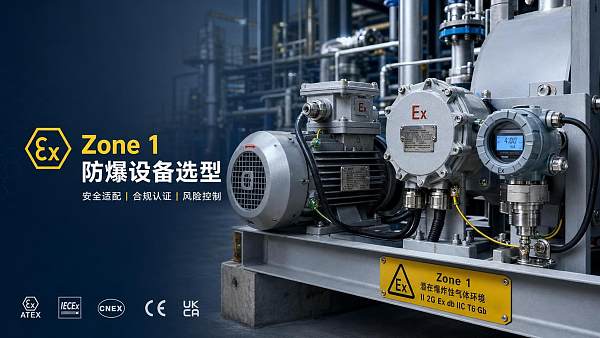
 Jul 28, 2026Explosion Protection Zone 1: Key Equipment Selection RisksExplosion protection Zone 1 selection often fails at gas group, temperature class, and installation details. Learn the hidden risks and choose safer, compliant equipment with confidence.
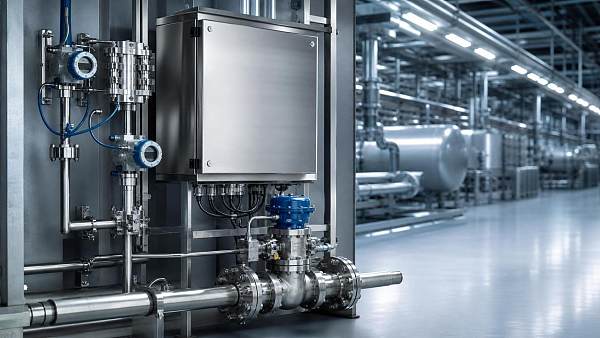
 Jul 12, 2026When a Safety Shutdown System Reduces Downtime and RiskSafety shutdown system strategies can cut downtime, contain risk, and speed recovery. Learn how smarter shutdown design protects uptime, assets, and project performance.
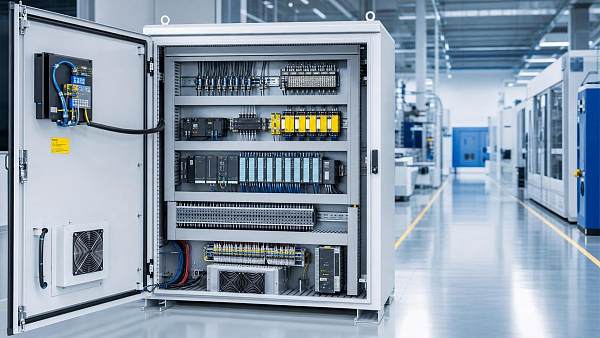
 Jul 10, 2026Industrial Safety Systems Control Panels: Common Design Risks and FixesIndustrial safety systems control panels design risks can trigger trips, heat issues, and compliance gaps. Discover the most common failures and practical fixes to improve uptime and safety.
![]() Jul 07, 2026Regulatory Compliance Intelligence for Electronics: What to Track in 2026Regulatory compliance intelligence electronics leaders need for 2026: track traceability, cybersecurity, PFAS, batteries, and regional rules to cut launch delays and protect market access.
Jul 07, 2026Regulatory Compliance Intelligence for Electronics: What to Track in 2026Regulatory compliance intelligence electronics leaders need for 2026: track traceability, cybersecurity, PFAS, batteries, and regional rules to cut launch delays and protect market access.

All Categories
Hot Articles
- How to select hazardous area protection for offshore oil and gas sitesSep 12, 2026Hazardous area protection oil and gas guide for offshore sites—select certified, durable solutions that meet zoning, temperature, cable-entry, and maintenance demands.
- What to verify before choosing an electronics industry solutions supplierSep 11, 2026Electronics industry solutions supplier checklist: verify engineering expertise, traceability, compliance, quality controls, supply resilience, and lifecycle support before you buy.
- How to verify a supplier’s SIL metrics before selecting gas detectorsSep 10, 2026SIL metrics supplier guide: learn how to verify certificates, FMEDA data, proof tests, and lifecycle support before selecting gas detectors for safety-critical SIFs.