SIL Metrics Explained for Safer Industrial System Decisions
TIME
Click count
For engineers, procurement teams, and industrial researchers, understanding safety integrity level (SIL) metrics is essential to making safer, evidence-based system decisions. From process plants to high-risk manufacturing environments, SIL metrics help quantify risk reduction, support compliance, and guide the selection of critical components and protection systems with greater confidence.
What do safety integrity level (SIL) metrics actually measure?
In industrial decision-making, safety integrity level (SIL) metrics are used to express how reliably a safety function reduces risk when demanded. They are most often discussed within the framework of functional safety, especially for systems that must detect abnormal conditions and move equipment into a safe state.
For information researchers, the challenge is rarely the definition alone. The real issue is how to interpret SIL ratings across different assets, suppliers, and operating contexts. A stated SIL capability does not automatically mean a system is suitable for your process, exposure profile, proof-test interval, or shutdown philosophy.
At a practical level, safety integrity level (SIL) metrics help answer several procurement-critical questions:
- How much risk reduction is required for a specific hazardous scenario?
- Can the sensing, logic, and final elements meet that target as a complete safety instrumented function?
- Will the selected equipment maintain performance under real operating stress such as heat, vibration, corrosive media, dust, pressure swings, or explosive atmospheres?
- Do certification claims align with the standards and jurisdictions relevant to the facility?
This is where G-CSE adds value. By linking benchmarked engineering data with standards awareness across fire and explosion protection, filtration systems, advanced materials, fastening solutions, and robotics for extreme environments, G-CSE helps decision-makers move beyond label-based comparisons toward evidence-based system selection.
Why SIL metrics matter beyond compliance
Many teams first encounter safety integrity level (SIL) metrics because of IEC 61508 or IEC 61511 related projects. Yet the commercial importance goes further. A poor interpretation of SIL can lead to overdesign, under-protection, inflated lifecycle cost, delayed approvals, or mismatched components that pass paper review but fail under field conditions.
In sectors such as semiconductor processing, energy handling, aerospace manufacturing, specialty chemicals, and hazardous materials logistics, the cost of a wrong assumption can affect uptime, insurance exposure, maintenance burden, and tender competitiveness.
How SIL metrics support safer decisions across industrial scenarios
Different industries use safety integrity level (SIL) metrics in different ways. The hazard may be fire, overpressure, toxic release, ignition, contamination, structural failure, or loss of remote handling capability. The safety objective remains consistent: reduce the probability that a dangerous event leads to unacceptable consequences.
The table below shows how SIL-oriented evaluation becomes more useful when tied to actual operating conditions rather than abstract safety labels.
The key insight is simple: safety integrity level (SIL) metrics are most useful when they are mapped to the full operating scenario, not treated as a standalone product badge. This scenario-based view is especially important when multiple industrial pillars intersect, such as filtration, ignition protection, and automated intervention inside one critical line.
Where research teams often struggle
- They compare component certificates without reviewing the complete safety function.
- They overlook environmental derating, maintenance access limits, or diagnostic coverage assumptions.
- They assume compliance in one market automatically transfers to another jurisdiction or tender specification.
- They treat price as the main comparator, even when proof testing, spare strategy, and shutdown consequences dominate lifecycle cost.
Which metrics should buyers and researchers review first?
When evaluating safety integrity level (SIL) metrics, start with the performance data that affects risk reduction in service, not just the headline SIL claim. For procurement and benchmarking work, this means reviewing the assumptions behind the rating and the interaction among sensors, logic solvers, final elements, and diagnostics.
The following table summarizes the evaluation points that usually have the greatest impact on industrial selection and approval workflows.
For complex programs, G-CSE’s multidisciplinary benchmarking approach is useful because it brings these variables into one comparison frame. That matters when a shutdown valve, filtration skid, explosion-protection layer, and mechanical connection system all contribute to the overall safety case.
A practical review sequence
- Define the hazardous event and target risk reduction.
- Identify the safety function boundary, including sensing, logic, actuation, and mechanical dependencies.
- Check safety integrity level (SIL) metrics together with environmental limitations, maintenance assumptions, and applicable standards.
- Compare lifecycle implications such as proof-testing burden, spares, lead time, and audit readiness.
- Document any gap between certified capability and site-specific operating reality.
How to avoid common mistakes when comparing SIL-rated options
A common purchasing mistake is to assume that a higher SIL number is always the better commercial choice. In reality, over-specifying can add cost, complexity, testing overhead, and integration effort without improving the safety outcome in a meaningful way.
Another frequent error is to compare only one component in isolation. Safety integrity level (SIL) metrics belong to safety functions and architectures, not just individual parts. A certified transmitter paired with an unsuitable valve arrangement or poorly maintained final element can leave the overall function weak.
Common misconceptions
- “SIL-certified” and “fit for our application” are not the same statement.
- A strong data sheet does not replace proof-test planning, installation quality, and operating discipline.
- Explosion protection, filtration purity, mechanical stability, and remote operability may all influence whether the intended safety function succeeds.
- Lowest upfront price can create the highest lifecycle cost if maintenance windows are short or compliance evidence is weak.
This wider systems view aligns with G-CSE’s role as a technical intelligence hub. Buyers in extreme-engineering environments rarely make decisions inside a single discipline. They need cross-functional evidence that materials, filtration, ignition control, fastening integrity, and robotic intervention can work together under abnormal conditions.
Standards, certification, and cross-border compliance checkpoints
Safety integrity level (SIL) metrics are most credible when interpreted with the correct standards context. Functional safety discussions often connect with IEC 61508 and sector-specific implementation frameworks such as IEC 61511 for process industries. Depending on the asset, other standards and certifications may also shape acceptance.
For global projects, that can include hazardous-area requirements, fire and explosion protection rules, machinery safety expectations, semiconductor-specific guidelines, and purchaser-specific documentation protocols. The research burden increases when one package crosses several regulatory domains.
What compliance reviews should include
- Applicable functional safety standard and edition.
- Hazardous-area certification relevance, including ATEX or equivalent requirements where needed.
- Material and process compatibility with the medium, cleaning regime, and contamination tolerance.
- Traceability of certificates, assumptions, and product revision status.
- Required site documentation for audit, insurance review, tender qualification, and internal management of change.
G-CSE supports this work by connecting regulatory foresight with technical benchmarking. For multinational buyers, that reduces the risk of selecting a solution that appears compliant in one market but creates approval delays or retrofit expense in another.
FAQ: what information researchers ask about SIL metrics most often
How do I know whether the stated SIL level is enough for my application?
Start from the hazard and required risk reduction, not the product brochure. A suitable target depends on process severity, demand rate, occupancy, consequence modeling, and the performance of other protection layers. Safety integrity level (SIL) metrics only become meaningful when tied to that wider risk analysis.
Are SIL metrics only relevant to oil and gas or process plants?
No. They are highly relevant anywhere a safety function must act reliably under hazardous conditions. That includes chemical delivery systems, precision filtration skids, combustion control, explosion protection assemblies, robotic service systems in hostile environments, and advanced manufacturing lines with high consequence shutdown requirements.
What should procurement teams request from suppliers besides a SIL certificate?
Request the certification scope, failure data basis, proof-test assumptions, environmental limitations, revision status, installation constraints, and any required maintenance intervals. Also ask how the supplier expects the device to be integrated into the full safety function. These details often reveal whether a seemingly comparable option is actually usable on site.
Can a lower-cost alternative still be acceptable?
Sometimes, yes. If the required risk reduction is lower, operating conditions are less severe, and maintenance access is strong, a less expensive architecture may be justified. But that conclusion must come from structured comparison, not price pressure alone. Lifecycle labor, downtime exposure, and compliance evidence can erase the savings quickly.
Why choose us for SIL-related industrial research and sourcing support?
G-CSE is built for decision-makers who need more than a list of vendors. Our advantage is the ability to interpret safety integrity level (SIL) metrics across interconnected industrial domains, then translate that information into practical sourcing and engineering decisions for critical assets operating under extreme conditions.
We support information researchers, engineering teams, and procurement leaders with structured guidance across five pillars: advanced ceramics and specialty glass, precision fluid filtration, industrial fire and explosion protection, high-performance fastening and connection systems, and service robotics for extreme environments.
You can contact us to discuss
- Parameter confirmation for safety functions, including environmental and duty-cycle assumptions.
- Product and system selection when multiple SIL-related options appear similar on paper.
- Lead time, sourcing risk, and cross-border compliance considerations for critical industrial packages.
- Custom solution benchmarking where filtration, ignition protection, materials performance, and mechanical integrity interact.
- Documentation expectations for certification review, tender support, sample evaluation, and quotation alignment.
If your team is comparing safety-critical options and needs a clearer interpretation of safety integrity level (SIL) metrics, G-CSE can help you narrow the field, identify hidden risk assumptions, and build a more defensible basis for specification, procurement, and implementation.
Recommended News
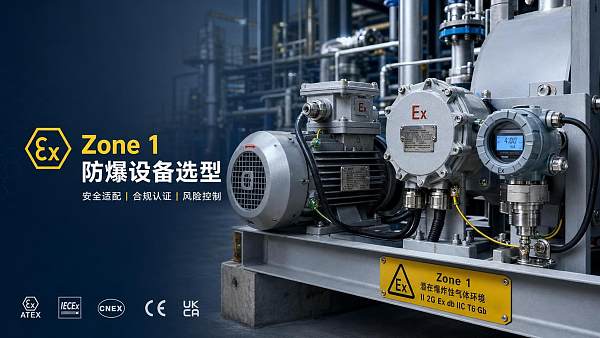
 Jul 28, 2026Explosion Protection Zone 1: Key Equipment Selection RisksExplosion protection Zone 1 selection often fails at gas group, temperature class, and installation details. Learn the hidden risks and choose safer, compliant equipment with confidence.
 Jul 12, 2026When a Safety Shutdown System Reduces Downtime and RiskSafety shutdown system strategies can cut downtime, contain risk, and speed recovery. Learn how smarter shutdown design protects uptime, assets, and project performance.
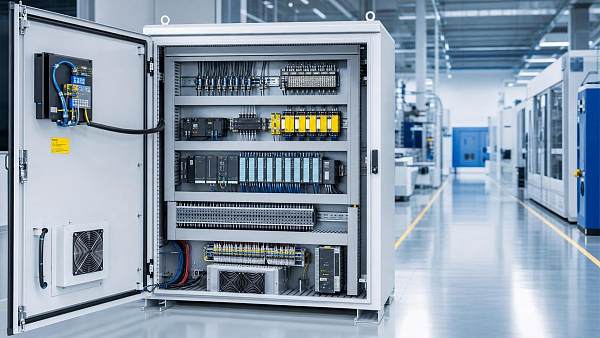
 Jul 10, 2026Industrial Safety Systems Control Panels: Common Design Risks and FixesIndustrial safety systems control panels design risks can trigger trips, heat issues, and compliance gaps. Discover the most common failures and practical fixes to improve uptime and safety.
![]() Jul 07, 2026Regulatory Compliance Intelligence for Electronics: What to Track in 2026Regulatory compliance intelligence electronics leaders need for 2026: track traceability, cybersecurity, PFAS, batteries, and regional rules to cut launch delays and protect market access.
Jul 07, 2026Regulatory Compliance Intelligence for Electronics: What to Track in 2026Regulatory compliance intelligence electronics leaders need for 2026: track traceability, cybersecurity, PFAS, batteries, and regional rules to cut launch delays and protect market access.

All Categories
Hot Articles
- How to select hazardous area protection for offshore oil and gas sitesSep 12, 2026Hazardous area protection oil and gas guide for offshore sites—select certified, durable solutions that meet zoning, temperature, cable-entry, and maintenance demands.
- What to verify before choosing an electronics industry solutions supplierSep 11, 2026Electronics industry solutions supplier checklist: verify engineering expertise, traceability, compliance, quality controls, supply resilience, and lifecycle support before you buy.
- How to verify a supplier’s SIL metrics before selecting gas detectorsSep 10, 2026SIL metrics supplier guide: learn how to verify certificates, FMEDA data, proof tests, and lifecycle support before selecting gas detectors for safety-critical SIFs.