
Industrial Safety Emergency Stop: Common Design Mistakes to Avoid
TIME
Click count
Industrial Safety Emergency Stop: Common Design Mistakes to Avoid
In high-risk industrial environments, an effective industrial safety emergency stop system can mean the difference between controlled shutdown and catastrophic failure.
Yet many projects still overlook critical design flaws that weaken response speed, compliance, and operator protection.
That gap usually appears early, during specification, panel layout, or risk assessment.
In practice, the industrial safety emergency stop is often treated as a simple pushbutton.
It is not.
It is a safety function tied to machine behavior, stopping categories, human factors, diagnostics, and legal duty.
When that function is poorly designed, even premium equipment can fail at the exact moment it is needed most.
The more useful question is not whether an emergency stop exists.
The real question is whether the industrial safety emergency stop performs reliably under realistic fault and stress conditions.
Why Emergency Stop Design Still Fails
Recent project reviews show a consistent pattern.
Teams invest heavily in process automation, but leave the industrial safety emergency stop architecture underdefined.
This happens in semiconductor plants, energy facilities, robotic cells, and advanced material lines alike.
One reason is false familiarity.
Because emergency stop devices look standard, buyers assume performance is standard too.
Another reason is fragmented ownership.
Mechanical, electrical, controls, and EHS teams often review different parts of the same safety chain.
That separation hides design errors until commissioning, or worse, after an incident.
From a standards perspective, the issue is rarely one missing component.
It is usually a mismatch between risk, stopping logic, hardware reliability, and operator use.
Mistake 1: Treating the Device as the Whole Function
A red mushroom button is only one visible part of the industrial safety emergency stop.
The safety function also includes wiring, relays, controllers, contactors, feedback loops, and final energy isolation behavior.
If any link is weak, the full emergency stop chain is weak.
A common procurement mistake is comparing actuator styles while ignoring performance level or safety integrity requirements.
This creates attractive hardware with uncertain protective value.
A proper review should confirm these points:
- Required stop category for the hazard
- Target PL or SIL based on risk analysis
- Fault detection and diagnostic coverage
- Final element behavior after command loss
- Reset logic and restart prevention
Without this system view, industrial safety emergency stop compliance can look complete on paper and still fail operationally.
Mistake 2: Poor Placement and Accessibility
An emergency stop that cannot be reached fast enough is a delayed safeguard.
This sounds obvious, yet layout errors remain common.
Buttons are placed behind swing doors, beyond moving carriers, or outside the operator’s natural path.
In robotic and enclosed systems, the problem becomes more serious during maintenance mode.
The industrial safety emergency stop must remain reachable from every credible intervention position.
This includes cleaning, setup, troubleshooting, material loading, and jam removal.
Good placement reviews should test actual body movement, sightlines, glove use, and panic conditions.
A CAD layout alone rarely captures that reality.
What to verify on site
- Reach distance under normal and abnormal access conditions
- Visibility under low light, dust, and face shield use
- No obstruction from guards, cable trays, or tooling
- Consistent position across similar machine modules
Mistake 3: Using the Wrong Stop Philosophy
Not every hazard should be handled by the same stopping method.
Some systems require immediate power removal.
Others need a controlled stop first, followed by safe energy isolation.
Selecting the wrong stop category can create a secondary hazard.
For example, an immediate cut may drop a suspended load.
A delayed stop may expose personnel to a rotating tool for too long.
This is where technical evaluation must connect process dynamics with safety standards.
The industrial safety emergency stop should match the machine’s energy profile, inertia, and downstream failure effects.
A stopping time study is often more valuable than another component comparison sheet.
Mistake 4: Ignoring Diagnostic Coverage and Fault Behavior
Many industrial safety emergency stop systems are designed for command activation, not fault tolerance.
That leaves dangerous blind spots.
Single-channel circuits, welded contacts, bypassed feedback, and unmonitored resets can defeat the safety intent.
The more automated the plant, the more this matters.
Modern lines may continue motion through distributed drives, remote I/O, and networked safety nodes.
In that environment, the industrial safety emergency stop must fail predictably.
Better designs ask clear questions:
- Can the system detect channel mismatch?
- Will welded contacts be identified before restart?
- Does communication loss trigger a safe state?
- Is manual reset separated from automatic restart logic?
If the answer is unclear, the emergency stop design is probably underdeveloped.
Mistake 5: Overlooking Environmental and Process Stress
Emergency stop devices do not operate in ideal laboratory conditions.
They sit in chemical vapor, conductive dust, washdown areas, vibration zones, and temperature swings.
That changes performance over time.
A weak enclosure rating or unsuitable contact material can quietly degrade the industrial safety emergency stop function.
The same applies in hazardous locations.
If the installation falls under ATEX, UL, or other area classifications, compatibility must be verified across the full assembly.
This includes operators, enclosures, glands, terminals, and control interfaces.
A single mismatched component can compromise approval and field reliability.
Stress factors worth checking
- Ingress protection against fluids and particulates
- Resistance to solvents, UV, and cleaning agents
- Mechanical endurance under frequent actuation
- Certification fit for explosive or corrosive zones
Mistake 6: Weak Validation, Testing, and Documentation
Some projects assume that successful power-up proves emergency stop readiness.
It does not.
The industrial safety emergency stop should be validated against real sequences, realistic faults, and documented acceptance criteria.
That validation must cover normal operation, maintenance modes, remote stations, and restart behavior after intervention.
Documentation matters just as much.
Missing circuit traceability, vague cause-and-effect logic, or incomplete safety calculations create long-term compliance risk.
In audits or incident reviews, those gaps become expensive very quickly.
A Practical Review Framework
A stronger industrial safety emergency stop review does not need to be complicated.
It needs to be disciplined.
- Define the hazardous event and required machine response.
- Confirm the applicable standard path, such as ISO or IEC based evaluation.
- Check device accessibility during operation and intervention tasks.
- Validate architecture, diagnostics, and restart prevention.
- Test the full industrial safety emergency stop chain under realistic faults.
- Keep records that support audits, upgrades, and lifecycle maintenance.
This approach supports better procurement, faster acceptance, and fewer surprises during operation.
Final Takeaway
The industrial safety emergency stop is one of the most familiar elements in a plant, and one of the most misunderstood.
Most failures do not come from one dramatic defect.
They come from small design assumptions that survive unchecked.
Better results come from earlier scrutiny of function, placement, stop logic, diagnostics, environmental fit, and validation evidence.
When reviewing a new line, retrofit, or critical asset, start there.
A well-designed industrial safety emergency stop does more than satisfy a checklist.
It protects uptime, people, compliance, and the credibility of the entire engineering decision.
Recommended News
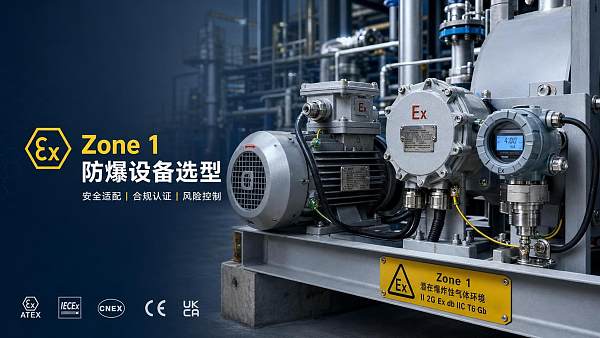
 Jul 28, 2026Explosion Protection Zone 1: Key Equipment Selection RisksExplosion protection Zone 1 selection often fails at gas group, temperature class, and installation details. Learn the hidden risks and choose safer, compliant equipment with confidence.
 Jul 12, 2026When a Safety Shutdown System Reduces Downtime and RiskSafety shutdown system strategies can cut downtime, contain risk, and speed recovery. Learn how smarter shutdown design protects uptime, assets, and project performance.
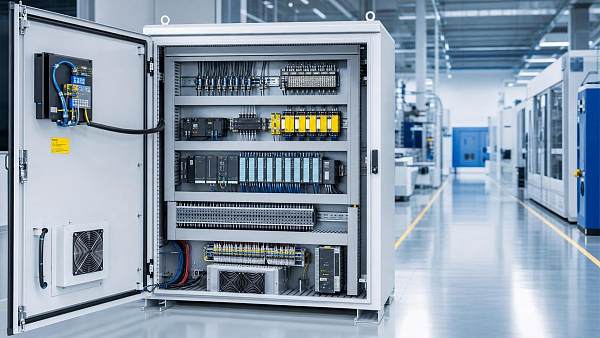
 Jul 10, 2026Industrial Safety Systems Control Panels: Common Design Risks and FixesIndustrial safety systems control panels design risks can trigger trips, heat issues, and compliance gaps. Discover the most common failures and practical fixes to improve uptime and safety.
![]() Jul 07, 2026Regulatory Compliance Intelligence for Electronics: What to Track in 2026Regulatory compliance intelligence electronics leaders need for 2026: track traceability, cybersecurity, PFAS, batteries, and regional rules to cut launch delays and protect market access.
Jul 07, 2026Regulatory Compliance Intelligence for Electronics: What to Track in 2026Regulatory compliance intelligence electronics leaders need for 2026: track traceability, cybersecurity, PFAS, batteries, and regional rules to cut launch delays and protect market access.


All Categories
Hot Articles
- How to select hazardous area protection for offshore oil and gas sitesSep 12, 2026Hazardous area protection oil and gas guide for offshore sites—select certified, durable solutions that meet zoning, temperature, cable-entry, and maintenance demands.
- What to verify before choosing an electronics industry solutions supplierSep 11, 2026Electronics industry solutions supplier checklist: verify engineering expertise, traceability, compliance, quality controls, supply resilience, and lifecycle support before you buy.
- How to verify a supplier’s SIL metrics before selecting gas detectorsSep 10, 2026SIL metrics supplier guide: learn how to verify certificates, FMEDA data, proof tests, and lifecycle support before selecting gas detectors for safety-critical SIFs.