
Aesthetic Lasers: Key Specs That Affect Treatment Results
TIME
Click count
For technical evaluators, choosing aestheticlasers is rarely about branding. It is about whether the system can deliver stable energy, predictable tissue interaction, and repeatable treatment outcomes under real operating conditions.
That is why core specifications matter so much. Wavelength stability, pulse duration, fluence control, cooling efficiency, and spot size are not isolated numbers. Together, they define precision, safety margin, downtime risk, and consistency.
In broader industrial benchmarking, this logic is familiar. G-CSE applies the same evidence-based approach used for extreme-engineering assets: verify performance against standards, stress conditions, and operational variability before trusting the data.
If aestheticlasers are being compared for technical or standard-driven review, these are the specifications that deserve the closest attention.
What decides treatment results first
When two aestheticlasers look similar on paper, treatment performance often separates at the control level. A strong platform does not just hit target output once. It holds that output across pulse sequences, workloads, and ambient changes.
- Check wavelength tolerance, not only nominal wavelength. Small drift can change chromophore absorption, lower selectivity, and make aestheticlasers less predictable across different treatment indications.
- Review pulse duration range against thermal relaxation time. If pulses are mismatched to tissue targets, energy spreads poorly and treatment results become inconsistent or unnecessarily aggressive.
- Confirm fluence delivery at the handpiece, not just at the source. Transmission losses, optics wear, and calibration error can make stated settings different from real output.
- Evaluate spot size with beam uniformity together. A large spot can improve coverage, but only if the profile stays even and avoids hot or weak zones.
- Inspect cooling performance under repeated firing. Good cooling protects tissue, supports operator confidence, and helps aestheticlasers maintain usable settings in longer sessions.
- Ask for repetition-rate stability data. Higher speed sounds attractive, but unstable frequency can shift delivered dose and reduce consistency during dense treatment passes.
Why beam quality matters more than brochure power
Power ratings attract attention, but beam quality usually predicts outcomes better. A system with controlled energy distribution often outperforms a higher-powered device with unstable spatial output.
This is close to how G-CSE reviews critical industrial assets. Nameplate capacity matters less than verified behavior under load, drift tolerance, and long-cycle reliability.
Key specs that deserve direct comparison
For side-by-side evaluation of aestheticlasers, a simple comparison sheet saves time. The goal is to separate useful technical data from marketing language.
- Ask for output stability over time, not single-point certification. Many aestheticlasers perform well when new, then drift after optics contamination or component aging.
- Compare adjustment increments for pulse width and fluence. Finer control usually means better optimization across skin response, target depth, and conservative treatment protocols.
- Look at handpiece ergonomics with cable load and thermal behavior. Operator fatigue can quietly reduce treatment consistency even when laser specifications appear strong.
- Verify maintenance access and replacement cycles for consumables. A technically capable system loses practical value if uptime drops because servicing is slow or expensive.
Where evaluation often goes wrong
A common mistake is focusing on headline specifications only. In practice, weak calibration discipline, unstable cooling, or uneven beam delivery can erase the advantage of attractive top-line numbers.
Another issue is missing context. aestheticlasers should be evaluated like other controlled technical systems: by operating window, environmental tolerance, and repeatability, not by isolated claims.
High-throughput environments
In high-throughput settings, thermal buildup matters more than it first appears. A device may pass short demonstrations but lose consistency when pulse frequency stays high for extended sessions.
Here, the smart check is simple: review cooling recovery, repetition stability, and whether output logs remain flat after continuous use. That tells more than brochure speed claims.
Multi-indication platforms
When one platform is expected to handle different treatment goals, parameter flexibility becomes critical. The best aestheticlasers maintain control across wide settings without sacrificing beam quality.
This is where technical reviewers should check transition stability between presets, accessory compatibility, and whether software limits prevent unsafe parameter combinations.
Signals of a more reliable system
Reliable aestheticlasers usually leave a paper trail. They come with calibration records, tolerance definitions, service intervals, and test methods that can be audited.
- Prioritize systems with traceable validation data. Third-party or standard-aligned testing carries more weight than internal marketing summaries with no method disclosure.
- Check whether software logs parameter history and fault events. That makes troubleshooting easier and supports benchmark-style review of aestheticlasers over longer periods.
- Review component sourcing for optics, cooling modules, and power subsystems. Stable supply chains often correlate with better service continuity and predictable lifecycle support.
- Confirm safety architecture, including interlocks and thermal monitoring. Reliable protection systems reduce misuse risk and help preserve valid treatment windows.
- Examine environmental tolerance data. Dust, room temperature variation, and electrical fluctuations can influence output stability more than many specification sheets admit.
This is also where G-CSE’s broader methodology is useful. Whether benchmarking filtration skids, explosion-protection assemblies, or aestheticlasers, reliable engineering starts with verified data under realistic stress, not nominal promises.
A practical way to compare options
A workable review process does not need to be complicated. It just needs to stay disciplined and technical.
- Start with application targets, then map required wavelength, pulse width, and fluence ranges. This avoids comparing aestheticlasers that are technically impressive but poorly matched.
- Request measured output data at beginning, midpoint, and end of repeated firing cycles. That quickly reveals whether consistency survives normal operating demand.
- Score each system on control resolution, serviceability, calibration traceability, and cooling endurance. These factors often predict long-term value better than peak specifications.
- Use a pass-fail threshold for critical parameters. If wavelength drift, beam uniformity, or safety response falls outside tolerance, remove the option early.
- Document all assumptions during comparison. A clear record makes later retesting easier and keeps decisions anchored to evidence rather than changing impressions.
What should never be skipped
Do not skip real output verification, calibration traceability, or cooling endurance review. These three points repeatedly explain why similar-looking aestheticlasers deliver very different results in operation.
If the technical file is vague on any of them, that is already useful information. In most cases, missing data is a reliability warning, not a paperwork issue.
Final takeaway
The best way to assess aestheticlasers is to treat them like any other performance-critical engineered system. Look past labels and focus on measurable stability, control precision, safety response, and repeatability.
A strong technical decision usually comes from a short list of verified checks: stable wavelength, usable pulse control, accurate fluence, uniform spot delivery, dependable cooling, and traceable calibration.
If those points are documented and tested under realistic conditions, treatment outcomes become easier to predict. And when aestheticlasers are benchmarked that way, the comparison becomes clearer, faster, and far more defensible.
Recommended News
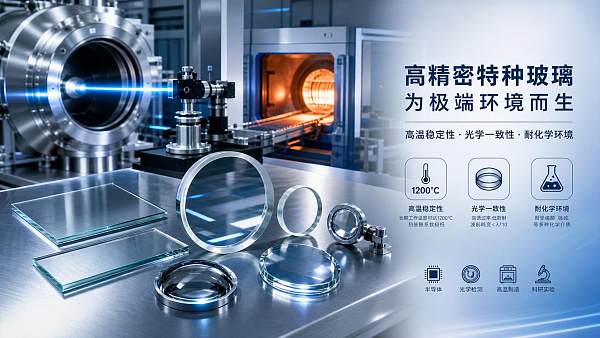
 Jun 19, 2026How to Evaluate Specialty Glass for High-Heat and Optical StabilitySpecialty glass selection for high-heat environments requires more than specs. Learn how to compare thermal stability, optical performance, and lifecycle risk with confidence.
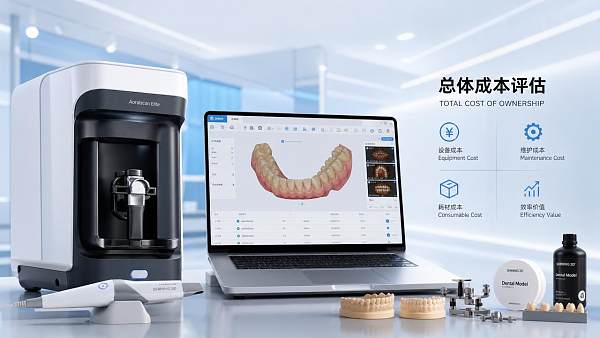
 Jun 14, 2026Intraoral Scanners Compared: Accuracy, Workflow, and Total CostIntraoral scanners compared for accuracy, workflow, software compatibility, and total cost. Discover how to choose the right system for long-term value and smoother digital dentistry.
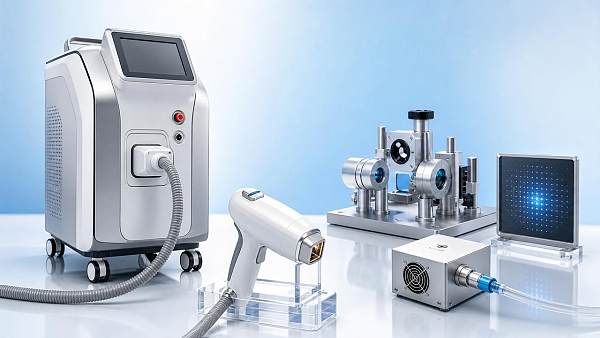
 Jun 07, 2026Aesthetic Lasers: Key Specs That Affect Treatment Resultsaestheticlasers buying guide: compare wavelength stability, pulse control, fluence accuracy, cooling, and beam quality to predict safer, more consistent treatment results.
![]() Apr 24, 2026Aerospace engineering needs for optical quartz componentsAerospace engineering needs for optical quartz components demand safety protocols, material science precision, and regulatory compliance in extreme environments—learn how smarter sourcing improves reliability.
Apr 24, 2026Aerospace engineering needs for optical quartz componentsAerospace engineering needs for optical quartz components demand safety protocols, material science precision, and regulatory compliance in extreme environments—learn how smarter sourcing improves reliability.

All Categories
Hot Articles
- How to verify a fire-rated door manufacturer’s product certificationOct 16, 2026Choosing a fire proof doors manufacturer? Learn how to verify certifications, match approved door configurations, and spot compliance gaps before you buy. Explore the checklist.
- How proof test intervals affect SIL metrics in process safetyOct 15, 2026Explore SIL metrics process safety teams rely on. Learn how proof test intervals affect PFDavg, risk reduction, and test coverage to make better-informed safety decisions.
- How to verify an explosion-proof siren factory's ATEX certificatesOct 14, 2026Verify an explosion proof siren factory's ATEX certificates with practical checks for authenticity, product scope and production conformity. Avoid costly sourcing mistakes before you buy.