VR Headsets Wholesale: MOQ, Warranty, and Margin Risks
TIME
Click count
VR Headsets Wholesale: MOQ, Warranty, and Margin Risks
For teams evaluating vr headsets wholesale opportunities, the real risk rarely starts with the headline unit price.
It usually appears later, inside MOQ pressure, warranty exclusions, spare-part delays, and weak channel margin control.
That is why a safe buying decision needs more than a supplier quote and a sample approval.
It needs a sourcing framework that tests commercial resilience as carefully as hardware performance.
This guide breaks down the practical questions behind vr headsets wholesale decisions, especially when cost pressure is high and demand forecasts are still moving.
Why vr headsets wholesale deals become risky fast
In fast-moving electronics categories, risk compounds across inventory, support, compliance, and resale timing.
VR devices are especially sensitive because model cycles are short and user experience depends on many components working together.
A headset may look competitive on paper, yet the deal can weaken if firmware updates stop or accessories become unavailable.
More importantly, vr headsets wholesale programs often include hidden assumptions about return rates, local repair capability, and promotional pricing support.
If those assumptions fail, gross margin falls quickly.
- High MOQ can lock capital before real sell-through is proven.
- Warranty language may exclude batteries, controllers, lenses, or shipping damage.
- Version changes can make replenishment inconsistent across the same SKU family.
- Aggressive online discounting can compress reseller margin without warning.
From a procurement view, these are not secondary details.
They shape the true landed cost and the actual commercial risk of vr headsets wholesale sourcing.
How to evaluate MOQ without trapping working capital
MOQ is often framed as a pricing lever.
In practice, it is also a balance-sheet decision.
A lower unit price means little if slow-moving stock sits for two quarters.
When reviewing vr headsets wholesale offers, compare MOQ against three operational realities.
- Expected monthly sell-through by channel.
- Forecast accuracy over the next 90 to 120 days.
- Replacement cycle risk if a newer model launches early.
A useful rule is to model best case, base case, and delayed sell-through scenarios before approving order volume.
This also helps during negotiation.
If a supplier insists on a large minimum, ask for split delivery, mixed-model allocation, or staged release against deposits.
That approach keeps the vr headsets wholesale program commercially flexible.
It also reveals how mature the supplier really is.
Suppliers with structured channel programs usually offer more options than factories pushing one-time volume.
Warranty terms matter more than the headline promise
Many vr headsets wholesale quotations advertise a one-year warranty.
That sounds reasonable, but the real value sits in the exclusions, process, and turnaround time.
Ask whether the warranty covers complete units, key modules, packaging defects, dead pixels, charging ports, and motion controllers.
Then ask where failed products are repaired and who pays freight both ways.
This is where many low-cost vr headsets wholesale deals lose their apparent savings.
- A long warranty with offshore return handling can still create service delays.
- A short warranty with local spare parts may cost less overall.
- Advance replacement programs reduce downtime and customer friction.
- Clear failure-rate thresholds support stronger claims management.
Also review firmware support commitments.
A headset with poor software maintenance can create functional failures that are never formally treated as hardware defects.
In actual business use, that still becomes your cost.
Margin risk in vr headsets wholesale channels
Margin erosion is often the least visible risk at the purchase stage.
Yet it can become the most damaging one after inventory arrives.
In vr headsets wholesale, margin pressure usually comes from four sources.
The stronger signal is whether the supplier actively protects channel economics.
If not, vr headsets wholesale becomes a race to the bottom.
That also affects reorder confidence, not just current margin.
Supplier reliability checks before order confirmation
A reliable vr headsets wholesale supplier should provide more than a polished product sheet.
It should offer evidence across manufacturing, compliance, support, and commercial governance.
Start with a short verification checklist.
- Confirm certifications required for your market and sales channel.
- Review batch traceability and serial number management.
- Check failure reporting, RMA process, and response times.
- Ask for spare-part availability over the product life cycle.
- Validate packaging strength for international shipment.
- Review channel conflict policy and territory discipline.
Recent market shifts make this even more important.
Some suppliers expand quickly into vr headsets wholesale without building equivalent after-sales infrastructure.
The sales team may respond fast, while the support system remains thin.
That mismatch usually appears only after the first defect wave.
Cost model: from quoted price to true landed risk
A sound vr headsets wholesale decision should convert quotation data into a full risk-adjusted cost model.
That model should not be complicated.
It just needs to be honest.
Include these elements in the same worksheet.
- Unit cost and payment terms.
- Freight, duties, and local handling.
- Expected defect rate and service labor.
- Replacement parts and reverse logistics.
- Price protection exposure during promotions.
- Inventory carrying cost under slower sell-through.
This framework quickly shows whether a low-priced vr headsets wholesale offer is truly cheaper.
Very often, the safer supplier wins once service risk and channel margin protection are included.
That also supports stronger internal approval because the reasoning is visible and measurable.
A practical sourcing approach for safer volume orders
The most effective vr headsets wholesale strategy is usually phased, not all-in.
Begin with a controlled order, validate field performance, then expand volume under clearer terms.
A practical sequence looks like this.
- Pilot one or two models with defined return and support metrics.
- Track setup issues, defect patterns, and user complaints for 30 to 60 days.
- Negotiate volume release only after support performance is proven.
- Lock warranty workflow, spare-parts access, and channel pricing rules in writing.
- Review reorder timing against the supplier’s product roadmap.
This does not slow the business unnecessarily.
It reduces the chance that a vr headsets wholesale deal looks efficient at purchase, then turns expensive after launch.
In other words, the best sourcing decision balances price, support resilience, and margin protection at the same time.
Before confirming any large-volume vr headsets wholesale order, test the supplier’s flexibility as hard as you test the hardware itself.
Recommended News
 Oct 12, 2026How to verify the biocompatibility of titanium medical implantsTitanium medical implants: learn how to verify biocompatibility through ISO 10993, surface analysis, chemical characterization, and risk-based evidence.
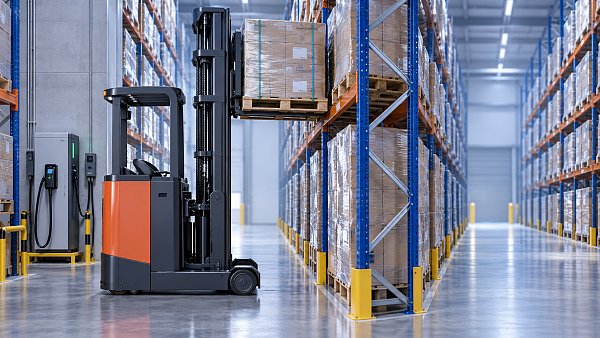
 Oct 10, 2026What to check before placing a reach trucks wholesale orderReach trucks wholesale buying guide: compare warehouse fit, capacity, batteries, safety features, lifecycle costs, and supplier support before placing a bulk order.
 Sep 23, 2026How pressure cycling affects high-pressure industrial systems designHigh-pressure industrial systems design: learn how pressure cycling affects fatigue, seals, materials, and validation for safer, longer-lasting equipment.
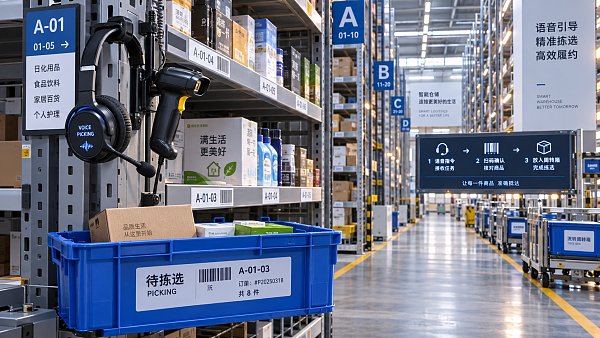
 Sep 18, 2026When do voice picking systems reduce errors in high-volume warehouses?Voice picking systems reduce warehouse errors by guiding workers through verified locations, quantities, and exceptions. Discover when voice workflows deliver stronger accuracy in high-volume operations.


All Categories
Hot Articles
- How to verify a fire-rated door manufacturer’s product certificationOct 16, 2026Choosing a fire proof doors manufacturer? Learn how to verify certifications, match approved door configurations, and spot compliance gaps before you buy. Explore the checklist.
- How proof test intervals affect SIL metrics in process safetyOct 15, 2026Explore SIL metrics process safety teams rely on. Learn how proof test intervals affect PFDavg, risk reduction, and test coverage to make better-informed safety decisions.
- How to verify an explosion-proof siren factory's ATEX certificatesOct 14, 2026Verify an explosion proof siren factory's ATEX certificates with practical checks for authenticity, product scope and production conformity. Avoid costly sourcing mistakes before you buy.