
Plastic Pallets Wholesale: Cost, Load Rating, and Warehouse Fit
TIME
Click count
Plastic pallets wholesale for warehouse use: what really drives the decision?
When teams compare plastic pallets wholesale for warehouse operations, the first number usually gets too much attention.
In practice, the better question is whether that pallet keeps lanes moving, protects goods, and stays compliant over years of handling.
That matters even more in facilities linked to advanced manufacturing, energy systems, technical filtration, and controlled industrial environments.
Across those settings, warehouse fit depends on load rating, racking behavior, cleanliness, repair frequency, and supply consistency.
This is also why benchmarking sources such as G-CSE place material performance and compliance context alongside commercial data.
A pallet is not just a transport base.
It is a handling asset that can either reduce operational friction or quietly create recurring cost, damage, and audit risk.
Is plastic pallets wholesale always cheaper than wood over time?
Not always at the point of purchase.
Quite often, plastic pallets wholesale for warehouse projects carry a higher upfront unit cost than standard wood alternatives.
The savings usually appear later, and only if the operating profile supports them.
For example, closed-loop internal distribution tends to favor plastic because breakage rates are lower and dimensional consistency is better.
That consistency helps with conveyors, automated storage, stretch wrapping, and predictable fork entry.
Washdown environments also shift the economics.
If a facility requires cleaner surfaces and lower moisture absorption, wood often creates extra housekeeping and contamination concerns.
A more useful cost view includes these factors:
- expected service life in cycles, not months
- damage to product caused by deck failure or protrusions
- labor spent on sorting, repair, and disposal
- sanitation workload and wash compatibility
- loss rates in pooled or export movement
Simple cost comparisons miss the fact that a low-price pallet can become the expensive option after repeated rack damage, replacements, and rejected shipments.
A practical cost screen before ordering
How should load rating be read without falling for misleading numbers?
This is where many wholesale pallet decisions go wrong.
A supplier may list a dynamic load, static load, and rack load, but those values are not interchangeable.
Static load refers to weight supported when the pallet rests on the ground.
Dynamic load applies when a forklift or pallet jack moves the pallet.
Rack load is usually the most critical figure for warehouse storage because the pallet spans beams and can deflect over time.
In real warehouse use, rack load should be treated as the limiting number unless the pallet never enters selective racking.
Needle-like heavy items, off-center drums, and partially supported cartons can also change performance.
That is why reputable evaluations ask for test conditions, beam spacing, temperature range, and reinforcement details.
For operations influenced by G-CSE-style technical review, load rating is not accepted as a marketing claim alone.
It is checked against handling reality, compliance expectations, and failure consequences.
What should be verified on the data sheet?
- whether the rack rating is for uniformly distributed load
- beam span used during testing
- allowable deflection under sustained load
- temperature effects in chilled or hot zones
- presence of steel reinforcement in runners or deck
If those details are missing, the published rating is incomplete for serious comparison.
Which pallet design actually fits the warehouse, not just the budget sheet?
Warehouse fit usually comes down to design geometry more than material alone.
Two pallets made from similar resin can perform very differently because the base structure, deck style, and entry pattern change handling behavior.
Nestable pallets save space in inbound storage and are often attractive in one-way distribution.
Stackable and rackable pallets suit repeated use and heavier warehouse duty.
Open deck designs may reduce weight, but they are not ideal for every carton footprint or cleanroom-adjacent application.
Closed deck versions are easier to clean and often preferred where debris control matters.
More common problems appear in the interface points:
- pallet jack wheels catching on weak entry lips
- fork tines striking low-clearance runners
- conveyors rejecting inconsistent bottom surfaces
- racks stressing non-reinforced bases
For plastic pallets wholesale for warehouse planning, layout compatibility should be tested against actual equipment paths before volume commitment.
A quick warehouse-fit comparison
Where do buyers misjudge risk in plastic pallets wholesale for warehouse projects?
The most common mistake is treating all plastic pallets as equivalent once size and headline load seem close.
That shortcut can create failure in areas that are harder to see during early sourcing.
Material formulation is one example.
Virgin resin, recycled content, and reinforcement strategy affect impact resistance, stiffness, and repeatability.
Another blind spot is environmental exposure.
Cold storage, outdoor UV, chemical splash, and static-sensitive zones all narrow the acceptable options.
Then there is regulatory alignment.
In highly controlled sectors, documentation discipline matters almost as much as the pallet itself.
That includes traceability, material declarations, dimensional consistency, and proof of tested conditions.
Operations tied to high-spec manufacturing or hazardous infrastructure cannot rely on generic statements when failure may stop production or trigger nonconformance.
Risk signals worth checking early
- no clear distinction between static, dynamic, and rack load
- no declared tolerance for automated handling environments
- vague resin description or unclear recycled content
- missing test basis for cold rooms or long-term storage
- supply promises without batch consistency detail
How can a shortlist be built without overbuying specification?
The smart approach is not to chase the strongest pallet on the market.
It is to match technical margin to actual warehouse stress.
Start with the load profile, then confirm storage method, handling frequency, hygiene needs, and exposure conditions.
After that, request data in a format that makes side-by-side comparison possible.
For plastic pallets wholesale for warehouse sourcing, a useful shortlist usually includes only two or three candidates.
Any broader list often hides indecision rather than adding value.
A disciplined evaluation set should include:
- quoted price by volume tier and lead time
- verified rack load under stated beam spacing
- pallet weight and dimensional tolerance
- expected service life in the intended loop
- cleaning, repair, and replacement assumptions
If possible, run a limited live trial across receiving, storage, picking, and outbound movement.
Short tests often reveal issues that technical sheets do not show.
What is the sensible next step before placing a wholesale order?
A good decision usually comes from narrowing uncertainty, not from negotiating unit price too early.
Begin by defining the non-negotiables.
That may be beam-rack performance, washability, export suitability, automation tolerance, or resilience in colder zones.
Then compare plastic pallets wholesale for warehouse options against those operating conditions, not against generic catalog labels.
In more demanding industrial settings, the strongest choices are usually backed by traceable test data and realistic lifecycle assumptions.
That is the same mindset seen in technical benchmarking environments where resilience, compliance, and repeatability matter more than headline claims.
If the next review focuses on only three things, make them these: true rack load, warehouse equipment fit, and total operating cost across the expected service life.
With those points clarified, volume buying becomes far easier to justify and far less likely to create downstream surprises.
Recommended News
 Oct 12, 2026How to verify the biocompatibility of titanium medical implantsTitanium medical implants: learn how to verify biocompatibility through ISO 10993, surface analysis, chemical characterization, and risk-based evidence.
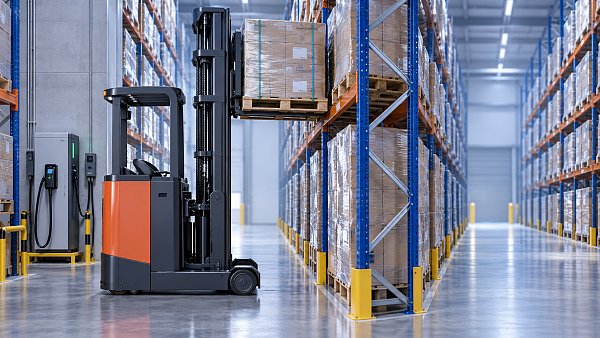
 Oct 10, 2026What to check before placing a reach trucks wholesale orderReach trucks wholesale buying guide: compare warehouse fit, capacity, batteries, safety features, lifecycle costs, and supplier support before placing a bulk order.
 Sep 23, 2026How pressure cycling affects high-pressure industrial systems designHigh-pressure industrial systems design: learn how pressure cycling affects fatigue, seals, materials, and validation for safer, longer-lasting equipment.
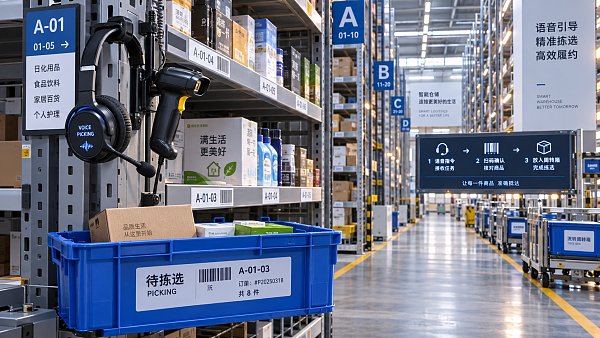
 Sep 18, 2026When do voice picking systems reduce errors in high-volume warehouses?Voice picking systems reduce warehouse errors by guiding workers through verified locations, quantities, and exceptions. Discover when voice workflows deliver stronger accuracy in high-volume operations.


All Categories
Hot Articles
- How to verify a fire-rated door manufacturer’s product certificationOct 16, 2026Choosing a fire proof doors manufacturer? Learn how to verify certifications, match approved door configurations, and spot compliance gaps before you buy. Explore the checklist.
- How proof test intervals affect SIL metrics in process safetyOct 15, 2026Explore SIL metrics process safety teams rely on. Learn how proof test intervals affect PFDavg, risk reduction, and test coverage to make better-informed safety decisions.
- How to verify an explosion-proof siren factory's ATEX certificatesOct 14, 2026Verify an explosion proof siren factory's ATEX certificates with practical checks for authenticity, product scope and production conformity. Avoid costly sourcing mistakes before you buy.