
Smart Manufacturing Technology Trends Reshaping Plant Upgrades in 2026
TIME
Click count
As 2026 approaches, smart manufacturing technology trends are no longer optional signals—they are decisive benchmarks for plant upgrades, risk control, and capital efficiency. For technical evaluators managing complex industrial assets, understanding how automation, data intelligence, compliance, and resilient engineering converge is essential to selecting upgrade paths that meet performance, safety, and long-term operational demands.
In cross-sector industrial environments, upgrade decisions are rarely about installing one new machine or adding one dashboard. They involve compatibility with legacy equipment, exposure to extreme heat or chemicals, filtration tolerances below 1 micron, hazardous-area compliance, robotic serviceability, and the long-term cost of downtime measured in hours, batches, or safety incidents.
For technical assessment teams, the most relevant smart manufacturing technology trends now sit at the intersection of operational data, material performance, and engineering governance. That is especially true in fabs, aerospace supply chains, advanced ceramics production, energy infrastructure, and other plants where a 2% efficiency gain may matter less than a 20% reduction in process risk.
Why 2026 Plant Upgrades Are Being Driven by Smart Manufacturing Technology Trends
Plant upgrades in 2026 are being shaped by three forces at once: aging industrial assets, tighter compliance expectations, and pressure to improve output without expanding footprint. In many facilities, brownfield lines already operate at 70% to 90% of designed utilization, leaving little room for disruption during retrofit programs.
That is why smart manufacturing technology trends are moving from innovation language into capital planning criteria. Technical evaluators are increasingly asked to prove whether a proposed upgrade can reduce unplanned stoppages, improve traceability, and maintain safe operation across temperature, vibration, pressure, and contamination extremes.
From isolated automation to connected resilience
A decade ago, many upgrades focused on isolated automation cells. In 2026, the stronger model is connected resilience. This means sensors, controls, filtration systems, fastening integrity, fire protection, and service robotics must function as a coordinated system rather than as five disconnected procurement packages.
For example, a high-pressure chemical process line may require sub-micron fluid filtration, ATEX-aligned protection in classified zones, torque traceability on critical fasteners, and robotic intervention in hazardous maintenance areas. If one layer is digitally blind, the entire upgrade loses predictive value.
Core triggers technical evaluators are seeing
- Legacy equipment with data gaps of 15 to 30 minutes between recorded events
- Maintenance cycles still based on fixed intervals such as 30, 60, or 90 days rather than condition data
- Compliance exposure across ISO, UL, SEMI, and ATEX requirements in multi-region operations
- Critical consumables affected by raw material volatility, including high-purity silica and rare earth inputs
The table below shows how major smart manufacturing technology trends are changing upgrade priorities in industrial plants that operate under demanding environmental or regulatory conditions.
A clear pattern emerges: the most valuable upgrades are not necessarily the most complex. They are the ones that connect performance, safety, and verification into one measurable decision framework. That is why smart manufacturing technology trends matter most when translated into plant-level engineering criteria.
The Technologies Technical Evaluators Should Prioritize First
Not every trend deserves equal investment. In critical manufacturing environments, the first priority should be technologies that improve decision quality within 6 to 18 months, not merely those that look advanced in pilot demonstrations. The evaluation sequence matters as much as the technology itself.
1. Sensor density with usable data context
Adding sensors without context creates more noise than value. Plants should target monitoring points tied to failure modes: differential pressure in filtration skids, thermal drift in glass-ceramic tools, torque stability in fastened joints, and gas or flame indicators in fire and explosion protection systems.
A useful benchmark is to capture data at intervals aligned with process criticality. High-speed production assets may require sub-second to 5-second sampling, while utility subsystems may be adequately monitored at 30-second to 2-minute intervals. The key is not volume, but actionable correlation.
2. Digital twins for brownfield validation
Among current smart manufacturing technology trends, digital twins have become more practical for retrofit planning. In 2026, their strongest use is not virtual showmanship. It is validating airflow, thermal behavior, maintenance access, robot reach, and line interactions before mechanical changes are made on site.
For technical evaluators, a digital twin can cut redesign loops from 3 rounds to 1 or 2 when layout constraints are severe. This is especially important where cleanroom zoning, blast separation distances, or confined service corridors make post-installation changes expensive.
3. Specialized robotics for extreme environments
Service robots are no longer limited to logistics or repetitive pick-and-place tasks. In extreme-engineering settings, specialized robots now support inspection, sampling, remote manipulation, and intervention in radiation, toxic vapor, heat, or explosion-risk zones where human exposure time must be minimized.
A practical screening rule is to prioritize robotic deployment where manual access takes more than 20 minutes per intervention, requires 2 or more technicians, or forces line isolation. In those conditions, service robotics can improve both safety and recovery time.
4. Traceable fastening and connection integrity
Fasteners are often overlooked in digital upgrade programs, yet they remain a frequent source of leakage, vibration failure, and structural drift. Smart manufacturing technology trends increasingly include torque traceability, preload monitoring, and connection lifecycle visibility for critical assemblies.
In plants exposed to thermal cycling or high vibration, even a tolerance shift of a few percentage points in clamping performance can affect alignment, sealing, or electrical grounding. Evaluators should treat fastening data as part of reliability infrastructure, not only as assembly documentation.
5. Compliance-linked control architecture
Smart controls now need to support auditability as well as automation. That means alarm history, interlock validation, maintenance overrides, and safety zone access logs should be reviewable over a defined retention period, often 12 to 36 months depending on industry practice and internal policy.
This matters particularly in sectors where process excursions trigger customer investigation, insurance review, or regulatory notification. A plant may run efficiently, but if it cannot reconstruct the event chain within minutes, the upgrade remains incomplete from a governance perspective.
How to Evaluate Plant Upgrade Readiness Without Overbuying
One of the most expensive mistakes in 2026 upgrades is overbuying digital complexity before the plant is ready to absorb it. Technical evaluators should begin with readiness mapping across assets, data, compliance, and workforce response. The goal is to identify where a 3-step upgrade can outperform a 12-module rollout.
A four-layer assessment model
- Asset layer: age, failure mode history, environmental exposure, and spare part status
- Data layer: signal availability, timestamp accuracy, historian quality, and system interoperability
- Compliance layer: gap review against applicable ISO, SEMI, UL, or ATEX checkpoints
- Execution layer: maintenance capability, vendor support time, and shutdown window availability
This framework helps separate high-value upgrades from low-return digitization. A filtration system with unstable pressure and weak contamination records may justify immediate instrumentation. A stable utility pump with minimal production impact may not need advanced analytics in phase one.
The matrix below can help technical evaluators score upgrade candidates using criteria that balance risk, implementation effort, and commercial impact.
If an asset scores high on operational value and compliance urgency, it should usually move ahead of less critical digital projects. This sequencing discipline is one of the most practical responses to current smart manufacturing technology trends, especially where CAPEX approval is under scrutiny.
Common upgrade mistakes in critical plants
Mistake 1: Treating standards as a late-stage paperwork issue
When standards review begins after equipment selection, redesign risk rises sharply. Hazardous-zone components, filtration housings, glazing materials, cable routing, and robotic enclosures may all require changes that extend delivery by 2 to 8 weeks.
Mistake 2: Ignoring extreme-environment material behavior
Smart systems still depend on physical materials. Specialty glass, advanced ceramics, seals, and connectors can drift under thermal shock, chemical exposure, or pressure cycling. If materials are not benchmarked for the true operating envelope, digital visibility will not prevent mechanical failure.
Mistake 3: Measuring success only by automation rate
A plant can automate 40% of a process and still fail to improve reliability if contamination, fastener integrity, or emergency response remain weak. Technical evaluators should define success through 4 to 6 measurable outcomes such as downtime reduction, alarm resolution time, maintenance accuracy, and audit traceability.
Where Smart Manufacturing Technology Trends Intersect With Extreme-Engineering Requirements
In advanced industrial settings, trend adoption must be grounded in physical operating realities. This is where cross-disciplinary benchmarking becomes valuable. Smart manufacturing technology trends gain practical meaning when assessed alongside filtration thresholds, thermal stability, explosion protection, connection reliability, and robotic survivability.
Five engineering domains that now shape upgrade strategy
- Specialty glass and advanced ceramics for thermal control, dimensional stability, and high-purity environments
- Precision fluid filtration systems for particle control, chemical integrity, and pressure consistency
- Industrial fire and explosion protection for hazardous-area continuity and layered safety response
- High-performance fastening and connection solutions for vibration resistance and lifecycle traceability
- Specialized service robots for remote intervention in inaccessible or dangerous operating zones
These five pillars influence whether a smart upgrade remains dependable after commissioning. A connected plant is only as strong as the materials, interfaces, and safety mechanisms that support its data-driven logic.
What procurement and technical teams should ask suppliers
During technical review, supplier conversations should move beyond brochure-level automation claims. Ask for operating envelope ranges, contamination tolerances, maintenance intervals, integration protocols, and the standards basis for critical components. For many systems, a 5-point question set is more revealing than a long generic feature list.
It is also useful to compare lead times for both equipment and compliance documentation. In some projects, hardware can ship in 6 weeks while supporting qualification records take 10 to 12 weeks. That mismatch often delays acceptance more than manufacturing itself.
Recommended supplier review checklist
- Confirm applicable standards and hazardous-area assumptions before final specification
- Verify compatibility with existing control architecture and historian formats
- Review service access requirements, including robotic or remote maintenance options
- Assess consumable and raw-material exposure, especially for specialty media or silica-based components
- Define acceptance criteria with measurable thresholds before purchase order release
Implementation Roadmap for Technical Evaluators in 2026
A practical upgrade roadmap should be phased, measurable, and aligned with plant constraints. Most facilities do not need a full digital overhaul in one step. A disciplined 3-phase model is often more effective: readiness assessment, targeted pilot, and scale-up with compliance validation.
Phase 1: Benchmark and map critical assets
Start with the assets that combine high downtime cost with elevated safety or quality impact. Build a shortlist of 5 to 10 systems, then map failure modes, current sensing gaps, service windows, and documentation status. This creates a defensible base for investment prioritization.
Phase 2: Pilot where data can change decisions fast
Choose one line or subsystem where better visibility can change maintenance or process action within 30 to 90 days. Good pilot targets include filtration skids, heat-sensitive tooling, hazardous inspection routes, and critical connection assemblies with recurring reliability issues.
Phase 3: Expand with standardization and governance
Once pilot value is proven, scale through standard templates for instrumentation, alarm logic, naming conventions, and acceptance testing. This reduces engineering variation and supports faster replication across multiple sites or production cells.
Key metrics to track after rollout
- Mean time between failures on upgraded assets
- Mean time to diagnose and mean time to recover
- Maintenance intervention frequency per 30-day cycle
- Alarm recurrence rate and unresolved event age
- Audit readiness for process, safety, and component traceability
Smart manufacturing technology trends are reshaping plant upgrades because they now influence not only productivity, but also engineering resilience, supplier qualification, and regulatory readiness. For technical evaluators, the strongest upgrade strategy is one that links digital capability with real-world material performance, safety architecture, and measurable operating outcomes.
Organizations working across critical systems, extreme environments, and multi-standard industrial applications need more than general market commentary. They need verifiable technical benchmarks, cross-sector insight, and decision support that reflects how plants actually operate under pressure. To explore tailored upgrade paths, compare engineering options, or review benchmark-driven procurement criteria, contact us to get a customized solution and learn more about resilient manufacturing strategies for 2026.
Recommended News
 Oct 12, 2026How to verify the biocompatibility of titanium medical implantsTitanium medical implants: learn how to verify biocompatibility through ISO 10993, surface analysis, chemical characterization, and risk-based evidence.
 Oct 10, 2026What to check before placing a reach trucks wholesale orderReach trucks wholesale buying guide: compare warehouse fit, capacity, batteries, safety features, lifecycle costs, and supplier support before placing a bulk order.
 Sep 23, 2026How pressure cycling affects high-pressure industrial systems designHigh-pressure industrial systems design: learn how pressure cycling affects fatigue, seals, materials, and validation for safer, longer-lasting equipment.
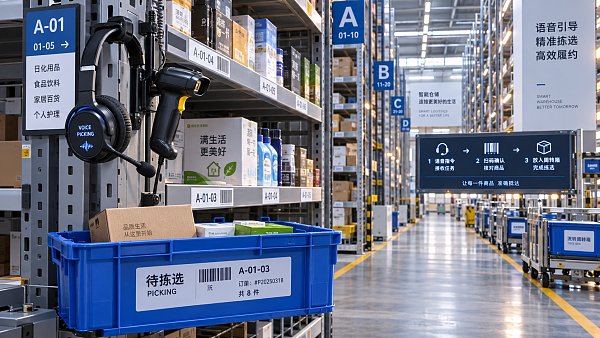
 Sep 18, 2026When do voice picking systems reduce errors in high-volume warehouses?Voice picking systems reduce warehouse errors by guiding workers through verified locations, quantities, and exceptions. Discover when voice workflows deliver stronger accuracy in high-volume operations.


All Categories
Hot Articles
- How to verify a fire-rated door manufacturer’s product certificationOct 16, 2026Choosing a fire proof doors manufacturer? Learn how to verify certifications, match approved door configurations, and spot compliance gaps before you buy. Explore the checklist.
- How proof test intervals affect SIL metrics in process safetyOct 15, 2026Explore SIL metrics process safety teams rely on. Learn how proof test intervals affect PFDavg, risk reduction, and test coverage to make better-informed safety decisions.
- How to verify an explosion-proof siren factory's ATEX certificatesOct 14, 2026Verify an explosion proof siren factory's ATEX certificates with practical checks for authenticity, product scope and production conformity. Avoid costly sourcing mistakes before you buy.