Global Trade Analytics: 5 Signals Reshaping Industrial Sourcing
TIME
Click count
Global Trade Analytics is moving from optional insight to industrial necessity
Global Trade Analytics now sits closer to operational risk management than to traditional market watching.
That shift is especially visible in sectors where technical failure carries regulatory, safety, and financial consequences.
Across advanced manufacturing, aerospace, energy, and critical infrastructure, sourcing decisions are no longer judged by price alone.
They are judged by resilience, traceability, standards alignment, and supplier readiness under stressed global conditions.
From recent market behavior, the clearest signals come from four connected data streams.
They include raw material pricing, compliance updates, capability verification, and cross-border project momentum.
This is why Global Trade Analytics matters more in high-spec categories such as advanced ceramics, precision filtration, fire protection, fastening systems, and extreme-environment robotics.
These are also the areas where G-CSE has become relevant as an intelligence reference point.
Its value is not promotional language.
It comes from combining benchmarked engineering data with commercial and regulatory signals that shape sourcing outcomes.
The first signal is price volatility with a technical consequence
Commodity swings are not new, but the current pattern is more disruptive because substitution is often limited.
High-purity silica, rare earth oxides, specialty alloys, and engineered polymers now affect both cost and qualification cycles.
In Global Trade Analytics, this matters because price movement increasingly predicts engineering pressure downstream.
A spike in one input can alter delivery schedules, redesign choices, and certification timelines.
For glass-ceramics or sub-micron filtration systems, even minor material variation may trigger broader validation work.
That changes the role of trade data.
It is not just a pricing dashboard.
It becomes an early warning layer for quality risk.
- Watch whether price rises are concentrated in one region or spreading across multiple supply bases.
- Check if input inflation is paired with longer quoted lead times or tighter minimum order conditions.
- Compare raw material movement with changes in failure tolerance for the final application.
The practical lesson is simple.
When material volatility appears in Global Trade Analytics, the next question should be technical exposure, not only landed cost.
A second shift is that compliance data is now shaping market access in real time
More noticeable than before is the speed at which regulation affects supplier viability.
Standards such as ISO, SEMI, UL, and ATEX are not static background references anymore.
They increasingly act as live filters in cross-border industrial trade.
This is particularly true in explosion protection, clean-process filtration, and robotics used in hazardous or radiation-sensitive environments.
In these segments, one regulatory revision can quickly shift approved supplier lists.
Global Trade Analytics helps reveal which regions are tightening requirements and which product lines are most exposed.
This is one reason intelligence platforms tied to technical benchmarking have gained weight.
They help connect the legal language of compliance with the commercial timing of actual sourcing decisions.
Supplier capability is becoming harder to judge from catalogs alone
A third signal inside Global Trade Analytics is the widening gap between advertised capability and verified performance.
That gap becomes expensive in extreme-duty environments.
A fastening solution may meet dimensional expectations yet fail under thermal cycling.
A fire suppression system may look equivalent on paper yet differ sharply in certification scope.
A robotic arm may appear rugged while lacking proven endurance in radiation or corrosive exposure.
This is why trade analytics now intersects with performance analytics.
The market is rewarding suppliers that can prove repeatability, not just availability.
G-CSE reflects this broader transition.
Its five industrial pillars mirror categories where technical nuance strongly influences trade confidence.
In practical terms, Global Trade Analytics becomes more accurate when it includes performance thresholds, standards mapping, and application-fit evidence.
Without that layer, supplier comparisons remain shallow.
What deserves closer attention in capability reviews
- Test conditions behind published specifications, especially pressure, temperature, contamination, and vibration ranges.
- Evidence of consistency across production lots, not only prototype results.
- Alignment between certification scope and the exact operating environment.
- Service and replacement support in the export destination.
Project activity now reveals demand sooner than traditional trade summaries
Another notable development is the growing value of tender and project data.
By the time customs statistics confirm a trend, high-value industrial demand is often already moving.
Cross-border project pipelines reveal this earlier.
Energy upgrades, fab expansions, defense-adjacent infrastructure, and hazardous facility retrofits all generate leading indicators.
Those indicators matter because specification intensity is increasing alongside project volume.
A region may show moderate import growth while simultaneously demanding much higher technical standards.
That creates a different sourcing landscape than volume data alone would suggest.
In Global Trade Analytics, this means watching where project financing, regulatory approvals, and tender language begin to converge.
When all three move together, demand is usually becoming more durable.
Where they move apart, the market may look active but remain commercially unstable.
The real impact spreads across multiple business layers
What makes these signals important is that they rarely stay inside one function.
A material shock can influence qualification, delivery, insurance, and aftermarket service at the same time.
A compliance revision can alter engineering documentation, contract timing, and regional market access together.
This cross-functional effect is especially sharp in critical systems.
That is why Global Trade Analytics increasingly supports scenario planning rather than simple vendor comparison.
The most useful interpretation is not just who can ship next month.
It is who can remain technically valid across the next regulatory, logistical, and operational cycle.
In that sense, the market is moving from transactional sourcing toward evidence-based resilience sourcing.
A workable way to read the next phase
- Link trade data with standards updates instead of reviewing each stream separately.
- Separate price risk from qualification risk, then score both.
- Use project-tender activity to test whether demand is temporary or structural.
- Favor verified performance records in categories exposed to extreme operating conditions.
Where Global Trade Analytics becomes most useful next
The next stage is less about collecting more information and more about connecting the right information.
Global Trade Analytics is most valuable when market signals are tied to engineering reality.
That is increasingly necessary in industries where tolerance for failure is narrow and compliance drift is costly.
Recent changes suggest that strong decisions will come from integrated observation.
Watch raw material direction, but read it beside performance thresholds.
Track supplier activity, but test it against certification depth.
Follow project growth, but confirm whether the surrounding regulatory environment supports execution.
For sectors covered by G-CSE, this integrated view is already becoming a practical standard.
The sensible next move is to build a review rhythm around these five signals.
Compare trade movement, standards change, capability evidence, project momentum, and application risk on a recurring basis.
That approach does not remove uncertainty.
It does make uncertainty easier to interpret, earlier to detect, and less damaging when the market turns.
Recommended News
 Oct 12, 2026How to verify the biocompatibility of titanium medical implantsTitanium medical implants: learn how to verify biocompatibility through ISO 10993, surface analysis, chemical characterization, and risk-based evidence.
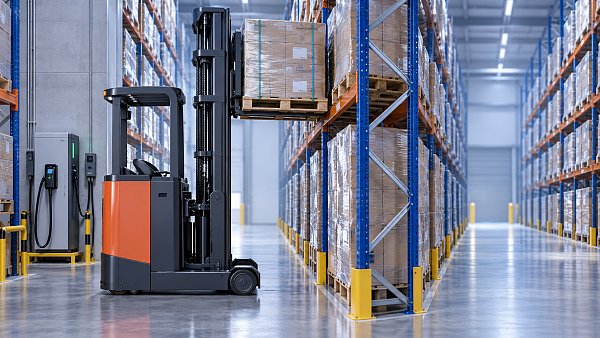
 Oct 10, 2026What to check before placing a reach trucks wholesale orderReach trucks wholesale buying guide: compare warehouse fit, capacity, batteries, safety features, lifecycle costs, and supplier support before placing a bulk order.
 Sep 23, 2026How pressure cycling affects high-pressure industrial systems designHigh-pressure industrial systems design: learn how pressure cycling affects fatigue, seals, materials, and validation for safer, longer-lasting equipment.
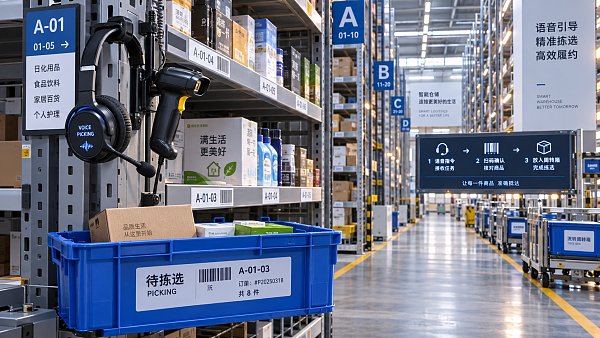
 Sep 18, 2026When do voice picking systems reduce errors in high-volume warehouses?Voice picking systems reduce warehouse errors by guiding workers through verified locations, quantities, and exceptions. Discover when voice workflows deliver stronger accuracy in high-volume operations.


All Categories
Hot Articles
- How to verify a fire-rated door manufacturer’s product certificationOct 16, 2026Choosing a fire proof doors manufacturer? Learn how to verify certifications, match approved door configurations, and spot compliance gaps before you buy. Explore the checklist.
- How proof test intervals affect SIL metrics in process safetyOct 15, 2026Explore SIL metrics process safety teams rely on. Learn how proof test intervals affect PFDavg, risk reduction, and test coverage to make better-informed safety decisions.
- How to verify an explosion-proof siren factory's ATEX certificatesOct 14, 2026Verify an explosion proof siren factory's ATEX certificates with practical checks for authenticity, product scope and production conformity. Avoid costly sourcing mistakes before you buy.