Global Sourcing Risks: Cost, Lead Time, and Supplier Stability
TIME
Click count
Global Sourcing can reduce unit prices fast, but the lowest quote rarely shows the full cost. In critical industries, delays, compliance issues, and supplier instability can erase savings within one project cycle.
That is especially true when buying technically sensitive assets, such as specialty glass-ceramics, precision filtration systems, explosion-protection equipment, fastening solutions, or service robots for extreme environments.
A better Global Sourcing decision balances cost, lead time, engineering fit, and long-term resilience. The goal is not simply to buy cheaper. It is to buy with fewer surprises.
For organizations operating in aerospace, semiconductor production, energy infrastructure, and other high-consequence sectors, that balance depends on verified technical data and a clear view of commercial risk.
Why apparent savings often disappear
Global Sourcing looks attractive when comparing ex-works prices alone. Yet in resilient engineering environments, hidden variables usually sit outside the first quotation.
Those variables include raw material volatility, export controls, requalification time, freight disruptions, and the supplier’s ability to maintain stable output under pressure.
- Check total landed cost, not unit price. Include freight, duties, insurance, tooling, retesting, compliance review, inventory carrying cost, and possible line-stop exposure before comparing Global Sourcing options.
- Map raw material dependence early. Rare earth oxides, high-purity silica, specialty alloys, and engineered polymers can move sharply, changing supplier quotes faster than annual budgets adjust.
- Test supplier financial durability. A technically strong source can still become risky if debt pressure, ownership changes, or weak cash flow reduce maintenance, staffing, and quality discipline.
- Review qualification burden carefully. For filtration skids, fire protection systems, or radiation-hardened robotics, switching sources may trigger validation work that costs more than expected savings.
- Price lead-time risk separately. A low-cost supplier with unstable delivery can force buffer stock, expedited shipping, or temporary redesign, all of which raise the real cost of Global Sourcing.
- Confirm compliance scope in writing. ISO, SEMI, UL, or ATEX references in brochures are not enough when the application requires exact certification boundaries and current documentation.
The fastest way to benchmark risk before award
Before any order is placed, compare suppliers on a short set of risk factors. This keeps Global Sourcing decisions practical and less influenced by aggressive sales pricing.
This kind of side-by-side review is where institutions like G-CSE add value. Technical benchmarking and commercial intelligence together make Global Sourcing decisions more defensible.
Where lead time risk hides in plain sight
Lead time problems are often underestimated because quoted weeks do not reflect the full chain. In practice, one missing material, one customs delay, or one qualification hold can reset everything.
This is common in engineered categories where components depend on specialized powders, ultra-clean processing, precision machining, or certified electronics.
- Ask for the lead-time structure. Separate raw material acquisition, production slotting, testing, packaging, export preparation, and transit time instead of accepting one blended delivery promise.
- Identify single-point bottlenecks. One furnace, one cleanroom line, one coating partner, or one certified electronics source can turn a normal order into a major delay.
- Review recovery scenarios. Strong Global Sourcing partners can explain what happens if a shipment misses schedule and how they restore output without lowering quality standards.
- Match lead time to project criticality. Long-cycle items for fire safety systems or advanced ceramics need earlier commitment than standard industrial parts with easy substitution paths.
- Use milestone-based visibility. Require progress checkpoints at material release, production start, testing, and shipment so delays appear early, not one day before need date.
A practical semiconductor example
A sub-micron filtration skid may look comparable across suppliers on paper. But if one source depends on imported membrane media with unstable allocation, the quoted lead time is only a best-case estimate.
In that case, Global Sourcing should include material traceability, media availability, and clean assembly capacity as early screening checks, not post-award questions.
How supplier instability becomes an operational problem
Supplier instability does not always show up as bankruptcy. More often, it appears as quality drift, slow communication, missed engineering updates, or delayed certification renewals.
That pattern is dangerous in Global Sourcing because it develops quietly while business volume is increasing.
- Look beyond revenue size. A large supplier can still be unstable if a major customer dominates volume or if expansion has outpaced process control and staffing.
- Track management continuity. Frequent leadership turnover can disrupt planning, technical support, escalation speed, and investment in quality systems needed for critical applications.
- Review CAPA responsiveness. Slow corrective action is often an early sign that the supplier lacks engineering depth or internal control under pressure.
- Confirm document discipline. Stable suppliers maintain revision history, certificate validity, and test records consistently, which matters when audits or incidents occur later.
- Assess geographic concentration. If production, testing, and warehousing sit in one exposed region, Global Sourcing risk rises during weather, energy, or trade disruptions.
A practical energy infrastructure example
Explosion-proof systems for volatile energy sites can become high risk when sourced from a supplier that recently changed ownership. Certification may remain valid, while execution quality starts slipping.
That is why ownership structure, engineering staffing, and recertification cadence should sit beside price in every Global Sourcing review.
The often-missed cost drivers in technical buying
The biggest mistake in Global Sourcing is treating engineering-critical items like standard catalog purchases. The quote is only one part of the financial picture.
- Count validation cost upfront. Factory acceptance tests, incoming inspection, material review, and system integration checks can materially change the economics of a lower quote.
- Include failure consequence cost. If a fastening system, ceramic part, or robotic component fails in service, downtime and safety exposure can outweigh years of purchase savings.
- Estimate inventory buffers honestly. Unreliable Global Sourcing usually forces higher safety stock, tying up cash and warehouse space that finance teams often miss initially.
- Review change-order exposure. Technical ambiguity in specifications often leads to later adjustments, expedited freight, or redesign work that reshapes the total cost baseline.
- Watch currency and payment terms. Small pricing gains can disappear if exchange volatility, advance payment, or weak warranty protection increases commercial exposure.
What stronger sourcing decisions look like in practice
The most resilient Global Sourcing strategies combine technical benchmarking with live market intelligence. That means seeing both the engineering truth and the commercial pressure around it.
G-CSE’s model is useful here because it connects performance data, international standards, tender visibility, and raw material movement across multiple industrial pillars.
- Build a weighted supplier scorecard. Rank cost, lead time, compliance, technical performance, and continuity risk so Global Sourcing decisions stay balanced and auditable.
- Use external benchmarks to verify claims. Independent data helps confirm whether quoted performance, certification scope, and lifecycle expectations are realistic for the application.
- Create approved alternates early. Dual-source planning reduces dependence on one region or one process bottleneck before disruption forces a rushed decision.
- Refresh risk reviews quarterly. Global Sourcing conditions change quickly when material prices, freight lanes, or trade rules shift across borders.
- Tie contracts to measurable triggers. Use clauses for lead-time variance, quality escape, documentation lapse, and surcharge logic to reduce ambiguity after award.
A simple decision rule
If a lower-cost source cannot clearly prove delivery resilience, certification control, and stable production capability, it is not a lower-cost source yet.
It is only a lower quoted price.
What to do next before the next RFQ closes
Start by reviewing one active category through a wider Global Sourcing lens. Compare quoted savings against validation cost, supply continuity, and compliance exposure.
Then check whether the current supplier view includes independent benchmarks, raw material signals, and region-specific risk. If not, the sourcing picture is still incomplete.
In critical industrial environments, the strongest Global Sourcing decision is rarely the fastest or the cheapest. It is the one that protects uptime, safety, and long-term operational confidence.
Recommended News
 Oct 12, 2026How to verify the biocompatibility of titanium medical implantsTitanium medical implants: learn how to verify biocompatibility through ISO 10993, surface analysis, chemical characterization, and risk-based evidence.
 Oct 10, 2026What to check before placing a reach trucks wholesale orderReach trucks wholesale buying guide: compare warehouse fit, capacity, batteries, safety features, lifecycle costs, and supplier support before placing a bulk order.
 Sep 23, 2026How pressure cycling affects high-pressure industrial systems designHigh-pressure industrial systems design: learn how pressure cycling affects fatigue, seals, materials, and validation for safer, longer-lasting equipment.
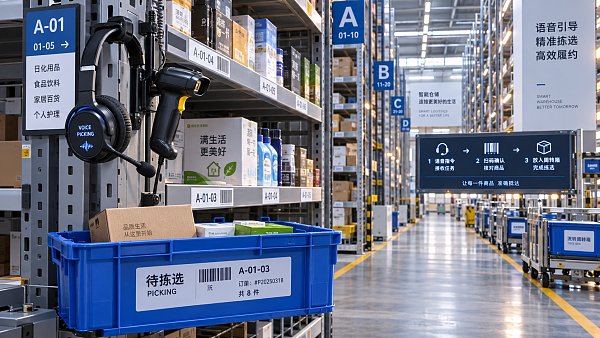
 Sep 18, 2026When do voice picking systems reduce errors in high-volume warehouses?Voice picking systems reduce warehouse errors by guiding workers through verified locations, quantities, and exceptions. Discover when voice workflows deliver stronger accuracy in high-volume operations.



All Categories
Hot Articles
- How to verify a fire-rated door manufacturer’s product certificationOct 16, 2026Choosing a fire proof doors manufacturer? Learn how to verify certifications, match approved door configurations, and spot compliance gaps before you buy. Explore the checklist.
- How proof test intervals affect SIL metrics in process safetyOct 15, 2026Explore SIL metrics process safety teams rely on. Learn how proof test intervals affect PFDavg, risk reduction, and test coverage to make better-informed safety decisions.
- How to verify an explosion-proof siren factory's ATEX certificatesOct 14, 2026Verify an explosion proof siren factory's ATEX certificates with practical checks for authenticity, product scope and production conformity. Avoid costly sourcing mistakes before you buy.