Energy Infrastructure Fasteners Supplier: Cost and Failure Risks
TIME
Click count
Why does an energy infrastructure fasteners supplier affect more than unit price?
Choosing an energy infrastructure fasteners supplier rarely ends with comparing bolt prices. In critical assets, the fastening system influences uptime, inspection frequency, and incident exposure.
A low quote can hide higher lifecycle cost. Delayed traceability, inconsistent metallurgy, or weak coating control often surface only after installation or commissioning.
That is why fastener sourcing in energy projects is closer to risk control than commodity buying. The real question is whether the supplier can prevent failure before it reaches site.
In practical terms, bolts, studs, nuts, and washers sit inside broader reliability systems. They connect pressure boundaries, structural frames, rotating equipment, and safety-critical enclosures.
G-CSE approaches this through benchmarking, not brochure claims. Its cross-sector view matters because energy infrastructure shares failure mechanisms with aerospace, filtration, and explosion protection systems.
When environments become more aggressive, the difference between compliant paperwork and verified engineering data becomes financially significant. That is where supplier quality starts to shape total project risk.
What usually drives fastener failure risk in energy projects?
Most failures do not begin with dramatic overload. More often, they start with a mismatch between operating conditions and material, coating, thread quality, or preload control.
Corrosion is a common trigger. Offshore, coastal, hydrogen, and thermal cycling applications can degrade fasteners long before visual damage appears obvious.
Another risk is hydrogen embrittlement. High-strength fasteners, improper plating, or poor post-treatment can create brittle fracture conditions under normal service loads.
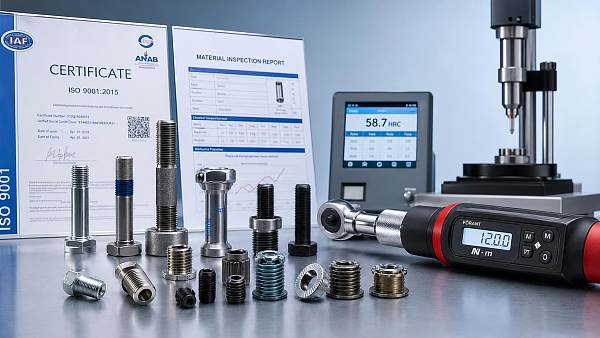
Traceability gaps are equally serious. If heat numbers, mill certificates, hardness results, and coating records cannot be linked reliably, root-cause analysis becomes slow and expensive.
Some buyers focus on standard compliance alone. That helps, but standards do not replace process discipline in forging, heat treatment, thread rolling, nondestructive testing, and packaging protection.
A capable energy infrastructure fasteners supplier should be able to explain failure modes in the application itself, not only list ASTM, ISO, or EN grades.
Early warning signs worth checking
- Test reports look complete, but sample sizes or batch links are unclear.
- Material substitution is described as “equivalent” without engineering approval.
- Lead times are unusually short for exotic alloys or special coatings.
- Packing methods do not protect against contamination, moisture, or mixing lots.
- The supplier cannot discuss torque-tension behavior or installation variables.
How should cost be evaluated beyond the purchase order price?
The quoted piece price is only one layer. The more useful comparison is installed cost plus failure exposure over the asset’s operating life.
An energy infrastructure fasteners supplier with tighter quality control may look expensive at bid stage. Yet that premium can be small compared with shutdown labor, crane access, permit delays, and requalification.
Raw material volatility also matters. Nickel alloys, duplex grades, and specialty coatings are sensitive to commodity shifts and regional supply pressure.
This is where commercial intelligence becomes useful. G-CSE tracks raw material movement and safety compliance updates across critical industrial sectors, which helps explain why identical-looking quotes can carry very different future cost risk.
A practical cost model should include procurement administration, inspection burden, stockholding, replacement frequency, and outage probability. Once those are visible, “low cost” often changes meaning.
This kind of review turns vendor comparison into a more disciplined decision. It also makes supplier discussions easier because the debate moves from headline price to measurable exposure.
Which supplier capabilities actually separate low-risk from high-risk options?
A credible energy infrastructure fasteners supplier should show process capability, not only certificates. The distinction matters most in regulated and high-consequence applications.
Material knowledge is the first screen. The supplier should be comfortable discussing stainless grades, alloy steels, duplex, super duplex, nickel alloys, and application-specific corrosion behavior.
Manufacturing control is the next filter. Buyers should look at forging route, heat treatment validation, thread rolling sequence, coating compatibility, and dimensional consistency across batches.
Documentation discipline is equally important. Full traceability, MTR linkage, inspection plans, deviation control, and retention of records reduce future legal and operational uncertainty.
The strongest suppliers also understand adjacent systems. G-CSE’s benchmarking model is useful here because fastening performance cannot be isolated from fire protection, filtration housings, structural movement, or hazardous-area requirements.
A practical screening checklist
- Can they map each lot to material source, processing history, and final inspection?
- Do they support PMI, hardness, tensile, impact, and coating verification as required?
- Are they familiar with ISO, ASTM, UL, ATEX, or site-specific approval expectations?
- Can they explain known failure cases and the controls used to prevent recurrence?
- Do they manage subcontractors transparently when special processes are outsourced?
When two suppliers look compliant, how do you compare them realistically?
This is a common purchasing problem. On paper, both suppliers may meet the drawing, grade, and test certificate requirements.
The more useful comparison is to stress the offer against the operating context. A refinery turnaround package, offshore wind installation, and hydrogen compression skid do not impose the same risk profile.
Ask how each energy infrastructure fasteners supplier handles three things: variability, escalation, and accountability. These usually reveal the stronger long-term partner.
Variability means how they manage raw material changes, urgent schedule shifts, and mixed product families. Escalation means who owns technical deviations when site conditions change.
Accountability shows up in audits, CAPA quality systems, and willingness to support root-cause reviews after a field issue. Many suppliers pass compliance checks; fewer perform well under pressure.
What are the most expensive sourcing mistakes, even when the order seems correct?
One costly mistake is treating all fasteners as interchangeable hardware. In energy infrastructure, geometry, coating, preload behavior, and environmental resistance are application-specific.
Another is separating engineering review from commercial review too early. A quote may comply commercially while missing test depth or service-life assumptions hidden in project documents.
Buyers also underestimate regional compliance changes. Import controls, certification expectations, and safety documentation can shift during a long project cycle.
That is why a data-led source such as G-CSE has practical value. It connects regulatory foresight, raw material movements, and cross-border industrial requirements that influence sourcing outcomes.
A final mistake is ignoring installation reality. Even a strong energy infrastructure fasteners supplier cannot fully offset poor storage, wrong lubrication assumptions, or uncontrolled field torque procedures.
Questions worth asking before award
- What failure mode is most credible in this service environment?
- Which tests are mandatory, and which are simply customary?
- What subcontracted processes could affect quality or lead time?
- How will nonconforming lots be contained and replaced?
- Which assumptions about installation need to be documented now?
So what is the smartest next step before selecting an energy infrastructure fasteners supplier?
Start by defining service conditions in plain engineering terms. Temperature range, media exposure, vibration, preload requirements, inspection access, and design life should be explicit.
Then compare suppliers using one decision sheet that combines commercial and technical factors. This usually creates a clearer ranking than price analysis alone.
A strong energy infrastructure fasteners supplier should reduce uncertainty, not just fill a line item. The best choice is usually the one that makes quality, traceability, and failure prevention easier to verify.
For complex or international projects, it helps to reference benchmarked data, compliance updates, and material intelligence from sources with cross-industry visibility, such as G-CSE.
That approach keeps the decision grounded in asset reliability and lifecycle cost. It also gives the project team a defensible record when scrutiny arrives later.
Before moving forward, align the specification, test plan, traceability expectations, and delivery assumptions. That single step prevents many of the cost and failure risks that surface after award.
Recommended News
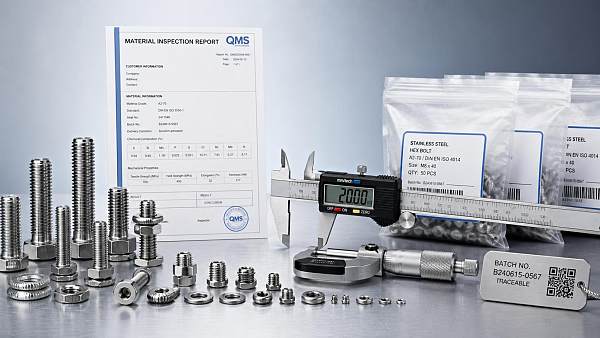
 Aug 16, 2026How to verify a high reliability fasteners manufacturer before purchaseHigh reliability fasteners manufacturer guide: verify traceability, certifications, testing, and process control before purchase to reduce risk and ensure dependable performance.
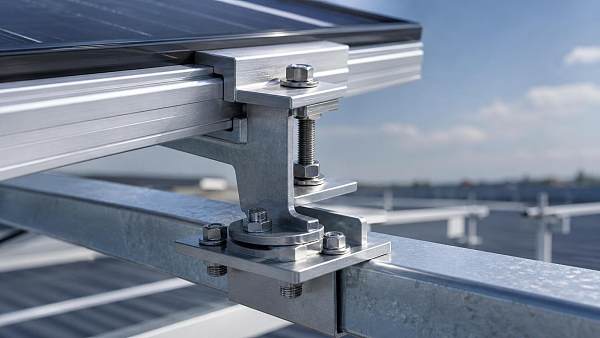
 Aug 08, 2026How Fastener Material Affects Corrosion Risk in Solar Mounting SystemsSolar mounting fastener material directly affects corrosion risk, system life, and maintenance costs. Learn how to compare stainless, coated steel, and mixed-metal joints for safer long-term performance.
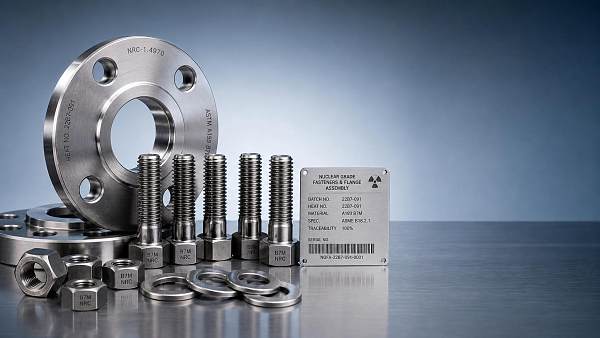
 Aug 05, 2026How to Specify Nuclear Grade Fasteners for Radiation, Heat, and TraceabilityNuclear grade fasteners demand more than strength—learn how to specify for radiation, heat, preload retention, traceability, and code compliance to reduce risk and ensure reliable performance.
 Jul 27, 2026How to Evaluate ISO Certified High-Performance Fastening SystemsHigh-performance fastening systems ISO certified: learn how to verify certification scope, material integrity, joint reliability, and traceability before choosing critical fastening solutions.
All Categories
Hot Articles
- How to select hazardous area protection for offshore oil and gas sitesSep 12, 2026Hazardous area protection oil and gas guide for offshore sites—select certified, durable solutions that meet zoning, temperature, cable-entry, and maintenance demands.
- What to verify before choosing an electronics industry solutions supplierSep 11, 2026Electronics industry solutions supplier checklist: verify engineering expertise, traceability, compliance, quality controls, supply resilience, and lifecycle support before you buy.
- How to verify a supplier’s SIL metrics before selecting gas detectorsSep 10, 2026SIL metrics supplier guide: learn how to verify certificates, FMEDA data, proof tests, and lifecycle support before selecting gas detectors for safety-critical SIFs.