How to Choose Aluminum Extrusions for Marine Applications
TIME
Click count
How to Choose Aluminum Extrusions for Marine Applications
Choosing aluminum extrusions for marine applications requires more than comparing strength-to-weight ratios.
Saltwater exposure, cyclic loading, and long service intervals change the decision logic.
In practice, the best profile is rarely the cheapest section on paper.
It is the one that maintains structural integrity, fabrication efficiency, and compliance across its full operating life.
This guide explains how to evaluate aluminum extrusions for marine applications in a practical, specification-driven way.
Start with the Real Marine Exposure Profile
Marine environments are not all equally aggressive.
A cabin framing system above deck faces a very different risk profile than a submerged support bracket.
That distinction should drive every later decision.
Before comparing suppliers, define where the extrusion will operate, how often it will be washed, and what metals it will contact.
- Splash-zone parts face chloride attack, trapped moisture, and repeated drying cycles.
- Interior vessel structures may see lower corrosion pressure but high vibration.
- Offshore modules often combine salt spray, UV exposure, and mechanical fatigue.
- Dock systems and gangways may also face abrasion and impact damage.
When aluminum extrusions for marine applications are selected without this context, corrosion control and maintenance costs are usually underestimated.
Choose the Right Alloy Before the Right Shape
Alloy selection is the core technical decision.
For aluminum extrusions for marine applications, 5xxx and 6xxx series alloys usually dominate the shortlist.
Each family offers a different balance of corrosion resistance, strength, and fabricability.
Common alloy logic
- 6061: Strong, machinable, and widely available, but not always the top corrosion choice in harsh seawater service.
- 6063: Good for complex shapes and clean finishes, often used where appearance and extrudability matter.
- 5083 or 5086: Often preferred in marine structures because of strong corrosion performance, though not every form is extrusion-friendly.
- 6005A: A useful middle ground for structural profiles needing strength and efficient extrusion.
A common mistake is selecting an alloy based only on tensile strength.
In marine procurement, localized corrosion, weld-zone behavior, and long-term dimensional stability often matter more.
That is why aluminum extrusions for marine applications should be reviewed with both structural and corrosion data in parallel.
Match Profile Design to Loads, Drainage, and Fabrication
Once the alloy family is narrowed, profile geometry becomes critical.
A profile that looks efficient in CAD can fail early if it traps saltwater or concentrates stress.
This is where marine design discipline really starts to show.
- Prioritize open drainage paths and avoid blind cavities where water can remain trapped.
- Use generous radii to reduce stress concentration and improve extrusion consistency.
- Check wall thickness uniformity to reduce distortion during extrusion and welding.
- Confirm joining access for welding, bolting, sealing, and later inspection.
- Review deflection limits, not just ultimate strength, for long spans and walking surfaces.
For ladders, rails, housings, frames, and modular offshore supports, shape efficiency must serve maintenance reality.
The best aluminum extrusions for marine applications are easy to drain, inspect, coat, and replace.
Evaluate Corrosion Risks Beyond the Base Metal
Most field failures do not come from the aluminum alloy alone.
They come from interfaces, coatings, and neglected design details.
Galvanic corrosion is especially important in marine assemblies.
If aluminum extrusions for marine applications will contact stainless steel, copper alloys, or carbon steel, isolate the materials.
Use non-conductive washers, bushings, coatings, or sealants where appropriate.
Fastener selection should be reviewed as carefully as the extrusion itself.
Key corrosion checkpoints
- Crevice formation around joints, end caps, and fasteners
- Surface damage from handling, drilling, or marine debris
- Coating compatibility with salt spray and UV exposure
- Weld-zone corrosion performance after fabrication
- Maintenance access for inspection and cleaning
From a lifecycle perspective, corrosion control often determines whether aluminum extrusions for marine applications truly deliver low total cost.
Review Surface Finish and Protective Treatment Options
Surface treatment should never be treated as a cosmetic afterthought.
It directly affects service life, inspection quality, and maintenance frequency.
The right finish depends on both exposure severity and cleaning practice.
Anodizing can improve surface hardness and appearance, but marine suitability depends on process quality and sealing.
Powder coating offers a protective barrier, yet damaged edges and hidden chips can become weak points.
For highly critical service, multi-layer coating systems may be justified.
When specifying aluminum extrusions for marine applications, include pretreatment, coating thickness, inspection criteria, and repair procedures in writing.
Check Tolerances, Quality Records, and Supplier Process Control
Even the right alloy can underperform if dimensional control is weak.
Marine assemblies often rely on repeatable fit-up across long sections and modular interfaces.
That makes extrusion consistency a procurement issue, not just a production issue.
- Request dimensional tolerance data for critical walls, straightness, twist, and cut length.
- Review batch traceability, chemical composition records, and mechanical test certificates.
- Ask how dies are maintained and how profile drift is monitored across production runs.
- Confirm whether post-extrusion machining or stress relief is needed.
Suppliers serving critical industries usually document these controls with more discipline.
That level of evidence is valuable when aluminum extrusions for marine applications must satisfy audits, warranty reviews, or class approvals.
Align with Standards, Codes, and Approval Requirements
Compliance should be mapped early, not checked at the end.
Marine projects may involve class society rules, flag requirements, offshore specifications, or customer-specific qualification protocols.
This is especially true for high-consequence infrastructure.
Depending on the application, aluminum extrusions for marine applications may need supporting evidence tied to ASTM, ISO, EN, or marine classification frameworks.
Welding procedures, corrosion testing, coating inspections, and material certificates should connect to those requirements.
A compliant profile with incomplete documentation can still become a procurement risk.
Use Total Lifecycle Cost, Not Unit Price, as the Final Filter
Price pressure often pushes teams toward the lowest initial quote.
In marine service, that approach can be expensive very quickly.
Replacement access, coating repair, and downtime often dwarf material savings.
When comparing aluminum extrusions for marine applications, calculate value across fabrication yield, installation time, inspection access, expected service life, and maintenance intervals.
A slightly higher-cost profile can reduce weld length, cut corrosion risk, and simplify field replacement.
That is usually where the strongest procurement decision becomes clear.
A Practical Selection Checklist
- Define the exact marine exposure zone and expected maintenance pattern.
- Shortlist alloys using corrosion behavior, weldability, and structural needs.
- Review profile geometry for drainage, stiffness, and access.
- Control galvanic interfaces, fasteners, and sealing details.
- Specify finish systems with measurable inspection criteria.
- Verify tolerance capability, traceability, and production consistency.
- Map all code, class, and certification requirements before ordering.
- Compare lifecycle cost instead of relying on unit price alone.
Selecting aluminum extrusions for marine applications is really a systems decision.
The best outcome comes from combining material science, fabrication logic, and compliance discipline.
If the specification is clear, supplier review becomes faster and far more defensible.
Use that structured approach to choose aluminum extrusions for marine applications that perform reliably in real saltwater service.
Recommended News
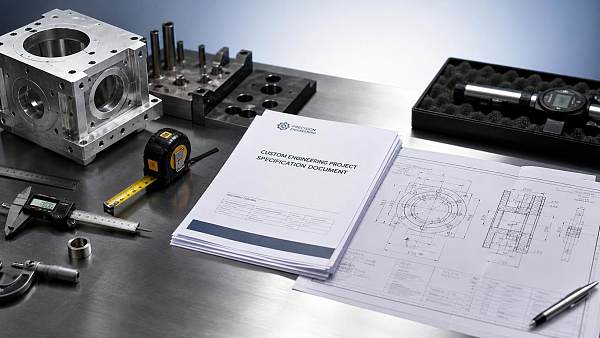
 Aug 15, 2026What to include in specification preparation support for custom projectsSpecification preparation support custom projects helps turn vague requirements into clear, actionable specs that reduce risk, improve procurement, and speed up successful delivery.
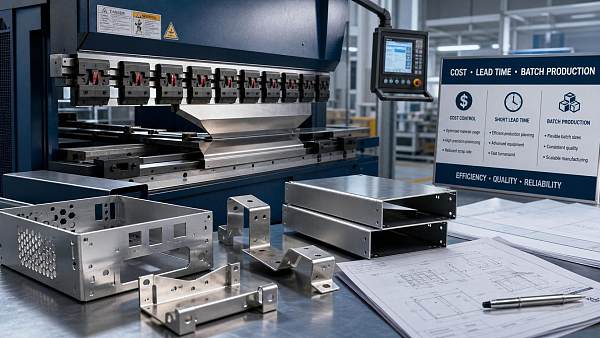
 Jul 02, 2026Sheet Metal Bending Services in Canada: Cost and Lead Time FactorsSheet metal bending services Canada: learn what drives cost and lead time, from material and bend complexity to capacity and quality control, so you can source smarter and reduce delivery risk.
 Jun 25, 2026Returnable Transport Packaging for Automotive Parts: Cost vs Damage ReductionReturnable transport packaging for automotive parts: compare upfront cost vs long-term damage reduction, labor savings, and cleaner line-side delivery in automotive supply chains.
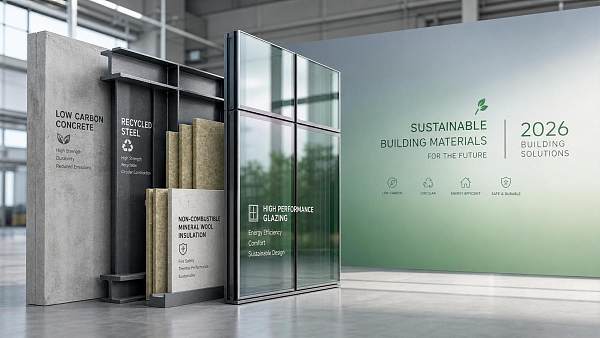
 Jun 23, 2026Sustainable Building Materials: What Performs Best in 2026?Sustainable building materials in 2026: discover which options deliver the best durability, compliance, and lifecycle value for high-performance, future-ready projects.

All Categories
Hot Articles
- How to verify a fire-rated door manufacturer’s product certificationOct 16, 2026Choosing a fire proof doors manufacturer? Learn how to verify certifications, match approved door configurations, and spot compliance gaps before you buy. Explore the checklist.
- How proof test intervals affect SIL metrics in process safetyOct 15, 2026Explore SIL metrics process safety teams rely on. Learn how proof test intervals affect PFDavg, risk reduction, and test coverage to make better-informed safety decisions.
- How to verify an explosion-proof siren factory's ATEX certificatesOct 14, 2026Verify an explosion proof siren factory's ATEX certificates with practical checks for authenticity, product scope and production conformity. Avoid costly sourcing mistakes before you buy.