Market Forecast
HEPA/ULPA Filters Market Forecast 2026: Demand Signals
As critical manufacturing, life sciences, aerospace, and energy facilities tighten contamination-control requirements, HEPA and ULPA filtration demand is entering a new decision cycle.
This Market Forecast examines the signals shaping 2026 procurement priorities, from semiconductor cleanroom expansion and regulatory pressure to validation, supply resilience, and lifecycle cost.
For information researchers and technical buyers, the focus is no longer only filter efficiency, but verified performance under extreme operating conditions.
Executive view: demand is shifting from replacement buying to risk-controlled filtration strategy
The 2026 HEPA and ULPA filters market is likely to be defined by selective growth rather than broad, uniform expansion.
Demand signals are strongest where downtime, contamination incidents, or regulatory findings carry direct financial and operational consequences.
Semiconductor fabs, biologics manufacturing, battery plants, aerospace clean zones, hospitals, and nuclear-adjacent facilities are raising filtration expectations simultaneously.
The common pattern is not simply higher efficiency, but greater insistence on traceability, testing evidence, installation integrity, and predictable service life.
Researchers comparing market opportunities should separate commodity HVAC replacement demand from mission-critical clean air systems with documented performance requirements.
That distinction matters because premium growth will concentrate around validated filters, engineered housings, monitoring integration, and lifecycle service models.
What searchers are really trying to confirm before 2026 planning
Most users searching this Market Forecast are not looking for a generic definition of HEPA and ULPA filtration.
They want to understand whether demand justifies investment, supplier qualification, capacity planning, or procurement strategy changes before the next budget cycle.
The core questions are practical: which end markets are expanding, which specifications are tightening, and where supplier risks may appear.
They also need to know whether ULPA adoption will accelerate broadly, or remain concentrated in the most contamination-sensitive environments.
For technical buyers, the more urgent concern is whether published efficiency claims survive installation, airflow variation, vibration, chemical exposure, and maintenance cycles.
For researchers, the useful forecast is therefore a signal map, not a single headline growth number detached from application realities.
Demand signal one: semiconductor and advanced electronics remain the strongest premium driver
Semiconductor fabrication is the clearest source of high-value HEPA and ULPA demand heading into 2026.
New fabs, capacity localization, advanced packaging, and contamination-sensitive process nodes all increase the need for controlled airborne particle environments.
Unlike conventional commercial HVAC, semiconductor filtration decisions are tied directly to yield protection and expensive process continuity.
Even small particle excursions can compromise wafer quality, making filter integrity and airflow uniformity more valuable than lowest unit price.
ULPA demand is particularly relevant in critical zones where submicron and ultrafine particles affect lithography, deposition, inspection, or advanced packaging steps.
However, the market should not assume a universal ULPA conversion across every cleanroom function.
Buyers will usually apply ULPA selectively, balancing efficiency against pressure drop, energy use, fan capacity, and maintenance access.
This creates opportunity for suppliers that can support application-specific selection, certified testing, and documentation aligned with cleanroom classification requirements.
Demand signal two: life sciences procurement is being shaped by validation discipline
Pharmaceutical, biotechnology, medical device, and laboratory facilities are also pushing HEPA demand into more evidence-driven procurement patterns.
In these environments, filtration is not only an engineering component; it is part of a regulated contamination-control strategy.
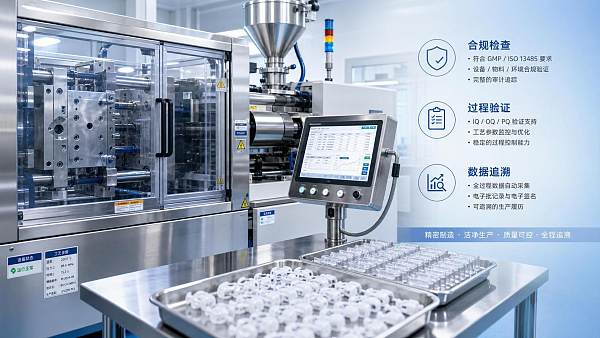
Good manufacturing practice expectations, sterility assurance, and audit readiness make documentation almost as important as physical filter performance.
Buyers increasingly ask for factory test data, leak testing compatibility, installation guidance, and replacement records that withstand quality review.
Facilities producing biologics, cell therapies, injectable products, or sterile devices are especially sensitive to filter failure and maintenance disruption.
For 2026 forecasting, the most attractive demand sits in validated supply programs rather than one-off filter purchases.
Suppliers able to support change control, batch traceability, consistent media sourcing, and clear certification packages will command stronger consideration.
Researchers should watch regulatory enforcement trends because even incremental inspection pressure can accelerate upgrades across controlled environments.
Demand signal three: energy, aerospace, and extreme facilities need robustness beyond laboratory ratings
Critical infrastructure operators are increasingly evaluating filtration under operating stress rather than idealized test conditions.
Energy hubs, aerospace facilities, nuclear-support zones, and harsh industrial sites may face vibration, temperature swings, moisture, chemicals, or explosive atmospheres.
In such settings, a filter’s rating is only one part of the procurement decision.
Frame rigidity, gasket durability, seal reliability, housing compatibility, and resistance to handling damage often determine real-world performance.
For aerospace and defense-related production, contamination control intersects with precision manufacturing, materials protection, and controlled assembly reliability.
For energy and hazardous facilities, filtration may also support worker protection, equipment preservation, or safety-case compliance.
The 2026 opportunity lies in engineered packages that combine filtration performance with documented resistance to site-specific risks.
This is where technical benchmarking, standards mapping, and independent verification become more persuasive than marketing claims.
Why total cost of ownership is becoming a decisive purchasing metric
Filter procurement teams are paying closer attention to total cost of ownership because energy and downtime costs are rising.
A lower-priced filter can become expensive if it increases pressure drop, shortens replacement intervals, or complicates validation work.
For large cleanroom and critical ventilation systems, fan energy consumption may exceed the visible cost of the filters themselves.
Pressure drop stability across the service life is therefore a meaningful performance attribute, not a secondary technical detail.
Facilities also evaluate labor access, disposal requirements, inventory burden, delivery reliability, and shutdown coordination when comparing suppliers.
Procurement teams should model cost across the operating cycle, including qualification, testing, installation, energy, replacement, and failure consequences.
This approach can justify premium filters where validated longevity and stable airflow reduce operational interruptions.
It can also prevent unnecessary overspecification where a lower class filter meets the actual risk profile and regulatory requirement.
HEPA versus ULPA: the 2026 question is suitability, not prestige
HEPA and ULPA filters are often compared as if higher efficiency is automatically the better choice.
In practical procurement, the right answer depends on particle risk, airflow design, energy budget, process sensitivity, and validation burden.
ULPA filters can support more stringent contamination control, but they may create higher resistance and require careful system compatibility checks.
HEPA filters remain sufficient and economically rational across many healthcare, industrial, laboratory, and controlled manufacturing applications.
The 2026 market will likely reward suppliers that help buyers avoid both underperformance and unnecessary specification escalation.
A sound selection process begins with contamination sensitivity, room classification objectives, process risk, maintenance frequency, and acceptable operational disruption.
Researchers should treat HEPA-to-ULPA migration as application-specific, not a blanket trend across the entire filtration sector.
That nuance is important for credible market sizing, supplier screening, and investment analysis.
Supply-chain resilience is now part of filtration risk management
Recent industrial procurement behavior shows that availability can be as important as nominal specification compliance.
Critical facilities cannot always wait for long lead-time filters when production ramps, audits, or emergency replacements occur.
For 2026, buyers will scrutinize media availability, manufacturing capacity, regional warehousing, alternative qualified models, and change-notification discipline.
Supply-chain risk is especially significant when facilities rely on specialized ULPA units, custom dimensions, or tightly validated replacements.
Substitution is rarely simple because even minor construction changes can trigger retesting, documentation updates, or quality review.
Procurement teams increasingly prefer suppliers that maintain transparent production controls and can support multi-site standardization.
This trend creates an advantage for manufacturers with consistent quality systems, regional service networks, and clear qualification support.
Information researchers should include lead-time stability and substitution risk when assessing market attractiveness, not only unit demand.
Regulatory and standards pressure will favor documented performance
Standards and compliance expectations do not create all demand, but they strongly influence purchasing behavior in regulated environments.
Cleanroom classifications, leak testing practices, biosafety expectations, occupational safety rules, and facility-specific validation protocols all shape filter decisions.
Buyers want evidence that products align with applicable ISO, GMP, EN, IEST, or local regulatory expectations.
For global operators, documentation consistency across regions reduces audit friction and simplifies multi-site technical governance.
Regulatory pressure also affects aftermarket demand because filters must be replaced, retested, and recorded within controlled maintenance systems.
Suppliers that provide clear certificates, test methods, serial traceability, and installation recommendations reduce compliance workload for buyers.
In 2026, the market premium will increasingly attach to verifiable performance rather than efficiency labels alone.
This fits the broader shift toward engineering resilience in critical systems and extreme operating environments.
How information researchers should evaluate market opportunities
A credible HEPA/ULPA market forecast should begin by segmenting demand according to application criticality and purchasing behavior.
Commodity replacement filters, hospital-grade systems, pharmaceutical cleanrooms, semiconductor tools, and extreme industrial packages follow different decision cycles.
Researchers should map each segment against expansion projects, replacement frequency, regulatory pressure, energy sensitivity, and supplier qualification barriers.
The strongest growth signals appear where all five factors reinforce each other, especially in high-capex manufacturing and regulated production.
It is also useful to distinguish new-build demand from retrofit and maintenance demand because each has different timing.
New fabs and laboratories can create large upfront orders, while installed bases generate recurring demand with qualification lock-in.
Supplier evaluation should include filter media capability, testing infrastructure, customization ability, lead-time performance, and technical field support.
Market numbers without these operational filters can overstate accessible opportunity or underestimate premium segments.
Procurement checklist for 2026 filtration decisions
Technical buyers should start with the contamination risk profile, not the catalog rating.
Define the protected process, required cleanliness level, particle concern, airflow conditions, and consequences of failure before comparing product classes.
Next, verify whether the existing system can support the selected filter without unacceptable energy, noise, or airflow penalties.
Review pressure drop curves, frame construction, gasket design, scan testing compatibility, and installation constraints in the actual facility context.
Ask suppliers for documentation that supports audits, including test reports, serial traceability, material consistency, and change-control communication.
For critical sites, evaluate the supplier’s ability to support emergency replacement, regional delivery, and multi-year standardization.
Finally, model total cost of ownership rather than only comparing filter unit prices.
This checklist helps buyers align filtration decisions with resilience, compliance, and operational continuity objectives.
Market outlook: where 2026 growth is most likely to concentrate
The strongest 2026 demand signals point toward premium, validated, and application-specific HEPA and ULPA filtration solutions.
Semiconductors and advanced electronics will likely remain the highest-value driver, supported by cleanroom expansion and yield protection needs.
Life sciences will sustain demand through validation discipline, sterility requirements, and recurring maintenance within regulated environments.
Aerospace, energy, and extreme industrial facilities will add specialized opportunities where robustness, safety, and documentation matter.
General HVAC replacement will continue, but it is less likely to define the strategic market narrative.
The main commercial shift is toward filtration as a risk-control system rather than a disposable component.
That shift supports suppliers offering verified performance, engineering consultation, stable supply, and lifecycle services.
For researchers, the key is to measure not only volume, but specification intensity and qualification complexity.
Conclusion: the useful forecast is about decision signals, not just demand volume
The HEPA/ULPA filters market forecast for 2026 should be read through the lens of critical-system resilience.
Demand is being shaped by contamination sensitivity, regulatory pressure, cleanroom investment, energy economics, and supply-chain reliability.
The most valuable opportunities will not simply come from selling more filters into existing channels.
They will come from solving buyer concerns around validated performance, operational continuity, audit readiness, and lifecycle cost control.
For information researchers, the practical conclusion is clear: segment the market by risk, not only by filter type.
For technical buyers, the right procurement question is whether the filtration solution protects the process under real operating conditions.
In 2026, credible HEPA and ULPA value will be proven through documentation, engineering fit, and dependable performance after installation.