2026 Machine Vision Systems for Firefighting Bots
TIME
Click count
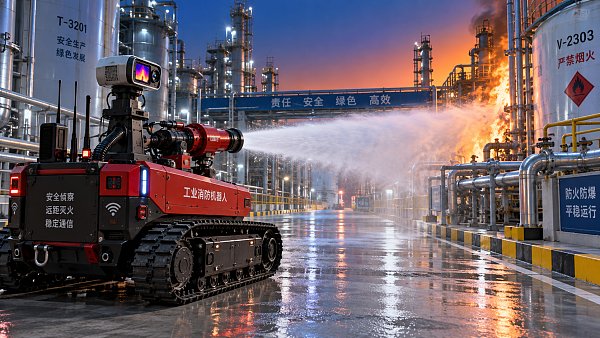
As firefighting robots move from pilot deployments to mission-critical industrial assets, machine vision systems are becoming central to safer, faster, and more autonomous emergency response. For technical evaluators, understanding how 2026 platforms perform under smoke, heat, glare, and low-visibility conditions is essential. This article examines the engineering benchmarks, sensing capabilities, and compliance considerations that define next-generation machine vision systems for firefighting bots.
Why are machine vision systems now a core evaluation point for firefighting bots?
In industrial fire response, navigation alone is no longer enough. A firefighting robot must detect flame fronts, identify blocked exits, classify obstacles, track human presence, and maintain orientation in fast-changing thermal and optical conditions.
That is why machine vision systems have shifted from optional perception modules to primary decision layers. For technical assessment teams, the real question is not whether vision matters, but which sensing architecture remains reliable under operational stress.
This matters across the broader industrial landscape served by G-CSE. Semiconductor plants, battery facilities, petrochemical sites, aerospace test zones, and energy infrastructure all present mixed hazards where heat, smoke, reflective surfaces, and explosion-risk zoning complicate vision performance.
- Low visibility caused by dense smoke, steam, aerosolized chemicals, or suppression agents.
- Severe thermal gradients that distort imaging, damage optics, or reduce sensor stability.
- Dynamic lighting changes from flame glare, emergency strobes, reflective metal, and shutdown events.
- Regulated environments that require alignment with ISO, UL, ATEX, or site-specific safety protocols.
G-CSE approaches these systems as part of resilience engineering, not as isolated robotics components. That means benchmarking optics, enclosures, thermal survivability, contamination resistance, and compliance fit against real operating conditions and procurement constraints.
What defines a 2026-ready machine vision systems architecture?
A 2026 platform is usually multispectral rather than single-camera based. Technical evaluators should expect machine vision systems for firefighting bots to combine visible imaging with thermal, depth, inertial, and edge-processing capabilities.
Core sensing layers
- Visible-light cameras for situational awareness, object recognition, and human-readable teleoperation views.
- Thermal imagers for hotspot localization, flame-edge detection, casualty search, and navigation when smoke blocks visible spectrum imaging.
- Depth sensing through LiDAR, stereo vision, or time-of-flight modules for obstacle mapping and corridor reconstruction.
- Inertial and odometry fusion to preserve localization when visual markers disappear.
- Onboard edge AI for real-time inference when communications are degraded or remote bandwidth is limited.
Engineering traits that separate industrial-grade platforms
The difference between a demonstration unit and a field-worthy platform is often found in packaging rather than raw sensor resolution. Lens materials, purge strategies, vibration resistance, ingress protection, and processor thermal management all affect image availability during incidents.
G-CSE frequently evaluates vision packages in relation to adjacent material and protection disciplines. Specialty glass, advanced ceramics, filtration interfaces, and explosion-protection requirements directly influence how long machine vision systems can sustain usable output in hostile environments.
Which technical parameters should evaluators benchmark first?
When comparing machine vision systems, teams often overfocus on megapixels and underweight survivability. The table below highlights practical evaluation parameters for industrial firefighting bots used in critical facilities.
For technical evaluators, this table provides a more realistic shortlist framework than headline camera specifications. In fire robotics, system continuity and perception integrity usually matter more than peak image quality in ideal conditions.
How do machine vision systems perform across different industrial fire scenarios?
Not all fire environments challenge vision in the same way. Selection should follow scenario-specific risk analysis rather than a generic robotics specification sheet.
The following comparison helps map machine vision systems to common industrial response settings relevant to high-value critical infrastructure.
The key insight is simple: one machine vision systems configuration rarely fits every facility. G-CSE helps technical teams align sensor stack choices with facility hazard class, process layout, maintenance burden, and compliance exposure.
What procurement teams often miss during technical comparison
Common gaps in RFQ and pilot-stage evaluation
- Specifying image resolution without defining smoke density, ambient temperature, or required detection distance.
- Accepting lab demonstrations that do not include water spray, soot deposition, or heat-soak conditions.
- Ignoring serviceability of lens covers, purge modules, or sensor replacement cycles.
- Treating compliance as a final paperwork step instead of an early architecture filter.
- Overlooking interoperability with suppression systems, command platforms, and plant digital infrastructure.
For many buyers, the hardest part is not choosing between two camera brands. It is translating an operational hazard profile into measurable acceptance criteria. That is exactly where independent benchmarking and cross-sector engineering intelligence add value.
A practical selection workflow
- Define fire scenarios by fuel type, visibility loss mechanism, and target detection range.
- Map zone restrictions such as explosion protection, contamination control, or electrical safety requirements.
- Set minimum perception tasks, including hotspot finding, path reconstruction, victim detection, and teleoperation support.
- Request evidence of performance degradation curves, not only nominal specifications.
- Evaluate lifecycle support for spare optics, firmware updates, calibration, and enclosure maintenance.
How should standards and compliance shape the decision?
Firefighting bots operate at the intersection of robotics, electrical safety, hazardous-location engineering, and industrial emergency response. That means machine vision systems must be reviewed within a broader compliance context rather than as generic automation hardware.
The table below outlines common compliance lenses technical evaluators should use when screening machine vision systems for critical environments.
Compliance is not only a legal checkpoint. It directly affects material selection, enclosure mass, cooling strategy, and service complexity. G-CSE’s multidisciplinary model is useful here because machine vision systems for firefighting bots rarely succeed without coordination across protection, materials, and operational governance.
Cost, lifecycle risk, and alternatives: what is the smart buying position?
A low upfront price can become expensive if optics foul quickly, thermal shutdowns interrupt response, or spare modules require long lead times. Technical evaluators should compare lifecycle exposure rather than acquisition price alone.
Major cost drivers
- Multispectral sensor stacks and onboard compute hardware.
- High-temperature lens windows, protective housings, and contamination countermeasures.
- Hazardous-area adaptation and certification-related engineering.
- Calibration, firmware maintenance, and fleet-level software support.
- Integration with command systems, plant mapping tools, and emergency procedures.
There are alternatives in some facilities. A simpler teleoperated robot with thermal-only vision may be sufficient for narrow, repetitive corridors. In contrast, high-value sites with mixed obstacles and human rescue requirements usually need fused machine vision systems with stronger autonomy support.
The best buying position is to avoid overengineering where risk is narrow, while refusing under-specified packages in mission-critical zones. That balance depends on verified scenario mapping, not generic robotics marketing claims.
FAQ for technical evaluators assessing machine vision systems
How should we compare thermal-only versus fused machine vision systems?
Thermal-only setups can work in severe smoke and are often attractive for simpler use cases. However, fused machine vision systems usually provide better obstacle interpretation, route planning, and operator awareness, especially in cluttered industrial spaces with reflective equipment and changing geometry.
Which environments need the most ruggedized vision package?
High-heat energy assets, petrochemical processing areas, battery storage zones, and enclosed utility passages usually demand the most ruggedization. The deciding factors are not only heat, but also soot loading, water exposure, chemical contamination, and access limitations for maintenance.
What delivery and implementation risks should we ask about early?
Ask about sensor lead times, replacement optics availability, software revision control, enclosure material sourcing, and site acceptance testing scope. In critical systems, the risk often sits in integration and support logistics rather than in the sensor bill of materials alone.
What is the most common evaluation mistake?
The most common mistake is approving machine vision systems based on ideal-condition demonstrations. If the test plan does not simulate glare, smoke, heat load, and contamination, it says little about real incident performance.
Why work with G-CSE when evaluating firefighting robot vision platforms?
G-CSE is positioned for buyers who need more than a component comparison. Our strength lies in connecting machine vision systems to the wider engineering realities of extreme environments, including specialty materials, filtration interfaces, fire and explosion protection, fastening reliability, and robotic deployment constraints.
For technical evaluators, that means a more disciplined path from specification to decision. We help teams interpret performance claims, align sensor architecture with facility risk, review compliance implications, and benchmark procurement options against international industrial expectations.
- Parameter confirmation for thermal, visible, depth, and enclosure requirements.
- Application-based selection support for semiconductor, energy, petrochemical, aerospace, and enclosed industrial sites.
- Guidance on certification pathways, hazardous-area fit, and documentation expectations.
- Support for delivery planning, spare strategy, maintenance burden review, and lifecycle cost comparison.
- Structured discussion on custom solutions, test criteria, quotation alignment, and project tender readiness.
If your team is screening machine vision systems for firefighting bots in critical infrastructure, contact G-CSE to discuss sensor parameters, scenario-based selection, compliance requirements, delivery timing, sample evaluation scope, or quotation planning. In high-risk environments, a better decision starts with better benchmarks.
Recommended News
 Sep 27, 2026When do service robots make sense for firefighting operations?Service robots for firefighting: learn when they improve responder safety, speed reconnaissance, and protect critical assets in high-risk industrial incidents.
 Aug 04, 2026How to Evaluate Service Robots in Europe for Safety, Compliance, and Site FitService robots Europe buyers: learn how to assess safety, CE compliance, site fit, integration, and maintenance risk before choosing a robot for your facility.
 Jul 26, 2026Service Robots Remote Operation: Key Risks, Latency Limits, and Control BasicsService robots remote operation explained: learn the key risks, latency limits, control basics, and safety factors that determine whether a system is truly field-ready.
 Jul 14, 2026Industrial Robotics for Painting Applications: When Automation Pays OffIndustrial robotics for painting applications can cut rework, improve coating consistency, and reduce safety risk. Learn when automation delivers real ROI and how to assess deployment fit.


All Categories
Hot Articles
- How to verify a fire-rated door manufacturer’s product certificationOct 16, 2026Choosing a fire proof doors manufacturer? Learn how to verify certifications, match approved door configurations, and spot compliance gaps before you buy. Explore the checklist.
- How proof test intervals affect SIL metrics in process safetyOct 15, 2026Explore SIL metrics process safety teams rely on. Learn how proof test intervals affect PFDavg, risk reduction, and test coverage to make better-informed safety decisions.
- How to verify an explosion-proof siren factory's ATEX certificatesOct 14, 2026Verify an explosion proof siren factory's ATEX certificates with practical checks for authenticity, product scope and production conformity. Avoid costly sourcing mistakes before you buy.