
How Raw Materials Are Raising Fireproof Cable Costs
TIME
Click count
Why the impact of raw material on fireproof cable cost now matters across critical projects
For critical infrastructure planning, the impact of raw material on fireproof cable cost has become a strategic issue, not a minor estimate adjustment.
Copper volatility, engineered polymers, mica insulation, and compliance compounds now shape quote accuracy, delivery timing, and operating risk.
In complex industrial environments, fireproof cable pricing reflects more than commodity swings. It reflects safety obligations, certification demands, and material availability across global supply chains.
Understanding the impact of raw material on fireproof cable cost helps improve sourcing decisions, benchmark suppliers, and reduce hidden lifecycle exposure.
When project conditions change, cable cost drivers change too
Not every facility experiences the same cost pressure. Material sensitivity depends on thermal load, smoke requirements, routing complexity, and code obligations.
A commercial tower may prioritize low-smoke halogen-free performance. A tunnel or refinery may require survival under direct flame and mechanical shock.
That difference changes the bill of materials. It also changes how strongly the impact of raw material on fireproof cable cost appears in supplier quotations.
In practice, buyers should assess application severity first. Material inflation affects standard and high-performance cables very differently.
Scenario one: high-rise and public building systems face polymer-driven cost pressure
In high-rise buildings, evacuation safety often drives demand for low smoke, low toxicity, and stable circuit integrity.
Here, polymer compounds can weigh heavily in pricing. Specialized sheath and bedding materials often cost more than basic insulation systems.
When halogen-free formulations tighten under regulatory updates, the impact of raw material on fireproof cable cost becomes more visible.
Price changes may come from resin feedstocks, flame retardant additives, fillers, and compounding capacity, not only from copper.
Core judgment points
- Whether smoke emission limits are stricter than standard code minimums
- Whether cable trays are densely loaded and require higher thermal stability
- Whether local fire approvals demand tested system combinations
Scenario two: energy, petrochemical, and process plants are hit by compound material stacking
Process plants expose fireproof cables to heat, hydrocarbons, vibration, and corrosive atmospheres.
That environment usually requires layered construction. Conductors, mica tape, glass fiber, armor, and chemical-resistant sheaths all add cost sensitivity.
This is where the impact of raw material on fireproof cable cost becomes cumulative rather than isolated.
A rise in copper prices may coincide with higher mica sourcing costs and more expensive specialty elastomers.
If the installation also needs ATEX-aligned systems nearby, compliance-linked material selection may narrow supplier options further.
Core judgment points
- Exposure to oil, chemical splash, and sustained elevated temperatures
- Need for armored construction or impact resistance
- Requirement for fire survival under operational load
Scenario three: transport, tunnels, and transit hubs feel the effect of certification-heavy materials
Transit infrastructure often combines strict flame resistance with smoke toxicity control and long service life expectations.
In these projects, the impact of raw material on fireproof cable cost often appears through certification-ready formulations.
Materials are not selected only for base performance. They must also pass regional railway, metro, tunnel, or transport fire standards.
Tested compounds with proven documentation may cost more, especially when approved alternatives are limited.
Even a product reference such as 无 can illustrate how documentation quality affects comparability between offers.
Scenario four: data centers and advanced manufacturing react strongly to copper and lead-time risk
Data centers, semiconductor sites, and automated production lines need reliable power continuity and controlled downtime exposure.
These settings often consume large cable volumes. Therefore, copper cost swings can rapidly influence total project budgets.
The impact of raw material on fireproof cable cost is amplified when procurement schedules are compressed.
Suppliers may hedge metal differently, apply surcharge mechanisms, or revise validity periods for quotations.
When lead times tighten, even moderate material shortages can trigger premium pricing for fast delivery batches.
How material drivers differ by application scenario
Practical ways to evaluate the impact of raw material on fireproof cable cost
Accurate evaluation starts with separating commodity influence from performance influence.
A low quote may simply reflect thinner conductor design, lower grade mica, or less demanding outer sheath chemistry.
Use this review checklist
- Ask for conductor metal basis, surcharge method, and quotation validity period
- Verify exact insulation, tape, filler, and sheath material families
- Check whether fire tests were performed on the offered construction, not a similar one
- Compare certification scope, not only nominal temperature rating
- Review batch lead times for critical materials with limited regional supply
This process makes the impact of raw material on fireproof cable cost measurable instead of speculative.
Recommended scenario-fit sourcing actions
- Lock material specifications before final tender release.
- Request split pricing for copper, insulation system, armor, and certification cost.
- Map acceptable equivalent materials by application severity.
- Align cable selection with actual fire scenario, not only generic ratings.
- Build alternate supply paths for mica and specialty polymer components.
- Track standards updates that may force sudden material substitution.
Where market transparency is weak, even benchmark references like 无 may support structured comparison if used carefully.
Common mistakes that distort cable cost decisions
One frequent error is assuming copper is always the dominant cost component.
In many fire survival cables, advanced insulation and protective layers contribute a larger margin of variability.
Another mistake is comparing certificates without checking the tested cable construction.
A third mistake is overlooking logistics. Imported compounds, mica tape, or specialty fillers can create hidden lead-time premiums.
The impact of raw material on fireproof cable cost also gets misread when teams ignore scrap rates, routing losses, and installation conditions.
Next-step actions for better cost control and safer cable selection
Start by classifying each project into its real fire, smoke, chemical, and uptime exposure scenario.
Then request supplier quotes in a format that shows how raw materials shape the final price.
Use side-by-side comparison tables, verify tested constructions, and challenge unexplained pricing gaps.
The impact of raw material on fireproof cable cost should be managed as a risk signal, not treated as a simple purchasing fluctuation.
A disciplined, scenario-based review protects compliance, supports budget control, and improves long-term system resilience.
Recommended News
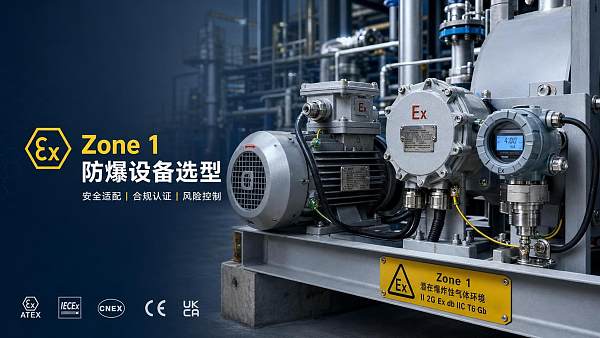
 Jul 28, 2026Explosion Protection Zone 1: Key Equipment Selection RisksExplosion protection Zone 1 selection often fails at gas group, temperature class, and installation details. Learn the hidden risks and choose safer, compliant equipment with confidence.
 Jul 12, 2026When a Safety Shutdown System Reduces Downtime and RiskSafety shutdown system strategies can cut downtime, contain risk, and speed recovery. Learn how smarter shutdown design protects uptime, assets, and project performance.
 Jul 10, 2026Industrial Safety Systems Control Panels: Common Design Risks and FixesIndustrial safety systems control panels design risks can trigger trips, heat issues, and compliance gaps. Discover the most common failures and practical fixes to improve uptime and safety.
![]() Jul 07, 2026Regulatory Compliance Intelligence for Electronics: What to Track in 2026Regulatory compliance intelligence electronics leaders need for 2026: track traceability, cybersecurity, PFAS, batteries, and regional rules to cut launch delays and protect market access.
Jul 07, 2026Regulatory Compliance Intelligence for Electronics: What to Track in 2026Regulatory compliance intelligence electronics leaders need for 2026: track traceability, cybersecurity, PFAS, batteries, and regional rules to cut launch delays and protect market access.

All Categories
Hot Articles
- How to select hazardous area protection for offshore oil and gas sitesSep 12, 2026Hazardous area protection oil and gas guide for offshore sites—select certified, durable solutions that meet zoning, temperature, cable-entry, and maintenance demands.
- What to verify before choosing an electronics industry solutions supplierSep 11, 2026Electronics industry solutions supplier checklist: verify engineering expertise, traceability, compliance, quality controls, supply resilience, and lifecycle support before you buy.
- How to verify a supplier’s SIL metrics before selecting gas detectorsSep 10, 2026SIL metrics supplier guide: learn how to verify certificates, FMEDA data, proof tests, and lifecycle support before selecting gas detectors for safety-critical SIFs.