Explosion Proof Lighting Wholesale: Price, Certs, Lifespan
TIME
Click count
For procurement teams sourcing explosion proof lighting wholesale, the real buying criteria go far beyond unit price. Certification validity, operating lifespan, maintenance burden, and compliance with hazardous-area standards all directly affect project risk and total cost of ownership. This guide outlines how to compare suppliers, verify certs, and evaluate long-term value for industrial applications where safety and reliability cannot be compromised.
What Buyers Are Really Searching For When They Compare Explosion Proof Lighting Wholesale Options
Procurement teams searching for explosion proof lighting wholesale usually want one practical outcome: a safe, compliant, cost-controlled purchase that will pass technical review and perform reliably in hazardous areas.
They are not simply comparing lamps by wattage or housing style. They are trying to reduce commercial risk, avoid non-compliant products, and secure dependable supply for critical facilities.
In most cases, the core search intent combines three needs. First, buyers want clear pricing logic. Second, they need trustworthy certification evidence. Third, they want realistic lifespan expectations.
For industrial buyers, these three topics are connected. A lower quoted price may hide weaker thermal design, incomplete certification, poor driver quality, or shorter service intervals.
That is why the best explosion proof lighting wholesale decisions are made through total cost of ownership, not through unit price comparison alone.
How Procurement Teams Should Evaluate Price Beyond the Unit Quote
The first quote is rarely the real project cost. Procurement should break pricing into fixture price, shipping, duties, mounting accessories, emergency backup options, spare parts, and future maintenance labor.
Two luminaires can look similar on a quotation sheet while delivering very different lifecycle economics. One may cost more upfront but reduce replacement frequency, shutdown time, and inspection burden.
For hazardous-area installations, price should also be reviewed against compliance exposure. If a supplier cannot provide valid documentation, the apparent savings may become a costly project delay.
A practical procurement model compares at least five cost layers: acquisition, installation, energy use, maintenance, and replacement risk. This gives a more accurate basis for supplier evaluation.
Buyers should also ask whether the quote includes cable glands, brackets, surge protection, battery backup, and packaging suitable for international transit. Missing details often create hidden post-award costs.
When sourcing explosion proof lighting wholesale, volume discounts matter, but they should never be accepted without matching product codes, revision control, and certification scope confirmation.
Why Certification Is the First Technical Gate, Not a Final Paperwork Step
In hazardous environments, certification is not an administrative attachment. It is the evidence that the product was designed, tested, and approved for use in a defined risk category.
Procurement teams should first confirm which certification framework applies to the project region and facility specification. Typical references include ATEX, IECEx, UL, CSA, and local electrical codes.
The important detail is that certification is never universal by default. A fixture approved for one market, gas group, temperature class, or zone may not be suitable for another installation.
Buyers should request the full certificate, not only a logo on a datasheet. The certificate number, issuing body, protection method, ambient range, and product model references must align exactly.
It is also important to check whether accessories affect compliance. Different glands, mounting arrangements, emergency modules, or lens options can change the certified configuration.
For example, a luminaire may be listed for Zone 1 or Class I Division 2 in one version, but not in every customized version offered in a wholesale catalog.
What Cert Verification Should Look Like in a Real Procurement Process
A robust verification workflow is straightforward. Start by asking for the latest certificate, test report summary, marking details, and factory quality audit evidence.
Next, cross-check the certificate with the issuing authority database whenever possible. Procurement should not rely only on a PDF supplied by the vendor or trading intermediary.
Then verify the exact model code. Many disputes happen because the certified base model differs from the quoted product variant, power rating, battery option, or optical configuration.
Ask whether the manufacturer maintains ongoing production conformity. Valid certification depends not only on initial testing, but also on quality system control and traceable manufacturing consistency.
Finally, involve engineering or EHS stakeholders before award. A short pre-purchase compliance review can prevent expensive rework, site rejection, or insurance complications later.
For high-value projects, buyers should document every cert check in the procurement file. This creates a defensible audit trail and strengthens internal compliance governance.
How to Judge Lifespan Realistically Instead of Trusting Marketing Claims
Many suppliers advertise very long operating life, often expressed as 50,000 or 100,000 hours. Procurement teams should treat these numbers as directional until test basis and operating conditions are clarified.
LED chip life alone does not define fixture life. In hazardous-area luminaires, driver reliability, thermal management, seals, housing integrity, and vibration resistance often determine actual service life.
A better question is not simply, “What is the rated life?” It is, “Under what ambient temperature, duty cycle, and enclosure condition was that life claim derived?”
Heat is especially important. Explosion proof housings are built for containment and protection, but enclosed structures can intensify thermal stress if the fixture is poorly engineered.
Procurement should request lumen maintenance data such as L70 or L80 projections, driver MTBF information, ambient temperature limits, and warranty conditions tied to operating environment.
If the installation is in refineries, chemical processing lines, offshore modules, grain handling sites, or paint plants, real-world stress factors may reduce lifespan versus laboratory assumptions.
Which Product Factors Most Directly Affect Long-Term Value
Not every specification has equal commercial importance. For buyers, the most meaningful factors are usually certification scope, ingress protection, corrosion resistance, thermal design, and driver quality.
Housing material matters in corrosive or marine conditions. Aluminum alloys, stainless steel options, powder coating quality, and lens material all influence durability and maintenance frequency.
Ingress protection should be reviewed together with washdown exposure, dust loading, and humidity conditions. A high IP rating helps, but seal quality and assembly consistency are equally important.
Optical efficiency also affects value. Better light distribution can reduce the number of fixtures required, cutting installation hardware, wiring labor, and energy usage across the project.
Surge protection and electrical resilience deserve close attention in unstable power environments. A cheaper luminaire may fail early if drivers are not designed for industrial power quality realities.
Buyers should also consider serviceability. If replacement components, mounting access, or emergency battery modules are difficult to handle, maintenance costs rise over the asset lifecycle.
Supplier Assessment: How to Separate Manufacturers from Trading Risk
In the explosion proof lighting wholesale market, procurement teams often encounter both direct manufacturers and trading companies. Either can be viable, but transparency is essential.
Buyers should ask who owns the certification, who manufactures the product, and who controls quality assurance. A distributor can add value, but unclear ownership creates risk in warranty and compliance matters.
It is wise to assess production capacity, lead-time stability, export experience, and documentation discipline. These often matter more than small differences in initial pricing.
Ask for factory audit records, sample traceability practices, incoming material control, and nonconformance handling procedures. Serious suppliers should be able to answer these questions clearly.
For long-term supply agreements, procurement should also review revision control. Engineering changes in drivers, LEDs, or housings must not quietly alter certified performance after approval.
A strong wholesale partner should provide not only products, but also technical submittals, packing consistency, project labeling, and responsive support for compliance checks.
Questions Procurement Should Ask Before Issuing a Purchase Order
Before placing an order, buyers should ask a structured set of questions. These questions help expose hidden risk faster than broad discussions about quality or reputation.
First, what hazardous-area standard does the product meet, and for which zones, divisions, gas groups, and temperature classes? Request written confirmation linked to the exact model.
Second, what is included in the quoted price? Clarify brackets, cable entries, batteries, emergency functionality, surge protection, and spare components.
Third, what is the documented operating life under the project’s real ambient temperature range? Ask for supporting test basis, not only brochure language.
Fourth, what warranty terms apply, and what voids them? This is especially important where high ambient heat, corrosive atmospheres, or continuous operation are expected.
Fifth, what is the supplier’s lead time, and how are production slots protected for repeat orders? Procurement stability matters in shutdown-driven or multi-site deployment schedules.
Common Buying Mistakes in Explosion Proof Lighting Wholesale
One common mistake is selecting by price per unit without checking certified configuration. This can lead to project rejection when actual accessories or options fall outside approval scope.
Another mistake is comparing products with inconsistent technical bases. A lower-cost model may have different housing grade, lower surge resistance, narrower ambient range, or reduced warranty protection.
Buyers also sometimes overlook maintenance access. In hazardous locations, every replacement event can involve permits, downtime, and safety procedures, making cheap fixtures expensive over time.
Another frequent issue is assuming all “explosion proof” language means the same thing globally. In reality, zone systems, division systems, and approval bodies differ by market and application.
Finally, some teams fail to involve operations or EHS early enough. Procurement works best when technical validation happens before the purchase order, not after goods arrive on site.
How to Build a Smarter Evaluation Matrix for Wholesale Sourcing
A practical evaluation matrix helps buyers compare suppliers on more than cost. It also improves internal alignment between procurement, engineering, safety, and finance teams.
Useful scoring categories include certification validity, exact application fit, supplier credibility, lifespan evidence, warranty terms, lead time, after-sales support, and total landed cost.
Weighting matters. For hazardous-area lighting, certification and application fit should carry more value than small price differences, because compliance failure has outsized operational consequences.
It is also useful to score documentation quality. Suppliers that provide clear drawings, cert packs, labeling data, and revision histories usually create smoother project execution.
If the sourcing program is global, add region-specific compliance readiness and spare-part availability to the matrix. This helps standardize decision-making across multiple facilities.
Using this structured approach, procurement can justify decisions internally and reduce the risk of choosing a supplier based on incomplete or misleading comparisons.
Final Takeaway for Procurement Teams
When sourcing explosion proof lighting wholesale, the best decision is rarely the lowest quote. The right choice is the product and supplier combination that minimizes compliance risk and lifecycle cost.
Price matters, but only when viewed alongside valid certs, realistic lifespan data, thermal performance, maintenance burden, and supply-chain reliability. These factors determine true project value.
For procurement professionals, the most effective path is clear: verify certification directly, compare total cost of ownership, challenge unsupported lifespan claims, and assess supplier discipline carefully.
In hazardous industrial environments, lighting is a safety-critical asset. A disciplined sourcing process protects budgets, project schedules, and operational integrity at the same time.
If buyers approach evaluation with this lens, they will make stronger, safer, and more defensible purchasing decisions in the explosion proof lighting wholesale market.
Recommended News
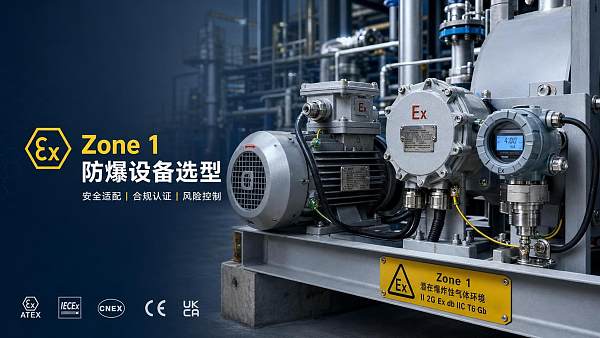
 Jul 28, 2026Explosion Protection Zone 1: Key Equipment Selection RisksExplosion protection Zone 1 selection often fails at gas group, temperature class, and installation details. Learn the hidden risks and choose safer, compliant equipment with confidence.
 Jul 12, 2026When a Safety Shutdown System Reduces Downtime and RiskSafety shutdown system strategies can cut downtime, contain risk, and speed recovery. Learn how smarter shutdown design protects uptime, assets, and project performance.
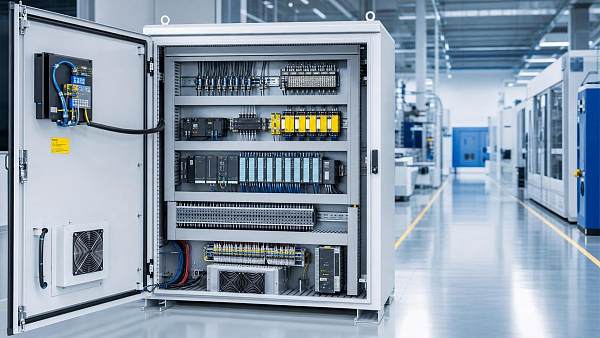
 Jul 10, 2026Industrial Safety Systems Control Panels: Common Design Risks and FixesIndustrial safety systems control panels design risks can trigger trips, heat issues, and compliance gaps. Discover the most common failures and practical fixes to improve uptime and safety.
![]() Jul 07, 2026Regulatory Compliance Intelligence for Electronics: What to Track in 2026Regulatory compliance intelligence electronics leaders need for 2026: track traceability, cybersecurity, PFAS, batteries, and regional rules to cut launch delays and protect market access.
Jul 07, 2026Regulatory Compliance Intelligence for Electronics: What to Track in 2026Regulatory compliance intelligence electronics leaders need for 2026: track traceability, cybersecurity, PFAS, batteries, and regional rules to cut launch delays and protect market access.


All Categories
Hot Articles
- How to select hazardous area protection for offshore oil and gas sitesSep 12, 2026Hazardous area protection oil and gas guide for offshore sites—select certified, durable solutions that meet zoning, temperature, cable-entry, and maintenance demands.
- What to verify before choosing an electronics industry solutions supplierSep 11, 2026Electronics industry solutions supplier checklist: verify engineering expertise, traceability, compliance, quality controls, supply resilience, and lifecycle support before you buy.
- How to verify a supplier’s SIL metrics before selecting gas detectorsSep 10, 2026SIL metrics supplier guide: learn how to verify certificates, FMEDA data, proof tests, and lifecycle support before selecting gas detectors for safety-critical SIFs.