
Biometric Safes: Failure Risks Before You Buy
TIME
Click count
Biometric safes promise fast, controlled access, but reliability under pressure matters more than convenience.
Before specifying biometric safes for offices, industrial sites, laboratories, or critical asset storage, failure risks require careful technical review.
Sensor degradation, power loss, false rejection, environmental exposure, and weak override mechanisms can turn access control into operational delay.
This guide explains how biometric safes should be assessed beyond marketing claims, with attention to resilience, serviceability, and long-term security value.
Biometric Safes in Practical Security Architecture
Biometric safes are secure storage units that use physical identity traits to authorize access.
Most biometric safes rely on fingerprint recognition, although some advanced systems use vein, facial, or multi-factor authentication.
The appeal is simple: no shared keys, fewer remembered codes, and faster access during urgent conditions.
However, biometric authentication is not the same as mechanical security.
A strong safe body can still fail operationally if the access system performs poorly.
For this reason, biometric safes should be evaluated as combined mechanical, electronic, software, and human-interface systems.
The biometric module only controls authorization. The locking mechanism, relockers, hinges, boltwork, and cabinet construction still define physical resistance.
Reliable biometric safes therefore balance recognition speed with low error rates and robust fallback access.
Current Industry Concerns Around Biometric Safes
The use of biometric safes is expanding across commercial, institutional, and industrial environments.
Growth is driven by asset traceability, internal access control, and the need to reduce key circulation.
Yet the same environments often expose biometric safes to dust, vibration, humidity, chemical residue, and irregular maintenance.
These conditions make consumer-grade assumptions risky for professional use.
High-quality biometric safes disclose more than opening speed.
They provide measurable performance data, environmental limits, test references, and maintenance requirements.
Core Failure Risks Before Purchase
Sensor Degradation and Surface Contamination
Fingerprint sensors in biometric safes can degrade through scratches, oils, dust, solvents, or repeated abrasive cleaning.
In industrial or laboratory settings, gloves, dry skin, residue, and moisture can reduce image quality.
Capacitive sensors may react differently than optical sensors under contamination.
Ultrasonic sensors may offer better subsurface reading, but cost and integration quality vary.
Biometric safes should specify sensor type, cleaning method, operating temperature, and expected service life.
Power Loss and Battery Design
Many biometric safes depend on batteries for authentication, actuator movement, display functions, and alarms.
A drained battery should not create a permanent lockout or force destructive entry.
Preferred designs include early warning alerts, external power terminals, protected battery compartments, and nonvolatile credential storage.
Battery chemistry also matters in cold rooms, outdoor structures, mobile units, or emergency storage points.
Biometric safes installed in remote areas need a documented battery replacement schedule.
False Rejection and User Variability
False rejection occurs when an authorized user is denied access.
This risk increases with worn fingerprints, cuts, dust, wet hands, aging skin, or poor enrollment quality.
Biometric safes should allow multiple enrolled fingers per user where policy permits.
Enrollment should be performed slowly, using clean sensors and consistent positioning.
A low false rejection rate is especially important where safes store emergency keys, controlled tools, or response equipment.
False Acceptance and Matching Thresholds
False acceptance occurs when the system grants access to an unauthorized biometric sample.
Biometric safes with fast opening claims may use less strict matching thresholds.
Speed must be balanced against acceptable security tolerance.
Review whether the manufacturer publishes FAR values and explains the testing environment.
For higher-risk storage, biometric safes should support PIN-plus-biometric or card-plus-biometric modes.
Override Mechanisms and Bypass Exposure
Every access system needs a recovery path.
The problem arises when override keys are poorly protected or mechanically weak.
Some low-grade biometric safes include simple tubular keys or exposed keyways behind thin covers.
That design can defeat the purpose of biometric access.
A serious safe should protect emergency override through restricted key control, sealed access, logging, and documented authorization procedure.
Application Value in Operational Environments
When properly selected, biometric safes can improve accountability without slowing routine access.
They are useful where many authorized users need controlled access to shared assets.
Unlike shared PIN codes, biometric credentials are harder to casually transfer.
This supports clearer auditability, especially when the safe records event logs.
Biometric safes can also reduce rekeying costs after staff changes or lost keys.
User removal is usually faster than mechanical key recovery.
The strongest business value appears when biometric safes are integrated into access policies, maintenance routines, and incident response plans.
- Faster authorized access for controlled items.
- Reduced dependence on shared keys and common PINs.
- Improved traceability when audit logs are available.
- Simpler credential removal after role changes.
- Better policy alignment for sensitive asset storage.
These benefits depend on product quality and installation context.
Biometric safes should never be selected only by capacity, price, or advertised opening speed.
Typical Scenarios and Risk Priorities
Different sites face different failure patterns.
The best biometric safes for an office may not suit a maintenance bay, clinic, workshop, or remote facility.
For harsh locations, biometric safes may require sealed electronics, reinforced mounting, and independent access recovery.
For high-turnover settings, user enrollment and deletion must be simple, traceable, and protected by administrator controls.
Specification Criteria That Reduce Failure Risk
A reliable specification should treat biometric safes as engineered systems, not convenience products.
Start with the asset value, access urgency, threat model, environment, and expected user population.
Then compare products against measurable criteria rather than general descriptions.
- Request FAR and FRR data with test assumptions clearly stated.
- Confirm sensor type, coating durability, and approved cleaning methods.
- Check battery life, warning behavior, and emergency power options.
- Review override design, key control, and bypass resistance.
- Verify event logs, administrator roles, and credential deletion process.
- Match safe body rating to asset value and attack exposure.
- Assess mounting options, anchoring hardware, and tamper detection.
- Require service documentation and spare part availability.
Where applicable, review references to recognized standards for lock performance, fire resistance, burglary resistance, or electronic security.
Biometric safes used near regulated assets may also need alignment with internal compliance controls.
Environmental and Human-Factor Testing
Pre-purchase testing should reflect actual use, not showroom demonstrations.
Biometric safes should be trialed with expected users, lighting, gloves, dust levels, and access urgency.
A short pilot can reveal enrollment issues, awkward sensor placement, or unacceptable denial rates.
Test after repeated openings, low battery warnings, cleaning cycles, and simulated power interruptions.
Also test the recovery process.
Emergency access should be possible, authorized, logged, and protected from casual discovery.
If biometric safes are used across multiple sites, standardize enrollment rules and maintenance checks.
Inconsistent practices can create more risk than the hardware itself.
Practical Purchase Checklist
The following checklist supports a disciplined comparison of biometric safes before final selection.
- Define stored assets and the consequence of delayed access.
- Classify the environment by dust, humidity, temperature, vibration, and cleaning exposure.
- Decide whether biometric-only access is acceptable.
- Prefer multi-factor access for high-value or regulated storage.
- Validate sensor performance with representative users.
- Inspect the override mechanism as a security component, not an accessory.
- Confirm the safe body, lock, and mounting strength match the threat model.
- Document maintenance intervals, battery replacement, and administrator responsibilities.
This process reduces surprises after installation.
It also separates durable biometric safes from devices that only appear secure during simple demonstrations.
Implementation Notes for Long-Term Reliability
Installation quality has a direct impact on security performance.
Even strong biometric safes can be removed if anchoring is weak or the location is poorly chosen.
Place safes where access is convenient but not publicly exposed.
Avoid areas with water spray, corrosive vapor, direct sunlight, or uncontrolled temperature swings.
Keep administrator credentials limited and documented.
Remove inactive users promptly and review event logs on a scheduled basis.
Maintain a sealed record of override access, battery replacement, firmware updates, and service events.
If firmware is updateable, verify update authentication and vendor support policy.
Network-connected biometric safes require additional cybersecurity review.
Connectivity can improve monitoring, but it may introduce remote attack surfaces and data protection obligations.
Final Decision Framework
Biometric safes can deliver strong operational value when evaluated through resilience, not convenience alone.
The best choice is not always the fastest-opening model or the most feature-heavy product.
A sound decision balances physical protection, biometric accuracy, environmental durability, controlled override, and maintenance discipline.
Before purchase, compare biometric safes using real operating conditions and measurable failure criteria.
Request technical evidence, test the access process, and document how failures will be handled.
For critical storage, consider multi-factor authentication and audited emergency access as baseline requirements.
The next practical step is to build a site-specific risk matrix for biometric safes under consideration.
Include access urgency, environment, stored asset value, user count, failure tolerance, and service support.
That disciplined approach turns biometric safes from a convenience purchase into a reliable security investment.
Recommended News
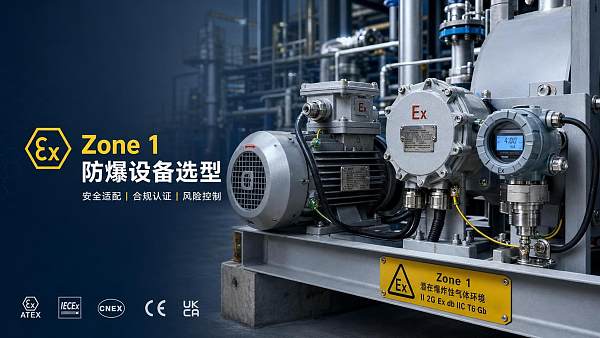
 Jul 28, 2026Explosion Protection Zone 1: Key Equipment Selection RisksExplosion protection Zone 1 selection often fails at gas group, temperature class, and installation details. Learn the hidden risks and choose safer, compliant equipment with confidence.
 Jul 12, 2026When a Safety Shutdown System Reduces Downtime and RiskSafety shutdown system strategies can cut downtime, contain risk, and speed recovery. Learn how smarter shutdown design protects uptime, assets, and project performance.
 Jul 10, 2026Industrial Safety Systems Control Panels: Common Design Risks and FixesIndustrial safety systems control panels design risks can trigger trips, heat issues, and compliance gaps. Discover the most common failures and practical fixes to improve uptime and safety.
![]() Jul 07, 2026Regulatory Compliance Intelligence for Electronics: What to Track in 2026Regulatory compliance intelligence electronics leaders need for 2026: track traceability, cybersecurity, PFAS, batteries, and regional rules to cut launch delays and protect market access.
Jul 07, 2026Regulatory Compliance Intelligence for Electronics: What to Track in 2026Regulatory compliance intelligence electronics leaders need for 2026: track traceability, cybersecurity, PFAS, batteries, and regional rules to cut launch delays and protect market access.

All Categories
Hot Articles
- How to select hazardous area protection for offshore oil and gas sitesSep 12, 2026Hazardous area protection oil and gas guide for offshore sites—select certified, durable solutions that meet zoning, temperature, cable-entry, and maintenance demands.
- What to verify before choosing an electronics industry solutions supplierSep 11, 2026Electronics industry solutions supplier checklist: verify engineering expertise, traceability, compliance, quality controls, supply resilience, and lifecycle support before you buy.
- How to verify a supplier’s SIL metrics before selecting gas detectorsSep 10, 2026SIL metrics supplier guide: learn how to verify certificates, FMEDA data, proof tests, and lifecycle support before selecting gas detectors for safety-critical SIFs.