Industrial Fire Suppression System OEM: What Affects Total Cost
TIME
Click count
Industrial Fire Suppression System OEM: What Affects Total Cost
For teams evaluating an industrial fire suppression system OEM, total cost goes far beyond the quoted unit price.
Engineering scope, hazard profile, certifications, commissioning conditions, and maintenance obligations often decide the real budget.
A structured review helps compare suppliers fairly, reduce lifecycle surprises, and protect critical facilities under demanding operating conditions.
Why a Structured Cost Review Matters
An industrial fire suppression system OEM may offer similar headline pricing, yet final project costs can differ sharply after detailed engineering begins.
This is common in semiconductor plants, battery lines, energy facilities, data halls, chemical process zones, and explosion-risk production areas.
Cost gaps usually come from hidden design assumptions, local code changes, interface complexity, and service requirements after startup.
A checklist approach turns broad vendor claims into measurable review points that support better technical and commercial decisions.
Core Cost Factors to Check Before Comparing Quotes
- Define the fire risk class, fuel source, enclosure volume, and suppression objective first, because system chemistry and discharge logic depend on hazard severity.
- Confirm whether the industrial fire suppression system OEM includes detection, alarm integration, control panels, and shutdown interlocks in the quoted scope.
- Review required standards such as UL, FM, NFPA, ATEX, ISO, or local fire codes, since certification differences directly affect component selection and testing.
- Check customization depth, including nozzle layout, enclosure geometry, agent storage size, and pipe routing, because tailored engineering raises both labor and validation cost.
- Assess site installation conditions like ceiling height, confined access, hazardous zones, and retrofit limits, as these can increase mounting and commissioning hours.
- Verify whether factory acceptance testing, witness testing, and documentation packs are included, especially for regulated sectors requiring traceable compliance records.
- Examine spare parts strategy, refill logistics, and service response times, because lifecycle readiness often becomes a larger cost than initial hardware.
- Ask about software, monitoring, remote diagnostics, and cybersecurity interfaces when suppression systems connect with plant automation or building management platforms.
- Review export packaging, freight class, customs handling, and destination certification support for global projects with multiple commissioning jurisdictions.
- Compare warranty terms carefully, including valve assemblies, detectors, cylinders, and controller electronics, because exclusions often transfer future risk to the buyer.
How Design Choices Change the Real Budget
The largest cost driver is often the chosen suppression method.
Clean agent, water mist, foam, dry chemical, and hybrid systems each carry different equipment, discharge, cleanup, and compliance costs.
For example, clean agent systems may reduce residue and downtime, but agent storage, enclosure integrity testing, and refill expense can be significant.
Water mist may lower agent replacement issues, yet pump skids, water supply assurance, and hydraulic calculations can increase engineering complexity.
An experienced industrial fire suppression system OEM should explain these tradeoffs through performance data, not marketing claims alone.
In some benchmark reviews, reference material appears alongside unrelated placeholders such as 无.
What matters is whether the engineering file clearly links system choice to risk reduction, downtime exposure, and expected operating environment.
Application-Specific Considerations
Battery and Energy Storage Facilities
Battery hazards demand attention to thermal runaway, off-gas detection, ventilation logic, and suppression after reignition risk.
Total cost rises when systems require multi-stage detection, gas sensing, compartmentalization, and integration with emergency exhaust controls.
Semiconductor and Clean Manufacturing Areas
These environments often prioritize contamination control, process uptime, and strict documentation over the lowest installation price.
An industrial fire suppression system OEM serving this sector may need chemical compatibility studies and detailed validation records.
Oil, Gas, and Chemical Processing
Explosion classification, corrosion resistance, outdoor durability, and shutdown sequencing can transform a standard package into a high-spec project.
Material upgrades, redundant controls, and certified hazardous-area components often account for major cost escalation.
Data Centers and Electrical Rooms
Downtime risk is usually more expensive than hardware.
Here, cost evaluation should include false discharge protection, cross-zone detection, room integrity testing, and recovery time after activation.
Commonly Overlooked Cost Items
- Engineering revisions after site survey can add redesign fees, new calculations, and delayed procurement if the initial scope was based on incomplete drawings.
- Third-party approvals may require additional testing, document translation, labeling changes, or local representative support before system acceptance is granted.
- Agent refill access is often ignored, yet remote sites may face long replacement lead times and premium logistics after any discharge event.
- Training, drills, and operating procedures may not appear in the base quote, although they are essential for safe use and audit readiness.
- Interface work with HVAC, power isolation, dampers, conveyors, or process control systems may be excluded and later billed as variation work.
- Documentation depth matters in regulated industries, where as-built drawings, maintenance schedules, and component traceability can consume substantial project hours.
A Practical Method for Comparing OEM Proposals
Start with a normalized bid sheet.
List hazard assumptions, included devices, standards, testing scope, commissioning, warranty, service intervals, and spare parts as separate line items.
Then score each proposal against technical fit, certification readiness, service support, and total lifecycle cost over three to ten years.
This method prevents low upfront pricing from masking higher maintenance burdens or expensive post-installation modifications.
If technical references include neutral placeholders like 无, keep focus on test evidence, installed base, and compliance records.
Execution Tips That Reduce Cost Risk
Freeze the hazard basis early and align it with process engineering, facility operations, and code requirements before detailed design begins.
Request a full inclusion and exclusion matrix from the industrial fire suppression system OEM before purchase order release.
Require factory testing documentation, cylinder data, valve certifications, detector specifications, and controller logic narratives in advance.
For international projects, confirm local authority acceptance pathways early to avoid redesign after equipment shipment.
Build a maintenance budget from day one, including inspections, consumables, calibration, refills, and emergency service support.
Final Takeaway
Choosing an industrial fire suppression system OEM is not only a price decision.
It is a technical, regulatory, and operational decision that affects asset protection, downtime exposure, and long-term budget stability.
The most reliable path is to compare suppliers through a disciplined review of hazard fit, compliance scope, installation realities, and lifecycle support.
When that review is done well, total cost becomes clearer, risk becomes more measurable, and the final system becomes easier to defend internally.
Recommended News
 Sep 01, 2026What is driving Southeast Asia's fire safety market?Explore the fire safety market Southeast Asia: industrial growth, data centers, regulation, insurance, and digital monitoring are reshaping demand and investment opportunities.
 Aug 26, 2026What drives smoke detector false alarm rates in EuropeSmoke detector false alarm rate Europe is shaped by technology, installation, environment, and maintenance. Discover what really drives nuisance alarms and how to reduce risk.
 Aug 21, 2026How to compare industrial fire protection systems in Europe by EN complianceIndustrial fire protection systems Europe: compare EN compliance, certification scope, hazard fit, integration, and lifecycle risk to choose a defensible, high-performance solution.
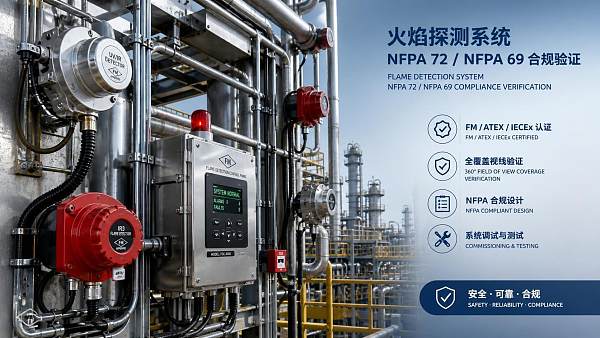
 Aug 20, 2026How to verify flame detection NFPA compliance before system approvalFlame detection NFPA compliance starts with proving design basis, certification, coverage, installation, testing, and records—learn the key checks to speed approval and avoid costly delays.
All Categories
Hot Articles
- How to select hazardous area protection for offshore oil and gas sitesSep 12, 2026Hazardous area protection oil and gas guide for offshore sites—select certified, durable solutions that meet zoning, temperature, cable-entry, and maintenance demands.
- What to verify before choosing an electronics industry solutions supplierSep 11, 2026Electronics industry solutions supplier checklist: verify engineering expertise, traceability, compliance, quality controls, supply resilience, and lifecycle support before you buy.
- How to verify a supplier’s SIL metrics before selecting gas detectorsSep 10, 2026SIL metrics supplier guide: learn how to verify certificates, FMEDA data, proof tests, and lifecycle support before selecting gas detectors for safety-critical SIFs.