
Choosing a Flame Detector OEM Supplier
TIME
Click count
Choosing a Flame Detector OEM Supplier
Choosing a flame detector OEM supplier is a high-stakes decision for safety, compliance, and lifecycle cost control.
In critical facilities, a weak supplier can create blind spots, downtime, false alarms, and expensive retrofit work.
A strong flame detector OEM supplier does more than quote a unit price.
They prove certified performance, stable production, technical transparency, and support across the full operating life.
That matters even more in refineries, battery plants, turbine halls, semiconductor sites, and hazardous storage areas.
This guide breaks down how to assess a flame detector OEM supplier with a procurement lens.
The goal is simple: reduce risk, compare suppliers fairly, and secure lasting value instead of short-term savings.
Start with Risk, Not Price
The first mistake in sourcing is treating all flame detectors as interchangeable.
They are not.
A flame detector OEM supplier must match technology to the real hazard profile.
Different sites need different responses to hydrocarbon fires, hydrogen fires, alcohol flames, or high-background radiation environments.
In practice, that means reviewing the application before comparing commercial terms.
- Define the combustible materials and likely ignition scenarios.
- Review detector placement, distance, and viewing angle constraints.
- Check interference risks from welding, sunlight, hot equipment, or steam.
- Confirm ambient temperature, vibration, corrosion, and enclosure needs.
A capable flame detector OEM supplier should ask these questions early.
If they only discuss discounts, lead times, or catalog models, that is a warning sign.
Verify Certifications and Test Evidence
For any flame detector OEM supplier, documented compliance is non-negotiable.
You need current certificates, test reports, and traceable evidence from recognized bodies.
Depending on the market, that may include FM, UL, ATEX, IECEx, SIL, and marine approvals.
From a procurement standpoint, certificates are only the starting point.
The stronger question is whether the flame detector OEM supplier can show how the product was tested.
- Ask for response time data under realistic fire conditions.
- Review false alarm immunity performance.
- Check field of view, detection range, and fuel-specific sensitivity.
- Confirm environmental testing for dust, humidity, shock, and EMC.
This is where many supplier comparisons become more revealing.
A reliable flame detector OEM supplier will share technical limits clearly, not hide behind broad marketing claims.
Assess Engineering Depth and Product Fit
Not every flame detector OEM supplier has real engineering ownership.
Some assemble generic products with limited control over sensors, optics, or firmware.
That can become a serious issue during qualification, customization, or failure analysis.
A stronger flame detector OEM supplier usually demonstrates engineering depth in several ways.
- They explain detector technology choices, such as UV, IR, or UV/IR combinations.
- They provide application guidance for challenging environments.
- They support integration with control panels, PLCs, and fire suppression systems.
- They manage firmware, diagnostics, and revision control in a disciplined way.
This also affects future flexibility.
If a site needs private labeling, custom output protocols, housing upgrades, or documentation support, engineering ownership matters.
A qualified flame detector OEM supplier should be able to discuss these options without overpromising.
Review Manufacturing Stability and Supply Chain Control
From recent market shifts, supply resilience has become a bigger buying factor.
Even the best design loses value if the flame detector OEM supplier cannot ship consistently.
Procurement teams should look beyond current stock and ask deeper operational questions.
- Where are the key components sourced?
- Are there second-source options for critical parts?
- How are calibration and final testing controlled?
- What are the actual lead times by volume tier?
- How does the supplier handle obsolescence risk?
A mature flame detector OEM supplier will usually have documented quality systems and change control procedures.
They should also be ready to discuss batch traceability, incoming inspection, and end-of-line verification.
This matters because safety products often stay in service for many years.
If replacement parts vanish or revision history is unclear, ownership cost rises quickly.
Compare Total Cost of Ownership
Price pressure is real, but unit price is only one part of the buying equation.
A low-cost flame detector OEM supplier may create higher costs after installation.
More false alarms, shorter service intervals, or complicated maintenance can erase initial savings.
A practical sourcing review should include total cost of ownership factors.
This approach creates a more accurate supplier comparison.
It also helps explain why one flame detector OEM supplier may be better value despite a higher quote.
Examine Service, Documentation, and Responsiveness
In real projects, service quality often separates an average supplier from a dependable partner.
A capable flame detector OEM supplier should support pre-sales, commissioning, and post-installation needs.
That includes documentation quality.
Poor manuals and slow answers delay approvals and increase engineering workload.
- Check datasheets for clarity and revision dates.
- Review installation manuals and test procedures.
- Ask how quickly technical questions are answered.
- Confirm warranty handling and failure return processes.
More importantly, test responsiveness during the bidding stage.
How a flame detector OEM supplier behaves before the purchase usually predicts support after the purchase.
Use a Structured Supplier Evaluation Matrix
To avoid bias, use a weighted scorecard.
This keeps the decision focused on measurable business value.
A typical evaluation for a flame detector OEM supplier may include these categories.
- Compliance and certification strength.
- Application fit and detection performance.
- Manufacturing quality and supply continuity.
- Commercial competitiveness and total cost.
- Technical support and documentation quality.
This is especially useful when comparing global and regional vendors.
It also creates a defensible record for internal approval, audits, and future sourcing reviews.
Final Buying Guidance
The best flame detector OEM supplier is rarely the one with the cheapest first quote.
It is the one that lowers technical risk, supports compliance, and protects lifecycle value.
That means checking certifications, engineering depth, production stability, and service discipline with equal care.
In actual sourcing work, the strongest results come from asking harder questions early.
When a flame detector OEM supplier can answer them with evidence, the procurement decision becomes clearer and safer.
Use this framework to shortlist vendors, compare proposals, and move toward a supplier that can perform long after the purchase order is issued.
Recommended News
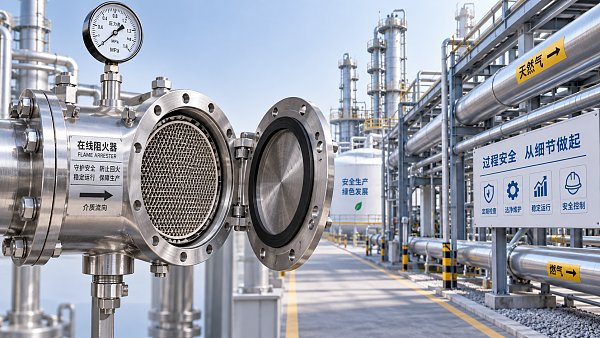
 Sep 17, 2026When does an inline flame arrestor need periodic inspection?Inline flame arrestor inspection: learn the key service conditions, event triggers, and practical maintenance strategies that protect safety and uptime.
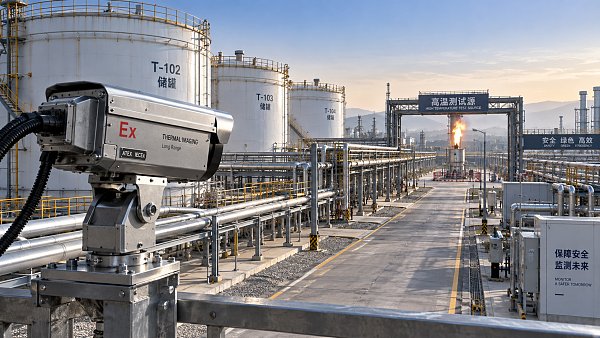
 Sep 16, 2026How to verify a thermal camera supplier’s fire detection distance claimsThermal camera fire detection distance supplier claims: learn how to validate lenses, targets, alarm analytics, and site tests before choosing a solution.
 Sep 01, 2026What is driving Southeast Asia's fire safety market?Explore the fire safety market Southeast Asia: industrial growth, data centers, regulation, insurance, and digital monitoring are reshaping demand and investment opportunities.
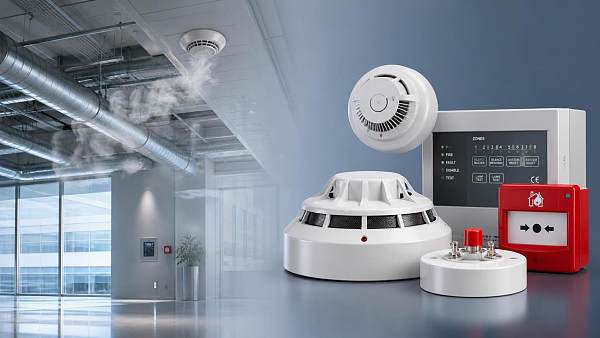
 Aug 26, 2026What drives smoke detector false alarm rates in EuropeSmoke detector false alarm rate Europe is shaped by technology, installation, environment, and maintenance. Discover what really drives nuisance alarms and how to reduce risk.

All Categories
Hot Articles
- How to verify a fire-rated door manufacturer’s product certificationOct 16, 2026Choosing a fire proof doors manufacturer? Learn how to verify certifications, match approved door configurations, and spot compliance gaps before you buy. Explore the checklist.
- How proof test intervals affect SIL metrics in process safetyOct 15, 2026Explore SIL metrics process safety teams rely on. Learn how proof test intervals affect PFDavg, risk reduction, and test coverage to make better-informed safety decisions.
- How to verify an explosion-proof siren factory's ATEX certificatesOct 14, 2026Verify an explosion proof siren factory's ATEX certificates with practical checks for authenticity, product scope and production conformity. Avoid costly sourcing mistakes before you buy.