
How the Hydrogen Economy Is Reshaping Explosion Proofing Requirements
TIME
Click count
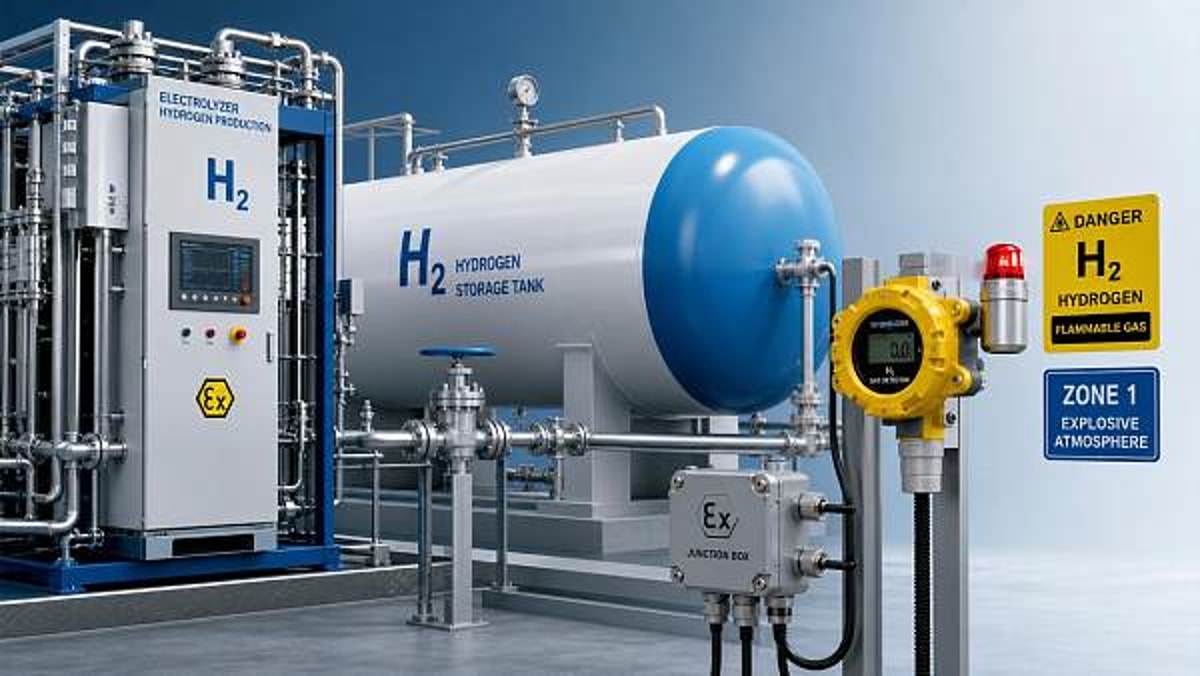
As hydrogen scales from pilot projects to core industrial infrastructure, project leaders must reassess safety design at every level. The impact of hydrogen economy on explosion proofing is no longer theoretical—it is reshaping equipment selection, hazardous area classification, compliance strategy, and lifecycle risk management. For engineering decision-makers, understanding these changes is essential to delivering resilient, regulation-ready facilities in energy, manufacturing, and other high-consequence environments.
Why is the impact of hydrogen economy on explosion proofing receiving so much attention now?
The short answer is scale. Hydrogen is moving beyond demonstration projects into electrolyzer plants, refueling stations, ammonia value chains, fuel-cell logistics, steel decarbonization, and backup power systems. As capital investment rises, so does the need for consistent engineering controls. That is why the impact of hydrogen economy on explosion proofing has become a board-level and project-level issue rather than a niche technical discussion.
Hydrogen changes assumptions that many teams developed around conventional hydrocarbons. It has a very wide flammability range, low ignition energy, high diffusivity, and a small molecular size that can challenge sealing strategies, material integrity, and gas detection placement. In practical terms, this means a facility that appears similar to a natural gas or chemical installation may require different enclosure concepts, venting logic, cable entry design, shutdown philosophy, and inspection routines.
For project managers, the main concern is not abstract chemistry. It is whether the original basis of design still holds when hydrogen is introduced into storage, compression, dispensing, blending, or process integration. Existing explosion-proof selections may not be invalid, but they often need revalidation against hydrogen-specific operating conditions, leak scenarios, and zoning outcomes.
What exactly changes in hazardous area classification when hydrogen becomes part of a project?
Hazardous area classification is one of the first places where the impact of hydrogen economy on explosion proofing becomes visible. Hydrogen leaks disperse quickly, but that does not automatically reduce risk. In partially enclosed spaces, around roofs, under canopies, inside equipment cabinets, or near ceiling-mounted systems, released hydrogen can accumulate in ways that alter zone boundaries and ventilation assumptions.
Compared with heavier gases, hydrogen often pushes engineers to look more carefully at vertical migration, high-point ventilation, roof geometry, and detector location. Classification studies may need to revisit release grades, occupancy, persistence of gas clouds, and the interaction between forced ventilation and abnormal operating modes. For example, a compressor skid in open air may behave very differently from a containerized hydrogen process unit with maintenance access panels and mixed electrical equipment.
Project leaders should also expect more cross-disciplinary coordination. Hazardous area classification for hydrogen is not just an electrical deliverable. It affects mechanical layout, HVAC strategy, control system architecture, emergency isolation, and even civil features such as canopy shape or blast relief pathways. The earlier this coordination starts, the lower the chance of late-stage redesign.
How does hydrogen affect explosion-proof equipment selection compared with conventional fuels?
Hydrogen can trigger a more demanding review of equipment groups, temperature classes, enclosure integrity, cable glands, sealing fittings, sensors, and purge or pressurization systems. The impact of hydrogen economy on explosion proofing is especially strong where teams assume that any existing certified equipment is automatically suitable. In reality, compatibility depends on the gas group, installation context, and lifecycle conditions.
For many applications, gas group requirements become more stringent. Hydrogen is associated with one of the most severe gas group classifications in many standards frameworks, so equipment selected for less demanding atmospheres may not be acceptable. This is particularly relevant for motors, junction boxes, lighting, analyzers, control panels, and field instrumentation near leak sources.
Material and sealing performance also deserve closer scrutiny. Hydrogen service may expose weaknesses in elastomers, threaded joints, valve packings, and repeated maintenance interfaces. Even where the electrical equipment certificate is correct, the installed system can lose practical integrity if cable entries, gaskets, breathers, or purge components are not matched to the hydrogen environment. This is where technical benchmarking and standards interpretation become valuable for procurement teams evaluating alternatives, including reference resources such as 无.
Which project types and operating environments are most affected?
Not every hydrogen-related project has the same risk profile. The impact of hydrogen economy on explosion proofing is strongest where compression, storage, transfer, or enclosed process handling are involved. Project managers should prioritize a deeper review in the following environments:
- Electrolyzer plants with power conversion systems, gas drying, and oxygen-hydrogen separation interfaces
- Hydrogen refueling stations using compressors, dispensers, storage banks, and control kiosks
- Industrial decarbonization projects in steel, glass, chemicals, and refining where hydrogen is introduced into existing assets
- Blending, pipeline, and terminal infrastructure with mixed legacy equipment and new regulatory expectations
- Containerized or modular hydrogen systems where confined volume increases the importance of ventilation and gas detection design
Facilities in harsh climates or remote locations face an added layer of difficulty. Extreme temperatures, dust, salt exposure, and maintenance constraints can all affect the long-term reliability of explosion-proof components. For global projects, regional certification expectations may also differ, making early compliance mapping essential.
What should project managers check first before approving design, procurement, or retrofit decisions?
A practical way to manage the impact of hydrogen economy on explosion proofing is to start with a structured decision screen rather than isolated equipment reviews. The table below summarizes key questions that help teams avoid costly rework.
In procurement reviews, ask vendors not only for certificates but also for installation limitations, seal material details, thermal behavior, and maintenance constraints. A compliant product on paper may still be a poor fit for a rooftop skid, a marine terminal, or a modular fueling package. That is why serious buyers compare documentation depth, not just price or lead time.
What are the most common misconceptions about hydrogen and explosion proofing?
One misconception is that hydrogen’s rapid dispersion always makes it easier to manage than heavier flammable gases. In open, well-ventilated areas, dispersion can reduce persistence, but in partial enclosures and elevated pockets the opposite can happen. Safety design must consider geometry, not just gas properties.
A second misconception is that explosion proofing is purely an electrical issue. The impact of hydrogen economy on explosion proofing is broader: leak prevention, ventilation, process controls, access planning, and operator training all influence whether the explosion-protection concept works in practice.
A third misconception is that retrofits can be handled by swapping a few devices. In many brownfield projects, hydrogen introduction changes zoning, emergency shutdown philosophy, and inspection scope. Teams that underestimate this often face late certification challenges, revised cable routing, or additional shutdown interlocks after procurement has already started.
Finally, some organizations assume compliance is static once equipment is installed. In reality, recurrent maintenance, unauthorized modifications, seal degradation, and undocumented replacement parts can slowly erode the protection concept. Lifecycle governance is therefore part of explosion proofing, not a separate administrative task.
How do compliance, cost, and schedule change as hydrogen projects scale up?
As the hydrogen market expands, compliance pathways are becoming more visible but also more demanding. Project teams must align with applicable frameworks such as ATEX, IECEx, UL-related expectations, local fire codes, process safety requirements, and owner-specific engineering standards. The impact of hydrogen economy on explosion proofing is therefore commercial as well as technical: certification review cycles, vendor qualification, and documentation packages can all influence schedule.
Cost pressure usually appears in three places. First, more stringent certified equipment can carry a premium. Second, design revisions linked to zoning or ventilation can increase package complexity. Third, inspection and training obligations may raise operating expenditure over time. However, these costs are usually lower than the expense of redesign after factory acceptance, delayed approvals, or an incident-driven shutdown.
The smartest programs reduce delay by front-loading engineering decisions. They lock down hazardous area philosophy early, standardize approved component families, and create a clear approval path between process, electrical, mechanical, and EHS stakeholders. Where benchmarking data is needed, teams may also compare supplier evidence and reference architectures, including selective review points associated with 无, to support consistent package-level decisions.
What is the best way to prepare an organization for the impact of hydrogen economy on explosion proofing?
Start by treating hydrogen as a program-level design change, not a component-level substitution. Build a cross-functional review that includes hazardous area classification, materials compatibility, gas detection, ventilation, shutdown logic, maintenance access, and certification strategy. Then create decision gates for concept design, FEED, procurement, factory acceptance, commissioning, and inspection planning.
For project managers and engineering leads, the most useful questions are practical: Which parts of the facility could release hydrogen? Where could gas accumulate? Which installed assets were selected for different gas groups? What documentation will authorities, insurers, and customers ask to see? Which maintenance tasks could unintentionally compromise explosion protection after startup?
The impact of hydrogen economy on explosion proofing will continue to grow as facilities become larger, more modular, and more globally distributed. Organizations that respond early will not only improve safety; they will also shorten approval cycles, reduce retrofit cost, and strengthen confidence with investors, operators, and regulators.
If you need to confirm a specific route forward, prioritize discussion around five points: the intended hydrogen process scenario, the applicable certification regime, the most critical leak and accumulation zones, the documentation expected for procurement approval, and the lifecycle inspection model after commissioning. Those questions usually reveal whether a proposed solution is genuinely fit for purpose or only appears compliant at first glance.
Recommended News
 May 04 2026How the Hydrogen Economy Is Reshaping Explosion Proofing RequirementsImpact of hydrogen economy on explosion proofing: learn how hydrogen is changing hazardous area classification, equipment selection, compliance, and project risk management.
 May 03 2026Intrinsically Safe Electrical Parameters Explained Through Real Device MatchingIntrinsically safe electrical parameters explained with real device matching examples. Learn entity value checks, barrier-to-device compatibility, and how to reduce compliance risk fast.
 May 03 2026Emergency Shutdown Latency Data: When Milliseconds Change System RiskEmergency shutdown latency data reveals how milliseconds affect system risk, compliance, and resilience. Learn the checklist project managers use to compare data, reduce uncertainty, and make safer procurement decisions.
 May 02 2026What to Check Before Choosing a Flame Detector OEM SupplierFlame detector OEM supplier selection starts with certifications, engineering depth, and traceability. Learn what to check to reduce risk, ensure compliance, and choose a reliable partner.


All Categories
Hot Articles
- Fire Pump Flow and Head Data: What to Check Before You Compare SuppliersMay 04 2026Fire pump flow and head data: learn what to verify before comparing suppliers, from rated conditions and test standards to curve fit, compliance, and lifecycle cost.
- Gas Monitor Calibration Frequency: How Often Is Too Often or Not Enough?May 04 2026Gas monitor calibration frequency explained: learn how to set the right interval by sensor type, risk, and environment to improve safety, compliance, and cost control.
- Global Industrial Fire Safety Market 2026: Which Segments Look Most PromisingMay 04 2026Global industrial fire safety market 2026 analysis reveals the most promising segments across energy, batteries, semiconductors, and logistics, helping researchers spot high-growth, compliance-driven opportunities.