
Port Automation Tech for Smart Logistics: ROI Risks to Check
TIME
Click count
Port Automation Tech for Smart Logistics: ROI Risks to Check
Port automation tech for smart logistics is rapidly reshaping how terminals, carriers, and industrial supply chains manage throughput, safety, and asset utilization.
Yet the real challenge is not simply adopting smarter cranes, sensors, robotics, or control platforms.
It is proving ROI under complex operating, compliance, integration, and resilience constraints.
This article examines the key return-on-investment risks that should be assessed before deployment.
The goal is to align automation ambitions with measurable performance, operational continuity, and long-term infrastructure value.
Why ROI Checks Matter Before Automation Deployment
Port automation tech for smart logistics often begins with a compelling business case: higher crane productivity, faster truck turns, lower labor exposure, and improved yard visibility.
However, port environments are not controlled factories. They combine weather, salt corrosion, vessel delays, customs rules, cyber threats, and aging civil infrastructure.
A checklist approach forces investment teams to test assumptions before capital is locked into equipment, software, or long integration programs.
It also separates visible savings from hidden lifecycle costs, especially in mixed fleets, brownfield terminals, and multi-stakeholder logistics corridors.
For critical infrastructure, automation ROI must include uptime, safety compliance, energy reliability, maintenance access, and data governance.
Core ROI Checklist for Port Automation Tech for Smart Logistics
Use the following checklist before approving design, procurement, pilot scaling, or full deployment.
- Define baseline throughput using verified moves per hour, berth occupancy, dwell time, gate cycle time, rehandles, and exception rates.
- Model automation benefits under peak, average, disrupted, and recovery conditions instead of relying on ideal vendor demonstration results.
- Validate civil infrastructure readiness, including pavement load, quay crane rails, power distribution, drainage, wireless coverage, and safe access routes.
- Map integration points between terminal operating systems, equipment control systems, ERP platforms, customs data, and carrier scheduling tools.
- Quantify cyber risk costs, including network segmentation, access control, patch management, incident response, and third-party software assurance.
- Calculate maintenance impacts for sensors, lidar, cameras, batteries, drives, control cabinets, robotic subsystems, and harsh-environment enclosures.
- Check workforce transition costs, including control-room training, safety procedures, emergency overrides, technician upskilling, and operating rule changes.
- Assess safety certification needs for autonomous vehicles, remote cranes, explosion-risk zones, battery rooms, fire protection, and emergency evacuation paths.
- Compare phased deployment options against full conversion, with attention to interface complexity between manual, semi-automated, and automated zones.
- Stress-test ROI assumptions against volume volatility, vessel bunching, tariff changes, labor disruption, energy price movement, and spare-part shortages.
Financial Risks Hidden Behind Productivity Claims
The headline ROI for port automation tech for smart logistics usually highlights faster moves and lower operating cost.
Those gains can be real, but only if the calculation includes transition losses during commissioning and stabilization.
Many terminals experience a temporary productivity dip when automated equipment enters live operations.
This dip should be priced into the payback model, including overtime, vessel delay penalties, and contingency staffing.
Capital cost also extends beyond cranes, AGVs, OCR gates, or yard management software.
Reliable automation may require substations, fiber networks, edge servers, protected control rooms, drainage upgrades, and redundant communication links.
A stronger model separates base CapEx, enabling CapEx, integration cost, downtime cost, and recurring technology cost.
Operational Continuity and Brownfield Complexity
Brownfield ports face a difficult automation problem because existing operations cannot simply stop.
Yard blocks, gate lanes, rail interfaces, and vessel schedules must remain active during installation and testing.
Port automation tech for smart logistics should therefore be evaluated as a staged operational change, not only a technology purchase.
Phasing plans must show how cargo is routed when equipment zones are isolated, software is upgraded, or safety barriers are installed.
Temporary inefficiencies are acceptable if they are forecast, funded, and tied to clear commissioning milestones.
If they are ignored, the ROI case can collapse before automation reaches stable utilization.
Container Terminals
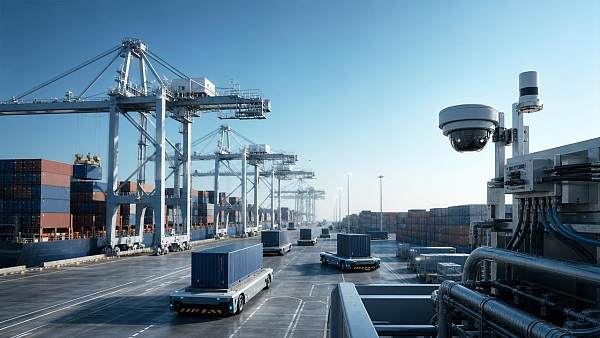
Container terminals usually focus on automated stacking cranes, remote quay crane operation, OCR gates, and terminal operating system optimization.
The main ROI risk is bottleneck relocation. A faster yard may expose weak gate capacity or rail handoff constraints.
Bulk and Energy Ports
Bulk, LNG, chemical, and energy terminals require stricter attention to dust, explosive atmospheres, fire systems, and environmental monitoring.
Here, port automation tech for smart logistics must be aligned with ATEX, IECEx, NFPA, API, or local hazardous-area expectations.
Intermodal and Inland Logistics Nodes
Inland terminals often depend on rail schedules, truck appointment systems, warehouse handoffs, and customs release timing.
Automation ROI improves when data sharing reduces idle assets across the whole corridor, not only inside the terminal fence.
Technology Integration Risks to Review Early
Automation platforms depend on accurate, timely, and trusted data.
If data quality is weak, advanced algorithms can amplify operational errors instead of reducing them.
Before adopting port automation tech for smart logistics, confirm whether master data, asset IDs, container events, and work orders are consistent.
- Audit data latency across OCR, PLC, TOS, fleet management, and control-room dashboards before accepting real-time optimization claims.
- Require open interface documentation, version control discipline, and escalation rules for every connected subsystem and software release.
- Test fallback modes for cranes, AGVs, gates, and scheduling tools when wireless links or central servers fail.
- Verify cybersecurity architecture against operational technology realities, including remote access, vendor support tunnels, and privileged accounts.
Integration risk is often underestimated because each component may pass factory acceptance testing.
The real test is end-to-end performance during live cargo flow, abnormal events, and shift handovers.
Compliance, Safety, and Resilience Factors
Port automation tech for smart logistics must be evaluated against safety and regulatory requirements from the beginning.
Retrofitting compliance after installation creates redesign cost, operating restrictions, and approval delays.
Automated zones need clear segregation, emergency stop coverage, machine guarding, safe maintenance access, and verified human-machine interface procedures.
For hazardous cargo, the ROI model must include rated electrical components, gas detection, fire suppression, ventilation, and inspection regimes.
Extreme weather should also be part of the financial case.
Salt spray, wind, flooding, heat, lightning, and seismic exposure can reduce equipment availability if not engineered into specifications.
Resilience is not a soft benefit. It directly affects demurrage, service reliability, insurance exposure, and asset life.
Commonly Missed ROI Risks
Underestimating exception handling. Automation works best on predictable flows, but ports handle damaged containers, late documents, misdeclared cargo, and urgent vessel changes.
Ignoring energy constraints. Electrified cranes, charging systems, reefer growth, and automated vehicles may require grid reinforcement or on-site energy storage.
Overlooking spare-part lead times. Specialized sensors, drives, controllers, and robotic modules can create long outages if inventory strategy is weak.
Assuming vendor roadmaps equal delivered capability. Features promised in future releases should not be counted as bankable ROI unless contractually verified.
Forgetting governance costs. Port automation tech for smart logistics requires ongoing data ownership rules, cybersecurity reviews, software testing, and performance audits.
Practical Execution Advice
Start with a narrow operational problem, such as gate congestion, yard rehandles, crane idle time, or safety exposure in high-risk zones.
Then select technologies that address that problem with measurable KPIs and realistic data availability.
- Build a digital baseline from at least one operating season, including disruptions, peak periods, maintenance events, and weather impacts.
- Run a controlled pilot with defined stop-go criteria, not an open-ended trial that slowly becomes permanent infrastructure.
- Use independent technical benchmarking to compare vendor claims, environmental ratings, standards alignment, and lifecycle support capability.
- Create a commissioning playbook covering training, emergency fallback, interface testing, cyber validation, and operational acceptance thresholds.
- Review ROI every quarter after launch, using actual throughput, downtime, maintenance cost, safety events, and energy consumption.
A successful program treats automation as an engineered operating system, not a collection of isolated smart assets.
That mindset improves decision quality and reduces the gap between projected ROI and field performance.
Summary and Next Actions
Port automation tech for smart logistics can deliver meaningful gains in throughput, safety, asset utilization, and supply-chain reliability.
Those gains depend on disciplined ROI validation before procurement and continuous measurement after deployment.
The strongest business cases examine infrastructure readiness, integration complexity, compliance obligations, resilience requirements, and lifecycle support.
They also account for transition disruption, exception handling, cybersecurity, workforce adaptation, and energy capacity.
Before committing capital, establish a verified baseline, rank automation opportunities by operational value, and test assumptions under real disruption scenarios.
Then move forward in phases, with clear acceptance criteria and evidence-based governance.
That approach turns port automation tech for smart logistics from a technology upgrade into a resilient infrastructure investment.
Recommended News
 Jun 10, 2026Procurement Intelligence Reports: What to Check Before Vendor ShortlistingProcurement Intelligence Reports reveal compliance gaps, supply risks, and lifecycle cost drivers before vendor shortlisting. Learn what to verify to avoid costly sourcing mistakes.
 Jun 07, 2026How to Audit Your Digital Footprint and Reduce Brand RiskDigital Footprint audits help uncover outdated claims, hidden brand risk, and credibility gaps. Learn practical steps to protect reputation, improve trust, and keep public records accurate.
 Jun 03, 2026Strategic Intelligence Reports: What to CheckStrategic Intelligence Reports need verified evidence, relevant benchmarks, and compliance context. Learn what to check before critical supplier or risk decisions.
 May 30, 2026Port Automation Tech for Smart Logistics: ROI Risks to CheckPort automation tech for smart logistics can boost ROI—but only if risks are checked. Explore key cost, integration, safety, and resilience factors before investing.


All Categories
Hot Articles
- Procurement Intelligence Reports: What to Check Before Vendor ShortlistingJun 10, 2026Procurement Intelligence Reports reveal compliance gaps, supply risks, and lifecycle cost drivers before vendor shortlisting. Learn what to verify to avoid costly sourcing mistakes.
- How to Choose Centrifuge Machines for Throughput and Sample SafetyJun 10, 2026Centrifuge machines selection guide for higher throughput and sample safety. Learn how to balance performance, compliance, contamination control, and lifecycle cost.
- Trade Finance Software Comparison: Features, Costs, and IntegrationJun 10, 2026Trade finance software comparison guide covering key features, total costs, and integration factors to help buyers choose a platform that improves compliance, visibility, and control.