Hazardous Area Safety Investment Trends to Watch in 2026
TIME
Click count
As industrial sites face tighter compliance demands, higher insurance pressure, and more complex risk landscapes, hazardous area safety investment trends are becoming a board-level priority for project leaders. In 2026, the smartest investments will go beyond basic compliance, focusing on resilient system design, certified protection technologies, lifecycle cost control, and data-driven risk reduction across critical operations.
What Project Leaders Need to Know First About 2026 Investment Priorities
For project managers and engineering leads, the core question is no longer whether to invest in hazardous area safety, but where investment will create the strongest operational and financial return.
In 2026, hazardous area safety investment trends will be shaped by stricter enforcement, rising downtime costs, tighter insurer scrutiny, and the growing need to protect complex, high-value assets.
The most effective budgets will prioritize certified systems, risk-based engineering decisions, and upgrade paths that reduce total lifecycle cost rather than only minimizing upfront capital expenditure.
That means buyers will increasingly evaluate safety investments as production continuity tools, insurance control measures, and project-risk reduction assets, not simply as compliance line items.
Why Hazardous Area Safety Is Moving Up the Capital Agenda
Several forces are pushing hazardous area safety higher on the investment agenda across manufacturing, energy, processing, aerospace, and critical infrastructure environments.
First, regulatory expectations continue to tighten. In many regions, authorities are demanding stronger documentation, clearer hazardous area classification, and more defensible equipment selection decisions across the full project lifecycle.
Second, industrial systems are becoming more integrated. A single ignition source, enclosure failure, grounding fault, or filtration issue can now trigger wider operational disruption across automated lines.
Third, insurers are paying closer attention to site-specific controls. Premium pressure, policy conditions, and post-incident scrutiny are making safety engineering quality more visible at the financial level.
Fourth, major owners are facing a talent gap. When experienced hazardous area specialists are limited, organizations invest more in standardized, certified, lower-ambiguity safety solutions.
These factors explain why hazardous area safety investment trends in 2026 will favor solutions that are easier to verify, maintain, audit, and defend under technical review.
Which Investment Areas Will Attract the Most Budget in 2026
Not all safety spending categories will grow at the same rate. Project leaders should expect budget concentration in a few high-impact areas.
Explosion-proof and intrinsically safe electrical systems will remain a core focus, especially where legacy equipment creates compliance gaps or maintenance complexity in classified zones.
Gas detection, flame detection, and integrated monitoring platforms will also attract more capital because they improve early warning capability and support measurable risk reduction.
Ventilation integrity, pressure control, ignition source isolation, and enclosure protection upgrades will gain attention in facilities handling volatile gases, combustible dusts, solvents, and fine particulates.
There will also be stronger investment in certified connection systems, sealing technologies, and fastening solutions that preserve protection integrity under vibration, heat, corrosion, and washdown conditions.
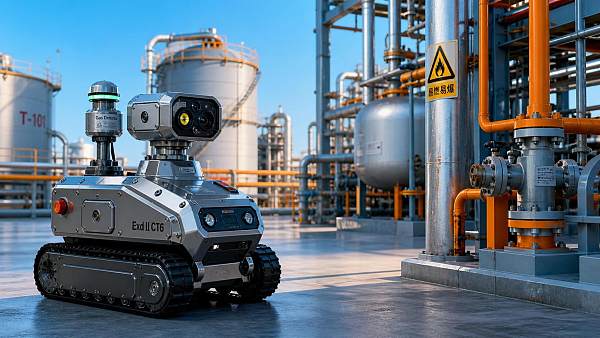
Another growth area is remote inspection and service robotics for extreme environments. These technologies reduce worker exposure while supporting inspection quality in hazardous or access-limited spaces.
Why Compliance-Only Spending Will Lose Ground
One of the clearest hazardous area safety investment trends is the decline of compliance-only thinking. Buying the minimum acceptable solution is becoming harder to justify.
Compliance still matters, but project leaders are being asked to prove that selected systems are fit for actual operating conditions, maintenance realities, and future process changes.
A low-cost device may satisfy a specification on paper, yet create hidden costs through installation complexity, frequent replacement, spare-part fragmentation, or repeated shutdowns for inspection.
As a result, 2026 investment decisions will increasingly favor robust, standardized solutions that support predictable uptime, simpler audits, and lower intervention frequency over time.
This shift is especially important in critical operations where a small safety failure can halt production, damage sensitive assets, or trigger cascading operational losses.
How Buyers Will Evaluate Return on Safety Investment
Project managers rarely struggle to justify that safety matters. The challenge is showing which investment option produces the best return under budget constraints.
In 2026, the strongest business cases will connect hazardous area safety spending to four measurable outcomes: lower downtime risk, lower incident exposure, lower compliance friction, and lower lifecycle maintenance cost.
Downtime reduction is often the most persuasive metric. If a certified protection system prevents one major shutdown in a high-value process environment, the investment case can become obvious.
Lifecycle cost is equally important. Buyers should compare inspection intervals, spare-part availability, service labor burden, recertification requirements, and expected environmental durability before approving procurement.
Insurance impact may also become more relevant. While premium changes vary, better-documented controls and stronger engineering defenses can improve the organization’s risk posture in insurer conversations.
For capital projects, the best approach is to model both direct and indirect cost avoidance rather than looking only at purchase price or installation cost.
Data-Driven Risk Reduction Will Shape Procurement Decisions
Another major shift in hazardous area safety investment trends is the move toward more data-driven safety planning and procurement.
Owners increasingly want evidence that a proposed solution matches the actual risk profile of the site, not just a generic hazard assumption carried over from an older design basis.
This creates demand for better hazardous area classification reviews, digital maintenance records, sensor data integration, event logging, and trend analysis tied to near misses or environmental deviations.
Project leaders can use this information to prioritize spending where risk concentration is highest, where legacy systems create uncertainty, or where failure consequences are most severe.
Data-backed decisions also improve internal alignment. Engineering, operations, procurement, EHS, and finance are more likely to support an investment when the risk logic is visible and quantified.
Why Certified, Standardized Technologies Will Gain Preference
In 2026, buyers will place greater value on certified systems that are easier to benchmark against international standards and easier to deploy across multiple facilities.
For large organizations, standardization reduces engineering ambiguity, streamlines spare strategies, simplifies training, and helps avoid inconsistent safety performance between sites and contractors.
ATEX, IECEx, UL, ISO, SEMI, and related certification frameworks will continue to influence purchasing behavior, especially in globally distributed projects with cross-border compliance exposure.
Standardization also supports faster project execution. When engineering teams work from approved, certified equipment families, design review and procurement cycles become more predictable.
This is why many project owners are moving away from fragmented local selections toward more unified hazardous area safety platforms and approved vendor ecosystems.
Legacy Asset Upgrades Will Be a Bigger Opportunity Than Greenfield Spend
Although new facilities will continue to invest heavily in hazardous area safety, many of the most immediate opportunities in 2026 will come from brownfield upgrades.
Older plants often contain mixed generations of electrical protection, incomplete documentation, outdated zoning assumptions, and maintenance practices that no longer match current operational intensity.
These environments present higher hidden risk and often offer strong returns from targeted upgrades such as certified enclosures, cable glands, detection systems, grounding improvements, and inspection modernization.
For project leaders, brownfield work requires careful planning because site constraints, production continuity demands, and undocumented modifications can affect installation and commissioning schedules.
However, where shutdown costs are high, even modest safety upgrades can deliver outsized value by reducing failure points and improving audit readiness.
How Insurance and Corporate Governance Are Changing the Conversation
Hazardous area safety is increasingly discussed in governance and financial terms, not only in technical or EHS language.
Boards and senior leadership now expect clearer visibility into operational resilience, incident exposure, and the adequacy of controls protecting critical production and infrastructure assets.
At the same time, insurers and underwriters are asking more detailed questions about ignition prevention, maintenance discipline, detection coverage, and the quality of documented engineering controls.
This means project managers need to present safety investments as part of a broader resilience strategy that protects output, reputation, insurability, and stakeholder confidence.
The more hazardous area safety can be linked to continuity planning and asset protection, the easier it becomes to secure cross-functional support for capital allocation.
What Project Managers Should Look for When Comparing Solutions
When evaluating vendors or technical options, project managers should move beyond catalog claims and focus on decision factors that affect performance in real operating conditions.
Start with certification validity and application fit. Equipment should match the specific gas, dust, temperature, pressure, corrosion, and cleaning conditions expected in the target zone.
Next, review installation complexity. A technically sound product can still create project risk if commissioning requires rare skills, long shutdown windows, or difficult field modifications.
Maintenance requirements matter just as much. Ask how often inspection is needed, what common failure modes look like, and whether replacement parts are globally available.
Also assess integration. Detection, alarms, controls, filtration, enclosure systems, and connection hardware should work together without creating documentation or interface gaps.
Finally, examine vendor support quality. In hazardous environments, the difference between a supplier and a technical partner can strongly affect long-term performance and compliance confidence.
Common Mistakes That Can Undermine Safety Investment Value
Even well-funded projects can miss the mark if procurement and engineering teams approach hazardous area safety too narrowly.
A common mistake is choosing equipment on unit price alone without accounting for downtime exposure, maintenance burden, and recertification complexity over the system life.
Another mistake is treating area classification as fixed and unquestionable, even when process changes, throughput increases, or new materials have altered the actual hazard profile.
Organizations also lose value when they buy high-quality certified devices but install them within weak supporting systems, such as poor sealing, inadequate mounting, or inconsistent inspection procedures.
Finally, some projects fail to align safety investment with long-term site strategy. If expansion, automation, or stricter customer requirements are likely, short-term choices may age badly.
A Practical 2026 Investment Framework for Decision-Makers
For project leaders planning next-year budgets, a practical framework can help convert broad trends into actionable priorities.
First, identify the operations where hazardous failure would create the highest combination of safety, downtime, and asset-loss impact. These zones should drive early investment focus.
Second, separate mandatory compliance gaps from strategic upgrade opportunities. Not every urgent issue offers the same operational return, so ranking matters.
Third, compare options on total lifecycle value rather than acquisition cost. Include installation effort, maintenance intervals, training needs, expected service life, and audit defensibility.
Fourth, favor solutions with strong certification, traceability, and standardization potential across multiple assets or sites. This improves scalability and reduces long-term complexity.
Fifth, build internal alignment early. Procurement, operations, engineering, EHS, and finance should share the same decision logic before the project reaches final approval.
Conclusion: The Smartest 2026 Investments Will Combine Safety, Resilience, and Cost Discipline
The most important takeaway from hazardous area safety investment trends in 2026 is that the market is moving beyond minimum compliance toward resilient, verifiable, lifecycle-focused protection strategies.
For project managers and engineering leaders, the winning approach is to invest where safety controls also strengthen uptime, simplify governance, support insurance confidence, and reduce uncertainty around critical assets.
Certified technologies, data-driven prioritization, brownfield upgrades, and standardized system architectures will likely outperform fragmented, price-led purchasing decisions.
In a more demanding regulatory and operational environment, hazardous area safety investment is no longer just a defensive necessity. It is a strategic engineering decision with direct business value.
Recommended News
 Sep 12, 2026How to select hazardous area protection for offshore oil and gas sitesHazardous area protection oil and gas guide for offshore sites—select certified, durable solutions that meet zoning, temperature, cable-entry, and maintenance demands.
 Sep 07, 2026Choosing service robots for extreme environments in hazardous areasService robots for extreme environments hazardous areas: learn how to select certified, reliable systems that improve safety, resilience, and mission performance.
 Aug 28, 2026How loud should a hazardous area siren be to remain audible?Hazardous area siren sound level: learn how to set audible alarm targets, account for ambient noise and distance, verify ATEX/IECEx compliance, and prove coverage in the field.
 Aug 24, 2026How regulatory compliance intelligence reduces export compliance riskRegulatory compliance intelligence helps project teams reduce export compliance risk, avoid delays, and protect global delivery with faster, smarter compliance decisions.
All Categories
Hot Articles
- How to select hazardous area protection for offshore oil and gas sitesSep 12, 2026Hazardous area protection oil and gas guide for offshore sites—select certified, durable solutions that meet zoning, temperature, cable-entry, and maintenance demands.
- What to verify before choosing an electronics industry solutions supplierSep 11, 2026Electronics industry solutions supplier checklist: verify engineering expertise, traceability, compliance, quality controls, supply resilience, and lifecycle support before you buy.
- How to verify a supplier’s SIL metrics before selecting gas detectorsSep 10, 2026SIL metrics supplier guide: learn how to verify certificates, FMEDA data, proof tests, and lifecycle support before selecting gas detectors for safety-critical SIFs.