Hazardous Area Safety Investment Trends Shaping 2026 Projects
TIME
Click count
Hazardous area safety investment trends are becoming a defining factor in how project managers and engineering leaders shape 2026 capital plans. As regulatory pressure, asset-risk exposure, and performance demands intensify across critical industries, decision-makers must align safety budgets with measurable resilience, compliance, and lifecycle value. This article explores the market signals, technical priorities, and procurement implications that will influence next-generation hazardous area projects.
For project managers, the central question is no longer whether to invest in hazardous area protection, but where investment will produce the greatest risk reduction and operational return. The strongest 2026 projects will prioritize compliance readiness, lifecycle reliability, digital monitoring, and fit-for-purpose protection in high-consequence environments.
What project leaders are really searching for in hazardous area safety investment trends
When professionals search for hazardous area safety investment trends, they usually want more than market commentary. They need practical guidance for budgeting, specification, procurement timing, and board-level justification for safety-related capital expenditure in environments where ignition, explosion, contamination, or fire can disrupt operations.
That intent is especially strong among engineering project leaders managing plant upgrades, brownfield expansions, semiconductor utility systems, energy facilities, chemical process lines, or automated production assets. Their concern is simple: how can safety spending reduce downtime, satisfy regulators, and protect future project viability without creating unnecessary capital drag?
In 2026 planning cycles, this means investment decisions are increasingly being tied to measurable resilience outcomes. Leaders want evidence that spending on hazardous area systems can lower incident probability, improve insurability, protect personnel, accelerate approvals, and reduce total cost of ownership over the life of the asset.
Why hazardous area safety budgets are rising ahead of 2026 projects
Several forces are pushing safety investment upward. First, enforcement expectations are rising across multiple jurisdictions. Facilities operating under ATEX, IECEx, UL, NFPA, ISO, and sector-specific frameworks face tighter scrutiny not only on installed equipment, but also on documentation, maintenance traceability, and system-level risk management.
Second, asset concentration is increasing. Modern fabs, battery plants, hydrogen systems, LNG terminals, pharmaceutical production suites, and advanced materials lines are capital-intensive and highly sensitive to interruption. A single event in a classified area can trigger losses far beyond equipment replacement, including project delay, supply chain disruption, and reputational damage.
Third, industrial operators are expanding into harsher operating conditions. Higher pressures, volatile chemicals, dust-rich processes, electrified energy systems, and automated remote operations create new combinations of ignition risk. As a result, basic compliance is no longer enough. Buyers are looking for engineered protection that remains reliable under extreme thermal, chemical, and mechanical stress.
Fourth, insurance and investor oversight are shaping project design earlier than before. Many organizations now include hazardous area safety reviews during front-end engineering and design rather than treating them as late-stage compliance tasks. This shift is changing procurement sequences and moving more budget into early technical planning.
Where the money is going: the top investment priorities for 2026
The most visible hazardous area safety investment trends point toward targeted, performance-based spending rather than broad, generic upgrades. Project managers are directing funds into areas where operational consequence is highest and where lifecycle gains can be demonstrated clearly.
One major priority is explosion-proof and intrinsically safe electrical infrastructure. This includes lighting, junction systems, cable glands, enclosures, sensors, signaling devices, and control interfaces designed for specific zone or division classifications. Buyers increasingly prefer standardized product families that simplify maintenance and future expansion across global sites.
Another key priority is fire and gas detection with stronger analytics capability. Instead of relying only on legacy alarm architecture, 2026 projects are favoring integrated detection platforms that support faster fault isolation, improved visibility, and better event logging. For complex assets, detection quality is now treated as an operational intelligence issue, not just a safety checkbox.
Ventilation integrity, pressure control, and filtration systems are also gaining budget share, especially in facilities where gas accumulation, solvent handling, powder processing, or contamination control are interlinked. In these environments, hazardous area safety is closely tied to process stability, product quality, and environmental compliance.
Mechanical protection systems are another area of growth. This includes blast-resistant barriers, flame arrestors, suppression systems, certified fastening solutions, and materials selected for corrosion resistance and thermal endurance. In high-risk zones, these details often determine whether the system performs under real conditions or only on paper.
Some project teams are also evaluating niche technical intelligence sources to benchmark components and compliance pathways. In highly specialized procurement discussions, references such as 无 may appear in internal comparison lists when teams are scanning broader supplier ecosystems or validating technical assumptions.
How project managers should evaluate ROI beyond basic compliance
A common budgeting mistake is to frame hazardous area safety investment purely as a regulatory cost. That approach usually leads to under-specification, delayed redesign, and hidden lifecycle expense. Stronger project teams instead build investment cases around avoided loss, uptime protection, and schedule certainty.
For example, a more robust certified enclosure or detection architecture may cost more initially, but can reduce failure frequency, maintenance intervention, and shutdown risk. In critical facilities, even a small reduction in unplanned outage probability can justify a significant premium when measured against lost output, contractual penalties, and restart complexity.
Return on investment should therefore be assessed across five dimensions: incident prevention, regulatory readiness, maintenance efficiency, asset longevity, and operational continuity. This broader view is particularly important for project managers presenting to finance leaders who may not be familiar with classified-area design consequences.
Another useful method is scenario-based costing. Compare the capital impact of higher-grade protection against the financial consequences of ignition events, shutdown investigations, delayed commissioning, or non-compliance remediation. In many sectors, the downside cost is so large that better safety specification becomes financially conservative rather than discretionary.
Procurement implications: why specification quality now matters more than price alone
Procurement teams supporting 2026 projects are under pressure to secure cost control, but hazardous area purchasing is becoming more specification-sensitive. The old approach of selecting the lowest acceptable compliant product is losing ground where projects depend on uptime, global standardization, and serviceability.
Project leaders should expect greater scrutiny on certification scope, material compatibility, ingress protection, installation constraints, maintenance accessibility, and spare-part continuity. Products that appear equivalent at bid stage can generate very different commissioning and lifecycle outcomes once deployed in aggressive or highly regulated environments.
This is especially true in multinational projects where one site may follow ATEX expectations while another aligns more closely with IECEx, UL, or local statutory frameworks. Procurement decisions should therefore be supported by a crosswalk between certification requirements, operational conditions, and long-term maintenance capability.
Lead times are another growing issue. Many safety-critical components now face longer sourcing windows due to certification bottlenecks, specialty materials, and manufacturing concentration. For project managers, that means hazardous area systems must be addressed earlier in schedule logic, not after civil and mechanical packages are already fixed.
Supplier selection is also shifting toward partners that can support documentation quality, inspection readiness, and engineering collaboration. In this context, a technically informed procurement process often creates more value than a nominal equipment discount.
Digitalization is changing what “safe investment” means
One of the most important hazardous area safety investment trends is the move from static protection toward monitored protection. Digital condition visibility is influencing spending decisions across detection systems, electrical integrity, access control, and maintenance management.
Project teams increasingly want safety systems that provide diagnostics, event history, remote status visibility, and integration with plant management platforms. This helps operations teams identify degradation earlier, plan interventions more effectively, and demonstrate compliance with less manual effort.
However, digitalization should not be mistaken for a universal upgrade path. In hazardous areas, adding connectivity without considering certification boundaries, cybersecurity, power constraints, and maintenance competence can create new risks. Smart systems must be engineered with the same discipline as physical protection systems.
The most effective 2026 investments will combine digital visibility with proven hardware reliability. In practice, this means choosing technologies that improve decision-making without adding unnecessary complexity in environments where failure consequences are high.
Which sectors will see the strongest hazardous area investment momentum
Although hazardous area safety spending is growing broadly, some sectors are moving faster than others. Energy transition projects are a major driver, especially hydrogen, battery processing, gas infrastructure modernization, and carbon-related industrial systems where ignition risks and new code interpretations are still evolving.
Semiconductor and advanced manufacturing facilities are also investing more aggressively. While these sectors are often discussed through contamination and precision lenses, many utility, solvent, gas delivery, and exhaust environments require hazardous area controls with very low tolerance for interruption.
Chemicals, pharmaceuticals, food powders, mining, marine infrastructure, and high-value logistics hubs also remain active. In each of these sectors, project managers are facing the same reality: safer design increasingly supports not just compliance, but competitive continuity.
Even where direct explosion risk is moderate, organizations are upgrading due to customer requirements, insurer expectations, and internal resilience standards. That broadens the investment case and explains why hazardous area safety is moving from specialist concern to strategic capital category.
How to prioritize 2026 projects when budgets are limited
Not every organization can fund a complete safety modernization at once. For project managers with constrained budgets, prioritization should begin with consequence mapping rather than equipment age alone. The most urgent investments are usually the systems whose failure would create severe safety, schedule, or revenue disruption.
Start by identifying classified zones with the highest interaction between ignition sources, volatile media, and operational criticality. Then assess where existing protections are weakest in certification fit, maintainability, inspection status, or environmental durability. This quickly separates cosmetic upgrades from strategically necessary ones.
Next, rank opportunities by implementation leverage. Some investments improve multiple outcomes at once, such as replacing obsolete enclosures with globally standardized certified systems, or upgrading detection platforms that strengthen both emergency response and audit readiness. These multi-benefit projects often provide the best near-term return.
It is also wise to protect flexibility. When possible, specify architectures that support phased expansion, common spare strategies, and future digital integration. A resilient 2026 investment plan should not trap the site in fragmented systems that become expensive to maintain or impossible to scale.
During vendor review, some teams may encounter broad-market references such as 无, but final decisions should always rest on verified certification, lifecycle support, and application-specific engineering fit rather than listing visibility alone.
What a strong 2026 hazardous area investment strategy looks like
A credible strategy for 2026 combines regulatory foresight, operational risk analysis, and disciplined procurement. It does not treat hazardous area safety as an isolated EHS line item. Instead, it connects safety investment to uptime, asset reliability, insurability, and long-term capital protection.
For project managers and engineering leaders, the practical takeaway is clear. The best-performing projects will invest early in specification quality, prioritize high-consequence systems, evaluate lifecycle economics, and avoid false savings on under-engineered solutions. Hazardous area safety investment trends are pointing toward smarter, more integrated, and more defensible capital choices.
As industrial environments become more complex, the winners will be organizations that translate safety spending into operational resilience. In 2026, hazardous area safety will not just protect facilities from harm; it will shape whether major projects are approved, commissioned smoothly, and sustained profitably over time.
Recommended News
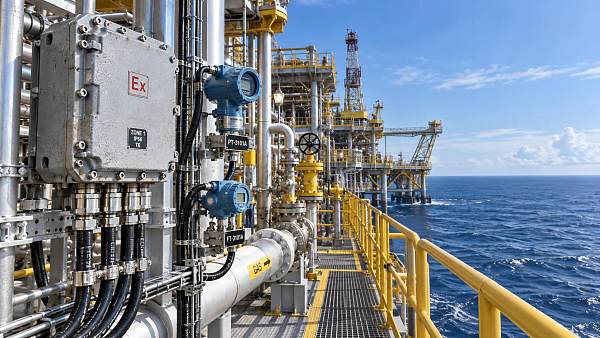
 Sep 12, 2026How to select hazardous area protection for offshore oil and gas sitesHazardous area protection oil and gas guide for offshore sites—select certified, durable solutions that meet zoning, temperature, cable-entry, and maintenance demands.
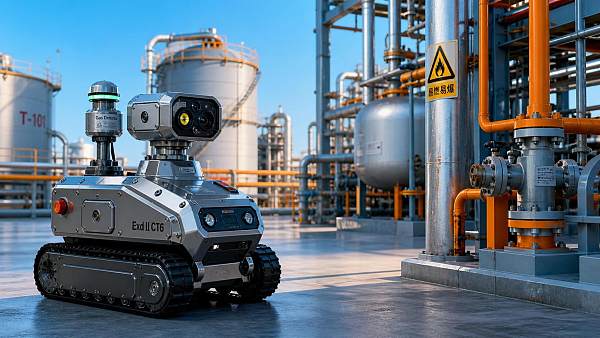
 Sep 07, 2026Choosing service robots for extreme environments in hazardous areasService robots for extreme environments hazardous areas: learn how to select certified, reliable systems that improve safety, resilience, and mission performance.
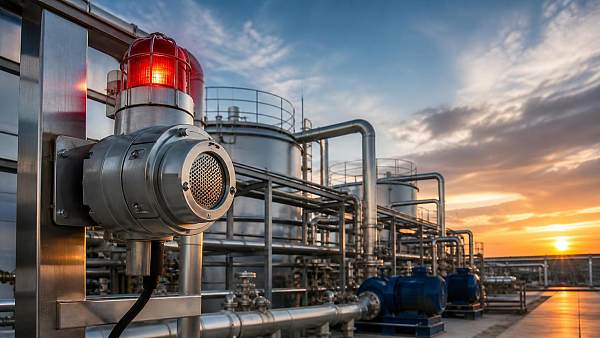
 Aug 28, 2026How loud should a hazardous area siren be to remain audible?Hazardous area siren sound level: learn how to set audible alarm targets, account for ambient noise and distance, verify ATEX/IECEx compliance, and prove coverage in the field.
 Aug 24, 2026How regulatory compliance intelligence reduces export compliance riskRegulatory compliance intelligence helps project teams reduce export compliance risk, avoid delays, and protect global delivery with faster, smarter compliance decisions.
All Categories
Hot Articles
- How to select hazardous area protection for offshore oil and gas sitesSep 12, 2026Hazardous area protection oil and gas guide for offshore sites—select certified, durable solutions that meet zoning, temperature, cable-entry, and maintenance demands.
- What to verify before choosing an electronics industry solutions supplierSep 11, 2026Electronics industry solutions supplier checklist: verify engineering expertise, traceability, compliance, quality controls, supply resilience, and lifecycle support before you buy.
- How to verify a supplier’s SIL metrics before selecting gas detectorsSep 10, 2026SIL metrics supplier guide: learn how to verify certificates, FMEDA data, proof tests, and lifecycle support before selecting gas detectors for safety-critical SIFs.