
Emergency Shutdown Latency Data and Hidden Project Risks
TIME
Click count
Emergency Shutdown Latency Data as a Practical Risk Signal
For critical industrial projects, emergency shutdown latency data reveals far more than response speed.
It exposes hidden links between control architecture, component quality, maintenance discipline, and compliance readiness.
In energy hubs, semiconductor plants, and hazardous processing zones, milliseconds may shape asset loss, restart time, and investigation scope.
This makes emergency shutdown latency data a decision tool for engineering, budgeting, tender review, and project governance.
Within cross-sector benchmarking, G-CSE treats latency evidence as operational intelligence, not just instrumentation output.
Why scenario context changes the meaning of emergency shutdown latency data
The same shutdown delay can carry different consequences across different assets.
A one-second delay in a dust explosion zone is not equivalent to a one-second delay in a clean utility room.
Context determines whether emergency shutdown latency data points to acceptable resilience or a serious project risk.
Important variables include process volatility, ignition sources, pressure profile, human intervention dependency, and regulatory thresholds.
Latency also reflects procurement choices.
Underspecified valves, slow actuators, fragmented controls, or weak diagnostic design often appear first in shutdown timing records.
That is why emergency shutdown latency data should be reviewed early, before commissioning delays become contract disputes.
Scenario 1: Volatile energy facilities where delay becomes escalation risk
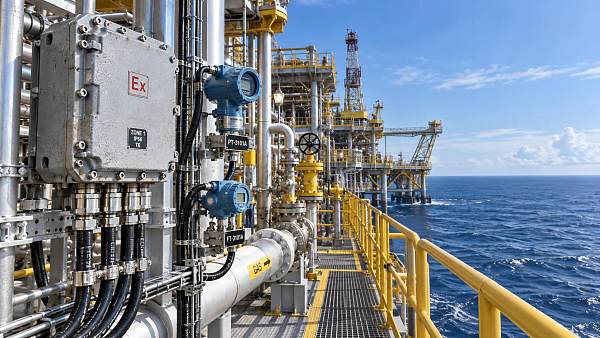
In gas compression, refining, storage terminals, and power infrastructure, shutdown timing directly affects escalation control.
Emergency shutdown latency data here must be tied to pressure release sequencing, flame detection logic, and isolation reliability.
A hidden risk appears when shutdown logic is fast, but mechanical isolation is slow.
This mismatch creates false confidence during FAT or SAT while real field conditions remain exposed.
Another warning sign is inconsistent latency under varying load conditions.
That pattern may indicate unstable power quality, actuator degradation, or poor interface coordination across safety layers.
Core judgment points in energy scenarios
- Is measured shutdown time aligned with hazard analysis assumptions?
- Do final elements respond consistently at temperature and pressure extremes?
- Is emergency shutdown latency data separated by logic, signal, and mechanical action?
- Are ATEX, UL, or local safety requirements influencing response windows?
Scenario 2: Semiconductor and high-tech plants where delay becomes contamination and yield risk
In semiconductor fabrication, shutdown events are not only about fire or explosion.
Emergency shutdown latency data can indicate contamination spread, tool damage, and extended process recovery.
Chemical delivery skids, ultra-pure filtration systems, and vacuum process lines require tightly coordinated isolation.
If one subsystem shuts later than another, particle release or backflow can damage high-value production environments.
Latency analysis in these sites should include communication bus performance, sensor validation logic, and cleanroom recovery impacts.
Even when no safety incident occurs, poor emergency shutdown latency data can signal future yield losses and unplanned downtime.
Core judgment points in semiconductor scenarios
- Does shutdown sequencing protect both personnel safety and process purity?
- Are filtration, gas handling, and exhaust systems time-synchronized?
- Is emergency shutdown latency data mapped against SEMI compliance expectations?
- Can restart protocols recover without hidden contamination events?
Scenario 3: Explosive or extreme environments where delay becomes survivability risk
Mining interfaces, offshore modules, tunnel systems, and remote chemical stations face harsh operating uncertainty.
In these settings, emergency shutdown latency data often reflects environmental stress on sensors, enclosures, connectors, and robotic response systems.
Dust, vibration, radiation, salt fog, and thermal cycling can gradually slow emergency paths.
The project risk is not always visible during design review.
It emerges after installation, when protection systems interact with degraded networks or difficult access conditions.
Emergency shutdown latency data becomes especially valuable when human intervention is limited or impossible.
Core judgment points in extreme scenarios
- Are robotic or remote shutdown functions included in latency records?
- Do connectors and cables maintain response speed after environmental aging?
- Is the data based on laboratory conditions or field-stressed testing?
- Can the shutdown path operate during partial communication failure?
How different scenarios change data needs and review priorities
Scenario-based adaptation steps that reduce hidden project risk
Good decisions require more than asking for a generic shutdown time.
Emergency shutdown latency data should be structured for direct project use.
- Break latency into sensing, logic processing, signal transmission, and final mechanical response.
- Request test evidence under realistic load, temperature, and environmental stress.
- Cross-check shutdown timing against HAZOP, SIL assumptions, and commissioning criteria.
- Compare emergency shutdown latency data across vendors, not only nameplate specifications.
- Include restart implications, because recovery delay can exceed the original shutdown consequence.
- Track timing drift over maintenance cycles to identify aging-related project exposure.
Common misjudgments when reading emergency shutdown latency data
One frequent mistake is accepting a single average value.
Average timing hides dangerous outliers, especially during cold starts, low voltage, or partial failure conditions.
Another mistake is treating software response as the whole event.
In many projects, physical closure or isolation dominates actual exposure time.
A third error is ignoring standards context.
Emergency shutdown latency data without reference to ISO, SEMI, UL, or ATEX obligations may look complete but remain unusable.
The final misjudgment is reviewing shutdown data too late.
By the time field acceptance begins, timing weaknesses often become schedule, rework, and liability problems.
A disciplined next step for high-stakes project decisions
Emergency shutdown latency data should sit beside material benchmarks, filtration performance, explosion protection evidence, and connection reliability records.
That integrated view helps expose design assumptions before they become operational failures.
A practical next step is to build a scenario-specific latency review sheet for every critical asset package.
Include timing breakdowns, test conditions, compliance references, failure modes, and restart impacts.
When emergency shutdown latency data is evaluated this way, it becomes a strategic filter for hidden cost, risk transfer, and resilience quality.
For complex industrial programs, that shift turns raw data into defensible project control.
Recommended News
 Sep 12, 2026How to select hazardous area protection for offshore oil and gas sitesHazardous area protection oil and gas guide for offshore sites—select certified, durable solutions that meet zoning, temperature, cable-entry, and maintenance demands.
 Sep 07, 2026Choosing service robots for extreme environments in hazardous areasService robots for extreme environments hazardous areas: learn how to select certified, reliable systems that improve safety, resilience, and mission performance.
 Aug 28, 2026How loud should a hazardous area siren be to remain audible?Hazardous area siren sound level: learn how to set audible alarm targets, account for ambient noise and distance, verify ATEX/IECEx compliance, and prove coverage in the field.
 Aug 24, 2026How regulatory compliance intelligence reduces export compliance riskRegulatory compliance intelligence helps project teams reduce export compliance risk, avoid delays, and protect global delivery with faster, smarter compliance decisions.

All Categories
Hot Articles
- How to select hazardous area protection for offshore oil and gas sitesSep 12, 2026Hazardous area protection oil and gas guide for offshore sites—select certified, durable solutions that meet zoning, temperature, cable-entry, and maintenance demands.
- What to verify before choosing an electronics industry solutions supplierSep 11, 2026Electronics industry solutions supplier checklist: verify engineering expertise, traceability, compliance, quality controls, supply resilience, and lifecycle support before you buy.
- How to verify a supplier’s SIL metrics before selecting gas detectorsSep 10, 2026SIL metrics supplier guide: learn how to verify certificates, FMEDA data, proof tests, and lifecycle support before selecting gas detectors for safety-critical SIFs.