Industrial Fire Protection Case Studies with Cost Lessons
TIME
Click count
For procurement leaders managing critical assets, industrial fire protection case studies offer more than incident summaries—they reveal how design choices, compliance gaps, and lifecycle costs shape real operational risk. This article examines real-world lessons from high-consequence industrial environments, helping buyers compare protection strategies, avoid hidden costs, and make safer, more defensible sourcing decisions.
What procurement teams are really looking for in industrial fire protection case studies
The core search intent behind industrial fire protection case studies is practical decision support. Buyers are not looking for generic fire safety theory. They want evidence of what works, what fails, what costs more later, and how to avoid selecting protection systems that look compliant on paper but underperform in operation.
For procurement professionals, the most important question is rarely the initial equipment price. It is whether a fire protection solution will reduce downtime, support insurability, meet jurisdictional requirements, and remain maintainable across a long industrial asset lifecycle. Case-based learning is valuable because it translates technical choices into operational and financial consequences.
That is especially true in critical facilities such as semiconductor plants, battery manufacturing lines, petrochemical terminals, data-heavy control environments, and hazardous materials processing units. In these sectors, even a localized ignition event can lead to production losses, contamination, regulatory action, or cascading shutdowns far beyond the fire zone itself.
The main lesson across industrial fire protection case studies is consistent: the cheapest compliant option is often the most expensive ownership decision. Systems that are poorly matched to process hazards, difficult to test, or weakly integrated with shutdown logic create hidden liabilities that procurement teams eventually inherit.
Why cost lessons matter more than equipment price alone
Industrial fire protection budgets are often evaluated through capital expenditure, but case studies show that total cost of ownership is the better framework. The true economic outcome depends on false discharge risk, maintenance burden, spare parts access, inspection complexity, and the cost of production interruption during system impairment or incident recovery.
In many industrial environments, a fire event does not need to become catastrophic to become expensive. A small suppression release in a clean process area may trigger contamination control procedures, batch losses, equipment recalibration, environmental reporting, and extended restart protocols. These downstream costs can exceed the original system purchase by a wide margin.
Procurement teams also need to account for compliance drift. A system may be installed correctly but become vulnerable over time because process conditions change, combustible load increases, equipment layouts evolve, or local code interpretations tighten. Case studies often show that underfunded inspection and change management drive failures more than hardware defects alone.
Viewed this way, cost lessons from industrial fire protection case studies are not just about spending less. They are about buying resilience, reducing uncertainty, and preventing situations where a technically installed system fails to protect business continuity.
Case study pattern 1: Manufacturing facility that under-specified detection coverage
In one common industrial scenario, a high-value manufacturing site selected a suppression package that satisfied baseline requirements but invested too little in detection zoning and early warning integration. The project team treated detection as a secondary scope item rather than the first line of risk control.
When overheating began inside an enclosed production module, the system did not identify the condition quickly enough to support process isolation before flame development. Suppression eventually activated, but not before smoke contamination spread through adjacent equipment and forced a broader shutdown than the original fire footprint warranted.
The direct fire damage was manageable. The major cost came from lost production, contamination cleaning, replacement of sensitive instrumentation, and delayed restart approval. Insurance covered part of the physical damage, but business interruption costs and schedule penalties remained substantial.
The procurement lesson is clear: detection architecture is not an accessory to suppression. Buyers should evaluate detector type, placement logic, environmental tolerance, alarm thresholds, and response integration with ventilation, power isolation, and process shutdown. A lower bid that weakens early detection often creates disproportionate lifecycle exposure.
Case study pattern 2: Hazardous process plant that chose the wrong suppression agent
Another recurring lesson appears in facilities handling flammable liquids, pressurized gases, or reactive chemicals. In these projects, procurement teams sometimes compare systems mainly by acquisition cost without sufficiently validating whether the suppression agent matches the actual fire scenario, enclosure conditions, and process chemistry.
A representative example involves a processing area where the installed suppression approach was acceptable for one class of hazard but less effective for the real ignition pathway that developed during an upset condition. The system activated, yet flame control was incomplete because fuel isolation, agent concentration, and ventilation interaction had not been engineered as a complete package.
The result was not a total system collapse, but a prolonged incident that damaged nearby cable trays, process controls, and structural supports. Recovery required partial replacement of utilities and a lengthy forensic review. The ultimate cost was far greater than the savings achieved during the original sourcing cycle.
For buyers, the lesson is to challenge one-size-fits-all proposals. Industrial fire protection case studies repeatedly show that agent selection must be tied to hazard analysis, occupancy profile, room integrity, ventilation behavior, and re-ignition risk. Procurement decisions should request proof of scenario suitability, not only certification labels.
Case study pattern 3: Warehouse and logistics site with strong hardware but weak maintenance discipline
Some of the most expensive losses occur in facilities that originally purchased reputable systems but failed to preserve performance through inspection, testing, and maintenance. Warehouses, spare parts depots, and industrial logistics hubs are especially vulnerable because storage configurations often change faster than protection systems are updated.
In one typical case, a distribution facility expanded rack density and altered aisle arrangements over time. The sprinkler system had been adequate for the previous commodity mix and geometry, but not for the revised storage profile. Management assumed existing coverage remained acceptable because no major process equipment had changed.
When a fire started in stored materials, suppression response was delayed in practical terms because water distribution no longer aligned with the evolved hazard. Firefighters contained the event, but inventory losses and operational disruption were severe. The site also faced difficult insurer scrutiny after the incident.
The sourcing takeaway is that system value depends on maintainability and governance. Procurement should assess whether the supplier can support inspection intervals, spare component availability, documentation control, and post-modification reassessment. A low purchase price means little if protection performance erodes as operations evolve.
Case study pattern 4: Data-rich control room protected without considering business continuity
Industrial fire protection decisions are often complicated in control rooms, electrical spaces, and process automation centers where the fire hazard is only one side of the risk equation. The suppression method itself can influence downtime, electronics survivability, and restoration speed after discharge.
In a frequently cited project pattern, a facility installed a solution that appeared cost-efficient and technically compliant. However, the procurement process placed insufficient weight on post-discharge recovery requirements. After a localized event, the suppression response prevented escalation, but cleanup and recommissioning took much longer than expected.
The facility avoided a large fire, yet the interruption to operations was still commercially painful because critical control infrastructure remained offline during investigation, replacement, and system reset. In board-level terms, the fire was controlled but the continuity objective was only partially achieved.
This type of case reminds buyers to procure against the real business function of the protected space. In control-intensive industrial environments, decision criteria should include agent cleanliness, equipment compatibility, room sealing requirements, accidental discharge consequences, reset complexity, and restoration timeline.
How procurement teams should read and use industrial fire protection case studies
Not all case studies are equally useful. Some are marketing summaries that highlight dramatic outcomes without explaining root cause, system limitations, or operating context. Procurement teams should prioritize case material that includes hazard profile, facility type, detection and suppression logic, maintenance conditions, and measurable business impact.
A good case study helps buyers answer six practical questions. What was the actual ignition scenario. Was the selected protection strategy suitable. Did integration with other systems work. What caused the financial loss. Which costs were avoidable. What specification changes would likely have improved the result.
It is also important to separate compliance from fitness for purpose. Many failed projects were technically code-aligned at installation. The commercial problem emerged because the design basis was too narrow, assumptions were outdated, or operational changes were not reflected in protection upgrades.
For procurement teams, the value of industrial fire protection case studies lies in turning past incidents into sourcing criteria. The best buyers do not just ask for references. They ask suppliers to explain how their recommendation would perform under realistic site-specific failure modes.
The hidden costs buyers often miss during vendor comparison
Several cost categories are commonly underestimated when comparing fire protection bids. The first is integration cost. A cheaper standalone system may require expensive interface work with alarms, shutdown systems, building controls, and emergency response logic after purchase.
The second is impairment cost. Some systems are harder to test, maintain, or isolate without disrupting operations. If maintenance windows are limited in a high-throughput plant, every hour of impairment has opportunity cost. Procurement should ask how service activities affect production continuity.
The third is environmental and compliance cost. Certain agents, discharge methods, or runoff implications can create reporting obligations, cleanup complexity, or future upgrade pressure as regulations change. These issues may not appear clearly in an initial quotation but become material over time.
The fourth is supplier support risk. In critical assets, response time for spares, field service competence, and documentation quality can be as important as equipment specification. Case studies often reveal that recovery delays are driven not by the incident itself, but by poor support after activation or fault diagnosis.
A practical sourcing framework for safer and more defensible decisions
For procurement leaders, the most defensible approach is to evaluate industrial fire protection through a structured framework rather than unit pricing alone. Start with hazard-specific suitability. Confirm that the proposed system matches fuel type, ignition pathways, occupancy conditions, enclosure behavior, and escalation scenarios.
Next, review system integration in operational terms. How will detection trigger response. What automation is required for power cut-off, ventilation control, fuel isolation, or process interlocks. Can the facility test these sequences reliably without exposing production to unnecessary interruption.
Then assess lifecycle economics. Compare inspection burden, training needs, refill or recharge logistics, spare parts resilience, room integrity testing, and expected restoration time after activation. Buyers should request scenarios showing both routine maintenance cost and cost impact after a plausible incident.
Finally, validate governance and change management. Ask how the vendor supports facility modifications, regulatory updates, periodic revalidation, and insurer engagement. The strongest procurement decision is one that remains robust after the plant changes, not just on the day of commissioning.
What a strong supplier conversation should include
When discussing solutions with vendors, procurement teams should move beyond broad claims such as certified, advanced, or turnkey. Strong supplier conversations are specific. Ask for comparable industrial fire protection case studies tied to your hazard profile, process criticality, and business continuity requirements.
Request documented assumptions behind detector selection, agent choice, discharge timing, enclosure design, and interface logic. Ask what failure modes the supplier considers most credible, and which ones are outside the design envelope. This clarifies whether the proposal is genuinely engineered or merely packaged for compliance.
It is also useful to discuss total event recovery. If the system activates, how long until the protected area can be inspected, reset, and returned to service. Suppliers who understand industrial continuity risk will answer this clearly and support it with references, procedures, and service capability.
These conversations help procurement convert case study lessons into measurable selection criteria. They also create a stronger audit trail for internal approval, insurer discussions, and future capital justification.
Conclusion: the best cost lesson is buying for resilience, not minimum entry price
Industrial fire protection case studies consistently show that the most important procurement decision is not choosing the lowest compliant bid. It is choosing the protection strategy that best aligns hazard reality, operational continuity, maintenance discipline, and long-term business risk.
For critical industrial assets, cost lessons usually emerge from what was not considered early enough: insufficient detection, weak system integration, poor hazard matching, neglected maintenance, or inadequate recovery planning. These are procurement issues as much as engineering issues.
Buyers who use case studies well can sharpen specifications, challenge superficial proposals, and make sourcing decisions that are safer and more economically defensible. In high-consequence environments, that discipline is not just a purchasing advantage. It is a resilience strategy.
Recommended News
 Sep 01, 2026What is driving Southeast Asia's fire safety market?Explore the fire safety market Southeast Asia: industrial growth, data centers, regulation, insurance, and digital monitoring are reshaping demand and investment opportunities.
 Aug 26, 2026What drives smoke detector false alarm rates in EuropeSmoke detector false alarm rate Europe is shaped by technology, installation, environment, and maintenance. Discover what really drives nuisance alarms and how to reduce risk.
 Aug 21, 2026How to compare industrial fire protection systems in Europe by EN complianceIndustrial fire protection systems Europe: compare EN compliance, certification scope, hazard fit, integration, and lifecycle risk to choose a defensible, high-performance solution.
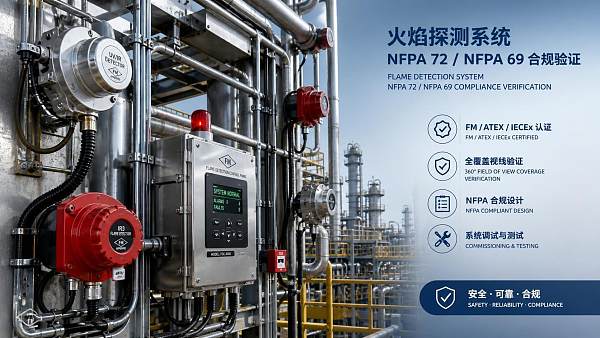
 Aug 20, 2026How to verify flame detection NFPA compliance before system approvalFlame detection NFPA compliance starts with proving design basis, certification, coverage, installation, testing, and records—learn the key checks to speed approval and avoid costly delays.
All Categories
Hot Articles
- How to select hazardous area protection for offshore oil and gas sitesSep 12, 2026Hazardous area protection oil and gas guide for offshore sites—select certified, durable solutions that meet zoning, temperature, cable-entry, and maintenance demands.
- What to verify before choosing an electronics industry solutions supplierSep 11, 2026Electronics industry solutions supplier checklist: verify engineering expertise, traceability, compliance, quality controls, supply resilience, and lifecycle support before you buy.
- How to verify a supplier’s SIL metrics before selecting gas detectorsSep 10, 2026SIL metrics supplier guide: learn how to verify certificates, FMEDA data, proof tests, and lifecycle support before selecting gas detectors for safety-critical SIFs.