
Eco-Friendly Fire Suppressants: 2026 Innovation Outlook
TIME
Click count
Eco-Friendly Fire Suppressants Enter a Strategic Turning Point
As industrial safety standards tighten, fire protection is being redefined by environmental accountability, system intelligence, and lifecycle risk control.
This is why innovations in eco-friendly fire suppressants are moving from niche interest to board-level engineering priority.
Looking toward 2026, the market is no longer asking whether greener suppression agents are viable.
The real question is which solutions can satisfy performance, compliance, and sustainability targets under harsh operating conditions.
Across semiconductor fabs, battery plants, data centers, offshore energy assets, and transport infrastructure, decision frameworks are changing fast.
Innovations in eco-friendly fire suppressants now influence project design, asset resilience, insurance exposure, and cross-border regulatory acceptance.
The 2026 Signal Is Clear: Clean Suppression Must Also Be High Performance
Recent market signals show a decisive shift away from legacy chemistries with high global warming potential, toxic residues, or disposal complexity.
In mission-critical environments, that shift is not driven by marketing language. It is driven by operating risk.
Facilities cannot afford secondary damage from suppressant residues, long downtime, or uncertain compliance exposure.
At the same time, fire scenarios are becoming more complex.
Lithium-ion thermal events, enclosed robotic cells, hydrogen process zones, and high-density electronics all demand more specialized suppression responses.
Therefore, innovations in eco-friendly fire suppressants are increasingly focused on precision discharge, lower toxicity, reduced atmospheric impact, and application-specific effectiveness.
Where the strongest adoption signals are emerging
- Semiconductor and electronics facilities seeking residue-free protection for sensitive equipment.
- Battery manufacturing lines requiring rapid intervention against thermal runaway propagation.
- Data centers balancing personnel safety, uptime, and environmental reporting duties.
- Energy infrastructure needing alternatives compatible with strict hazard zoning and remote operation.
- Transport and aviation support systems pursuing lightweight, lower-impact suppression platforms.
Why Innovations in Eco-Friendly Fire Suppressants Are Accelerating
Several forces are converging at once. Together, they explain why 2026 will likely mark another major transition point.
These drivers are changing procurement logic from agent price alone to full-system resilience and environmental fitness.
The Innovation Pipeline Is Expanding Beyond “Halon Replacement” Thinking
One major shift is conceptual. The industry is moving beyond simple substitution and toward integrated suppression design.
That means agent chemistry, nozzle architecture, sensors, ventilation logic, and enclosure behavior are being optimized together.
The most relevant innovations in eco-friendly fire suppressants for 2026 can be grouped into five directions.
1. Low-GWP clean agents with faster atmospheric breakdown
These options aim to suppress fire without leaving conductive residue while reducing long-term environmental burden.
2. Water mist systems engineered for minimal water damage
Fine droplet control improves cooling efficiency and oxygen displacement while using far less water than conventional sprinklers.
3. Encapsulating foams with improved biodegradability
Next-generation formulations are being developed to address hydrocarbon risks with lower persistence and cleaner disposal pathways.
4. Aerosol and hybrid systems for enclosed industrial assets
Compact systems are gaining attention in cabinets, control rooms, machinery enclosures, and unmanned technical spaces.
5. AI-assisted release logic and zoned suppression
Intelligent control reduces unnecessary discharge and aligns clean suppression with targeted intervention.
This broader innovation field is why innovations in eco-friendly fire suppressants should be reviewed as a system architecture issue, not a commodity issue.
How the Shift Will Affect Critical Business Functions
The transition will not affect every industrial function in the same way. However, several impacts are already visible.
Engineering and design
Early-stage design must account for enclosure tightness, discharge concentration, ventilation shutdown, and post-event recovery.
Compliance and legal review
Cross-border projects will face more documentation demands around emissions profile, toxicity, inspection protocols, and approved use conditions.
Operations continuity
Cleaner suppression options may reduce restoration time, but only if paired with proper detection and maintenance strategies.
Insurance and risk financing
Insurers increasingly examine suppression effectiveness, environmental liability, and failure mode evidence during underwriting.
- Projects with outdated agents may face hidden transition costs.
- Incomplete retrofit planning can create downtime during certification or recommissioning.
- Poor agent-system fit may undermine both safety outcomes and sustainability claims.
What Deserves Close Attention Before 2026 Commitments Are Locked In
Not every green-labelled product will deliver acceptable industrial performance. Due diligence remains essential.
Priority evaluation points
- Fire class suitability for electronics, flammable liquids, battery hazards, or mixed-risk zones.
- Compatibility with UL, FM, ISO, SEMI, ATEX, or site-specific approval requirements.
- Human exposure profile in occupied or intermittently occupied spaces.
- Environmental persistence, disposal obligations, and accidental release consequences.
- Agent refill security, supply chain resilience, and long-term serviceability.
- Detection-response integration with plant automation and emergency shutdown logic.
The strongest 2026 strategies will compare lifecycle value rather than isolated equipment pricing.
That is especially true where critical assets operate continuously and failure recovery windows are narrow.
A Practical Decision Framework for Evaluating Future-Ready Suppression
This framework helps translate innovations in eco-friendly fire suppressants into measurable engineering and governance outcomes.
The Outlook: Smarter, Cleaner, More Verifiable Protection
By 2026, leading fire suppression solutions will likely be judged on four combined qualities.
- Proven extinguishing performance in complex industrial scenarios.
- Lower environmental impact across use, release, and disposal stages.
- Digital traceability for inspection, activation logic, and compliance evidence.
- Adaptability to changing standards and extreme operating conditions.
In that context, innovations in eco-friendly fire suppressants are not just a sustainability trend.
They are becoming a core component of resilient industrial system design.
The next practical step is a gap review of current suppression assets, hazard profiles, and future compliance exposure.
A structured review now can prevent expensive retrofits and improve readiness for the 2026 fire protection landscape.
Recommended News
 Sep 01, 2026What is driving Southeast Asia's fire safety market?Explore the fire safety market Southeast Asia: industrial growth, data centers, regulation, insurance, and digital monitoring are reshaping demand and investment opportunities.
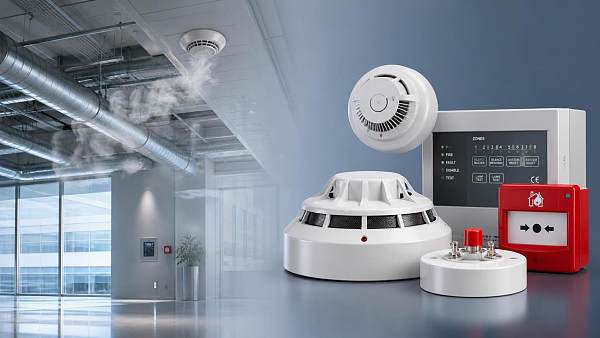
 Aug 26, 2026What drives smoke detector false alarm rates in EuropeSmoke detector false alarm rate Europe is shaped by technology, installation, environment, and maintenance. Discover what really drives nuisance alarms and how to reduce risk.
 Aug 21, 2026How to compare industrial fire protection systems in Europe by EN complianceIndustrial fire protection systems Europe: compare EN compliance, certification scope, hazard fit, integration, and lifecycle risk to choose a defensible, high-performance solution.
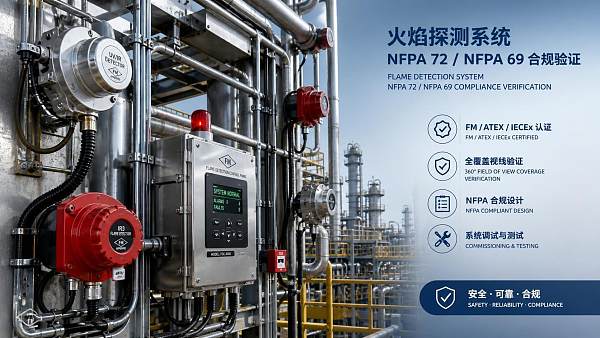
 Aug 20, 2026How to verify flame detection NFPA compliance before system approvalFlame detection NFPA compliance starts with proving design basis, certification, coverage, installation, testing, and records—learn the key checks to speed approval and avoid costly delays.

All Categories
Hot Articles
- How to select hazardous area protection for offshore oil and gas sitesSep 12, 2026Hazardous area protection oil and gas guide for offshore sites—select certified, durable solutions that meet zoning, temperature, cable-entry, and maintenance demands.
- What to verify before choosing an electronics industry solutions supplierSep 11, 2026Electronics industry solutions supplier checklist: verify engineering expertise, traceability, compliance, quality controls, supply resilience, and lifecycle support before you buy.
- How to verify a supplier’s SIL metrics before selecting gas detectorsSep 10, 2026SIL metrics supplier guide: learn how to verify certificates, FMEDA data, proof tests, and lifecycle support before selecting gas detectors for safety-critical SIFs.