
Industrial safety gaps to watch in hazard tech systems
TIME
Click count
Industrial safety gaps in hazard tech systems are no longer isolated technical issues. They are now enterprise-level risk factors that affect uptime, insurability, procurement decisions, compliance exposure, and long-term asset resilience. For organizations operating in high-tech manufacturing, aerospace, and energy infrastructure, the key question is not whether hazard control technologies exist, but whether hidden integration, maintenance, certification, and human-factor gaps are undermining them in practice.
For technical evaluators, procurement teams, safety managers, and project leaders, the most useful way to assess these gaps is to look beyond equipment specifications alone. The real risk often appears at the interfaces: between certified components and non-certified assemblies, between automation logic and field conditions, between inspection routines and actual degradation modes, and between nominal compliance and operational reality. In most cases, the biggest industrial safety gaps are not caused by a complete absence of protection, but by a false sense of protection.
Where industrial safety gaps usually emerge in hazard tech systems
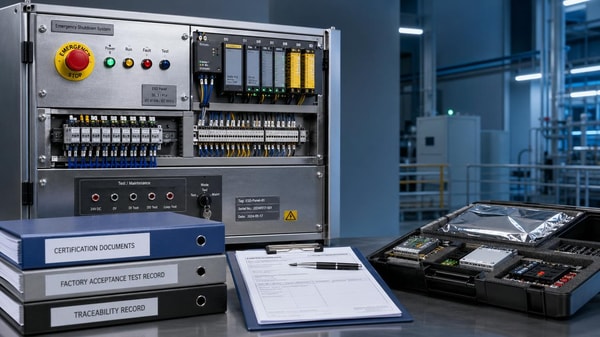
[[IMG:img_01]]In hazard tech systems, safety weaknesses rarely come from a single obvious failure. They usually develop across the lifecycle of design, procurement, installation, operation, and retrofit. This is especially true in environments involving combustible dust, flammable gases, corrosive chemicals, high-pressure media, thermal shock, radiation exposure, or confined automated operations.
The most common safety gaps include:
- Specification gaps: Equipment is selected based on peak performance or price, while environmental stress, failure modes, or hazard zoning are insufficiently defined.
- Certification gaps: Buyers assume a component-level certification automatically validates the full system, even when the assembled configuration changes actual risk behavior.
- Integration gaps: Fire suppression, filtration, robotics, enclosures, fastening systems, and process controls are engineered in parallel but not validated as one hazard-managed system.
- Maintenance gaps: Inspection intervals follow standard schedules, while real duty cycles, contamination loads, vibration profiles, or thermal extremes accelerate degradation.
- Human-machine gaps: Operators and maintenance teams interact with alarms, lockout procedures, override logic, and emergency responses under conditions that differ from original design assumptions.
- Change-management gaps: Retrofits, supplier substitutions, software updates, and line expansions alter safety behavior without triggering a full revalidation.
For decision-makers, this means that hazard tech systems should be reviewed as living operational ecosystems, not as static collections of compliant products.
What target readers should examine before trusting a “compliant” system
For information researchers, technical assessment teams, and procurement leaders, the most important practical question is simple: What evidence shows that the system is safe in the conditions we actually operate in?
A useful review framework should include the following checks:
- Hazard definition accuracy: Has the organization clearly mapped ignition sources, pressure events, contamination risks, thermal excursions, mechanical shock, and failure propagation scenarios?
- Standards alignment: Are relevant ISO, UL, ATEX, SEMI, or sector-specific requirements applied correctly to both individual equipment and the final integrated system?
- Interface validation: Have material compatibility, electrical interfaces, sealing integrity, grounding continuity, filtration loading, or robotic movement envelopes been tested under realistic process conditions?
- Evidence quality: Is the safety case based on traceable test reports, third-party certification, field performance records, and documented engineering assumptions rather than supplier claims alone?
- Lifecycle suitability: Can the system maintain safety performance as wear, contamination, pressure cycling, operator turnover, and software modifications accumulate over time?
- Failure response resilience: If a subsystem degrades or fails, does the architecture fail safely, or does it transfer risk elsewhere in the process?
This kind of assessment matters because industrial safety gaps are often hidden behind technically correct but commercially narrow documentation. A supplier may fully certify a fire suppression unit, a filtration skid, or an explosion-proof enclosure, but the buyer still carries the risk if those assets behave differently after integration into a volatile production environment.
Why procurement and engineering teams often miss the highest-risk gaps
Many organizations still evaluate hazard technologies through separate lenses: procurement focuses on cost, lead time, and vendor qualification; engineering focuses on technical fit; safety teams focus on compliance; operations focuses on uptime. The result is fragmented decision-making.
This fragmentation creates several predictable blind spots:
- Lowest-price substitution risk: A replacement component may appear equivalent on paper but differ in material stability, sealing performance, pressure tolerance, or hazardous-area suitability.
- Documentation overconfidence: Teams may rely too heavily on datasheets and certificates without confirming whether installation conditions match certification assumptions.
- Underestimated environmental extremes: High-purity chemical exposure, dust loading, vibration, temperature swings, and pressure pulsation can invalidate normal service assumptions.
- Retrofit complexity: Legacy systems often accumulate incompatible controls, outdated protection logic, and undocumented modifications.
- Insufficient cross-disciplinary review: Material science, mechanical design, fluid dynamics, electrical safety, fire protection, and robotics may all affect system risk, yet are not always reviewed together.
For enterprise decision-makers, this is why technical benchmarking must include not only performance data but also compliance context, field-use limitations, and integration constraints. The most expensive safety failure is often not the missing device, but the unchallenged assumption that existing protection is sufficient.
High-risk areas to watch across critical industrial hazard technologies
While safety gaps vary by application, several technology categories consistently demand closer scrutiny in critical industrial environments.
Industrial fire and explosion protection: The major gap is often not detection capability, but response timing, enclosure integrity, suppression agent suitability, venting design, and the interaction between ignition control and process continuity. Systems may comply individually but still leave propagation paths unaddressed.
Precision fluid filtration systems: In high-purity or chemically aggressive processes, filtration assets can become silent safety liabilities when pressure drop trends, seal degradation, media compatibility, or bypass risks are not monitored. Filtration failure may trigger contamination, chemical instability, or downstream equipment damage.
Specialized service robots for extreme environments: Robotics reduce human exposure, but they introduce their own safety concerns: sensor blindness, control latency, thermal loading, radiation effects, recovery limitations, and unsafe handoff points between automated and manual intervention.
High-performance fastening and connection solutions: Mechanical integrity is often underestimated in safety reviews. Under vibration, thermal expansion mismatch, corrosive attack, or repeated maintenance access, fastening failure can compromise pressure containment, grounding, fire barriers, or structural reliability.
Specialty glass and advanced ceramics: These materials are often selected for thermal, chemical, or dimensional stability, but safety gaps emerge when edge conditions, mounting stress, impact exposure, seal compatibility, or inspection methods are poorly controlled.
Across all five areas, the same principle applies: the hazard is not only in what the product is designed to do, but in how it behaves under accumulated stress, non-ideal maintenance, and system-level interaction.
How to close safety gaps without slowing critical projects
Project managers and engineering leaders often worry that deeper safety validation will delay deployment. In reality, the opposite is usually true. The earlier hidden gaps are identified, the lower the cost of correction.
A practical gap-closing approach includes:
- Define the operating envelope clearly: Document not just normal conditions, but excursions, upset states, contamination loads, emergency modes, and foreseeable misuse.
- Benchmark critical assets against international standards: Use ISO, UL, ATEX, SEMI, and relevant sector frameworks to evaluate both design intent and installed reality.
- Review integration points first: Focus on interfaces between equipment, controls, enclosures, materials, and operators, because this is where latent safety gaps tend to hide.
- Require traceable evidence from suppliers: Ask for third-party certifications, test boundaries, material data, service life assumptions, and documented exclusion conditions.
- Stress-test change management: Any substitute part, software revision, retrofit, or process expansion should trigger a formal review of safety implications.
- Use field feedback as engineering data: Inspection findings, near misses, drift trends, false alarms, maintenance burdens, and component wear should inform procurement and redesign decisions.
This approach supports both safety and business performance. It reduces unplanned downtime, lowers compliance exposure, improves insurance defensibility, and strengthens confidence in capital investment decisions.
What a strong safety judgment looks like for buyers and decision-makers
A strong industrial safety judgment is not based on whether a vendor says a system is advanced, certified, or widely used. It is based on whether the organization can defend, with evidence, that the chosen hazard tech system is fit for its exact duty, environment, and risk profile.
That means buyers and evaluators should be able to answer the following questions with clarity:
- What are the most credible failure scenarios in this operating context?
- Which parts of the system are certified, and which assumptions limit that certification?
- Where could integration invalidate expected safety performance?
- How will the system behave after wear, contamination, thermal cycling, or process modification?
- What monitoring, inspection, and maintenance evidence will confirm ongoing safety integrity?
- What is the business consequence if the system underperforms during a real incident?
If these questions cannot be answered confidently, then the organization is not looking at a fully controlled hazard technology environment. It is looking at an exposure.
Industrial safety gaps in hazard tech systems are widening because industrial environments are becoming more extreme, more automated, and more interconnected. The most important takeaway for technical evaluators, procurement leaders, safety managers, and project owners is that compliance alone is not enough. Real protection depends on system-level validation, lifecycle evidence, and multidisciplinary review. Organizations that identify and close these gaps early are better positioned to protect people, preserve uptime, meet regulatory expectations, and make more defensible engineering and procurement decisions.
Recommended News
 Apr 30 2026Emergency Shutdown System Factory Shortlist: The Red Flags That Matter Before ApprovalEmergency shutdown system factory approval starts with the right red flags. Learn what buyers must verify on safety, FAT depth, traceability, and lifecycle support before shortlisting.
 Apr 30 2026What to Check Before Working With a Flame Arrestor Factory for Process Safety ApplicationsFlame arrestor factory selection starts with safety, not price. Learn what to verify on compliance, materials, testing, and maintenance support before choosing a reliable partner.
![]() Apr 24 2026Industrial safety gaps to watch in hazard tech systemsIndustrial safety gaps in hazard tech systems: learn how safety protocols, regulatory compliance, and international standards reduce risk in volatile environments and high-pressure systems.
Apr 24 2026Industrial safety gaps to watch in hazard tech systemsIndustrial safety gaps in hazard tech systems: learn how safety protocols, regulatory compliance, and international standards reduce risk in volatile environments and high-pressure systems.


All Categories
Hot Articles
- Emergency Shutdown System Factory Shortlist: The Red Flags That Matter Before ApprovalApr 30 2026Emergency shutdown system factory approval starts with the right red flags. Learn what buyers must verify on safety, FAT depth, traceability, and lifecycle support before shortlisting.
- Automatic Fire Sprinkler OEM Selection: Wet, Dry, or Pre-Action for Different Facility RisksApr 30 2026Automatic fire sprinkler OEM selection made practical: compare wet, dry, and pre-action systems by facility risk, compliance, uptime, and false discharge exposure.
- When Wholesale Explosion Proof Lighting Is Worth It for Plant Expansion ProjectsApr 30 2026Explosion proof lighting wholesale makes sense for plant expansions when you need compliance, faster installation, and lower lifecycle cost. Learn when bulk sourcing adds real project value.