Industrial Integrity in Hazardous Facilities: What Matters Most
TIME
Click count
In hazardous facilities, industrial integrity is more than compliance—it is the engineering discipline that protects assets, people, and operational continuity under extreme conditions. For researchers evaluating high-risk environments, understanding what truly matters means examining materials, systems, certifications, and failure prevention through a data-driven lens. This article outlines the core factors that define resilient industrial performance.
For information researchers, the challenge is rarely a lack of data. The real issue is separating marketing claims from verifiable engineering criteria. In sectors such as semiconductor manufacturing, aerospace, chemical processing, and energy infrastructure, small integrity failures can trigger shutdowns lasting 8 to 72 hours, contamination events, fire escalation, or long-term asset degradation. That is why industrial integrity must be assessed as a system-level capability rather than a single product attribute.
Within this context, G-CSE frames industrial decision-making around benchmarkable evidence: material stability, filtration performance, explosion protection, fastening reliability, robotic operability in extreme environments, and alignment with standards such as ISO, SEMI, UL, and ATEX. For procurement teams and technical evaluators, what matters most is not the broad promise of safety, but whether each layer of the industrial environment can maintain performance within defined thresholds, cycles, and failure tolerances.
Why Industrial Integrity Starts with Design Boundaries
Industrial integrity begins before installation. In hazardous facilities, resilience is designed into the operating envelope: pressure ranges, thermal cycles, chemical exposure, vibration loads, ignition risks, and maintenance intervals. If a system is expected to perform in temperatures from -20°C to 250°C, or under pressure swings of 5 bar to 40 bar, each component must be evaluated against those exact conditions rather than against generic catalog performance.
The 4 Design Questions Researchers Should Ask
- What are the normal and peak operating conditions over a 12- to 24-month cycle?
- Which failure modes are most critical: fracture, leakage, ignition, clogging, loosening, or access failure?
- Which standards govern the installation, inspection, and certification pathway?
- How quickly can the system be inspected, repaired, or replaced during a shutdown window of 6 to 24 hours?
These questions matter because hazardous facilities rarely fail in one dramatic event. More often, industrial integrity erodes through micro-cracks, seal fatigue, particulate loading, thermal mismatch, or undocumented maintenance deviations. In a high-purity or explosive environment, a small deviation of 1 to 3 percent in material stability or particle retention can have outsized consequences for yield, safety, and uptime.
Material selection is a first-order control
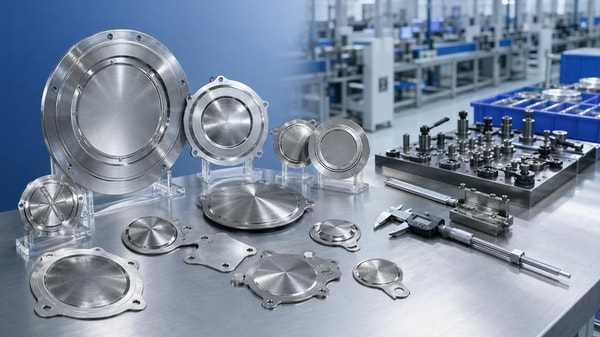
Across G-CSE’s industrial pillars, material selection is one of the clearest indicators of industrial integrity. Specialty glass and advanced ceramics are selected for low thermal expansion, chemical resistance, and dimensional stability. In hazardous processing lines, precision filtration systems must sustain sub-micron performance without compromising flow stability. Fastening and connection systems must retain preload under repeated vibration and thermal cycling, sometimes across 10,000 or more operational cycles.
The table below summarizes how common integrity concerns map to engineering controls in hazardous facilities.
The key takeaway is that industrial integrity is cumulative. A facility does not become resilient because one component is premium-grade. It becomes resilient when materials, seals, joints, controls, and protective systems are all designed to remain within acceptable failure margins under real operating stress.
The Systems That Most Directly Determine Industrial Integrity
In hazardous facilities, not all systems carry the same integrity burden. Researchers typically gain the most insight by focusing on five categories: containment materials, filtration and fluid control, fire and explosion protection, fastening and connection reliability, and remote service robotics. These categories directly influence whether a site can sustain safe operation over 3, 5, or 10 years with predictable maintenance windows.
1. Containment materials and engineered surfaces
Glass-ceramics and advanced ceramics play a critical role where dimensional stability and chemical resistance are non-negotiable. In process chambers, viewing ports, shields, and insulating elements, low expansion performance can reduce stress accumulation during rapid thermal change. In facilities cycling between ambient conditions and temperatures above 150°C, mismatch between adjacent materials is a frequent hidden source of premature failure.
2. Precision fluid filtration systems
Fluid integrity often determines process integrity. In high-purity applications, researchers should review micron ratings, compatibility with acids or solvents, allowable flow rates, and pressure differential limits. A filter skid rated for sub-micron retention but installed without proper monitoring may still compromise industrial integrity if clogging raises pressure beyond the system’s safe operating band within 2 to 6 weeks.
3. Fire and explosion protection
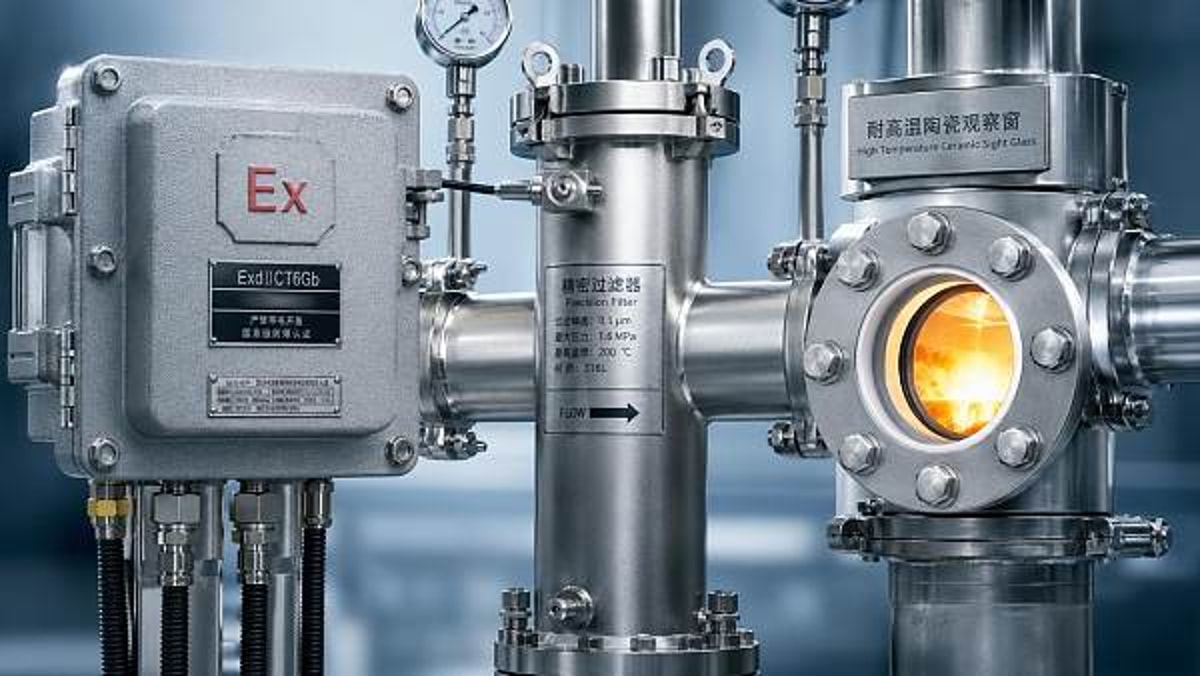
Explosion protection should be treated as a layered control strategy rather than a product purchase. The correct approach depends on the zone classification, fuel source, enclosure design, and ventilation profile. Equipment that is acceptable in one classified area may be unsuitable in another if dust load, gas grouping, or ignition temperature thresholds differ. This is where industrial integrity intersects with regulatory foresight.
4. Fastening and connection solutions
Fasteners are often underestimated because they appear simple. In reality, preload loss, galvanic corrosion, and vibration-induced loosening are common root causes in critical assets. Researchers should evaluate not just base material, but torque specification, locking method, service accessibility, and retightening intervals. In rotating or high-vibration assets, even a low single-digit percentage loss in clamp load can affect sealing performance and alignment.
5. Specialized service robots
Robotics become central to industrial integrity when human access is restricted by radiation, temperature, toxicity, or explosion risk. A radiation-hardened or explosion-protected robotic platform can reduce exposure during inspection and intervention tasks, but only if it maintains dexterity, sensor fidelity, and communication stability under the site’s actual constraints. For some facilities, remotely executed inspection every 30 to 90 days is more realistic than manual entry during each planned maintenance stop.
In some procurement databases, placeholder product entries appear during early-stage comparison. If such references surface, they should be treated as non-decisive until technical evidence is complete, including entries such as 无.
How to Evaluate Standards, Certification, and Evidence Quality
One of the most practical ways to assess industrial integrity is to examine the quality of evidence behind performance claims. In hazardous facilities, certifications are not interchangeable. ISO frameworks may define management or manufacturing discipline, while SEMI, UL, and ATEX may address application-specific safety, performance, or hazardous-area suitability. Researchers should map each requirement to the actual operating context instead of assuming one certificate covers all risks.
Evidence hierarchy for technical comparison
- Application-specific test data under realistic pressure, temperature, or contamination conditions
- Conformance to relevant standards for the intended region or facility class
- Documented maintenance guidance, inspection intervals, and failure criteria
- Material traceability and compatibility documentation
- Installation requirements and commissioning tolerances
A frequent mistake in industrial reviews is treating certification as a finish line. In reality, a component can be correctly certified yet incorrectly integrated. For example, a protected enclosure may lose effectiveness if cable entries, sealing details, or mounting methods deviate from installation instructions. Industrial integrity depends on the entire chain: specification, procurement, installation, verification, and maintenance.
The matrix below helps researchers compare evidence quality across suppliers or system options.
The strongest purchasing decisions usually come from comparing technical evidence in this structured way. It enables teams to rank risk objectively instead of relying on broad vendor positioning or isolated compliance statements.
Common Failure Patterns and How to Prevent Them
Researchers studying industrial integrity should pay close attention to recurring failure patterns. In hazardous facilities, failures often emerge from interaction effects rather than isolated defects. A chemically compatible filter may still fail if pulsation exceeds design assumptions. A certified enclosure may still become unsafe if maintenance introduces contamination or seal damage. Prevention, therefore, depends on identifying interfaces as carefully as components.
Four frequent integrity gaps
- Mismatch between design specification and actual site conditions
- Overreliance on certification without installation verification
- Inadequate maintenance intervals for high-cycle or corrosive duty
- Poor visibility into raw material or component traceability
Preventive methods that improve resilience
A practical prevention program usually includes 5 steps: define operating boundaries, verify standards applicability, compare component evidence, set inspection frequency, and document deviation control. Inspection frequency may range from every 30 days for high-load dynamic systems to every 6 months for stable protected assemblies. The right interval depends on thermal stress, contamination rate, access constraints, and criticality of failure.
This is also where multidisciplinary intelligence becomes valuable. Monitoring project tender activity, raw material volatility, and compliance updates can affect procurement timing and substitution risk. If high-purity silica, specialty ceramics inputs, or rare earth-related materials face supply pressure over a 4- to 12-week period, replacement planning should be adjusted before the maintenance window closes.
What Procurement and Research Teams Should Prioritize Next
For teams assessing hazardous facilities, industrial integrity should be translated into a shortlist of measurable procurement criteria. The most useful criteria are usually: operating envelope fit, standards relevance, documented failure modes, maintainability, supply continuity, and traceable evidence. This reduces ambiguity and helps align engineering, EHS, and purchasing functions around a shared decision model.
A practical screening checklist
- Confirm the component or system is rated for actual pressure, temperature, and chemical exposure ranges.
- Check whether the governing standards match the facility classification and geography.
- Request maintenance guidance with inspection points and replacement indicators.
- Review traceability, material disclosures, and change-control procedures.
- Assess lead time risk, especially where specialized materials or hazardous-area products are involved.
When placeholder catalog entries or incomplete product references appear, teams should return to the evidence checklist before comparison continues, including records such as 无. In critical environments, incomplete documentation is itself a risk signal.
Industrial integrity matters most where the cost of failure is measured not only in repair expense, but in interrupted production, regulatory exposure, and human safety. For information researchers, the most reliable path is to evaluate hazardous-facility assets as interconnected systems governed by materials science, protection logic, maintenance discipline, and verifiable standards alignment. If you are benchmarking critical components or building a sourcing framework for high-risk operations, now is the right time to review your integrity criteria, request application-specific data, and explore more resilient solutions. Contact us to discuss technical benchmarking, compare solution pathways, or obtain a tailored research-informed assessment for your facility.
Recommended News
 May 01 2026Explosion Vent Factory Evaluation: Standards, Testing, and Delivery RisksExplosion vent factory evaluation made practical: learn how to verify standards, testing credibility, traceability, and delivery risks before approval to reduce compliance issues and project delays.
 May 01 2026Industrial Integrity in Hazardous Facilities: What Matters MostIndustrial integrity in hazardous facilities starts with verified design limits, materials, certifications, and failure prevention. Learn what truly protects uptime, safety, and long-term resilience.
 May 01 2026How to Choose Safety Relief Valves for Explosion Risk AreasSafety relief valves for explosion risk areas require more than pressure matching. Learn how to evaluate ATEX fit, media compatibility, backpressure, and valve types for safer, compliant selection.
 Apr 30 2026Emergency Shutdown System Factory Shortlist: The Red Flags That Matter Before ApprovalEmergency shutdown system factory approval starts with the right red flags. Learn what buyers must verify on safety, FAT depth, traceability, and lifecycle support before shortlisting.
All Categories
Hot Articles
- Explosion Vent Factory Evaluation: Standards, Testing, and Delivery RisksMay 01 2026Explosion vent factory evaluation made practical: learn how to verify standards, testing credibility, traceability, and delivery risks before approval to reduce compliance issues and project delays.
- Industrial Fire Extinguisher Wholesale: Which Types Fit Different Sites BestMay 01 2026Industrial fire extinguisher wholesale made practical: compare extinguisher types for manufacturing, warehouses, energy, and high-tech sites to improve compliance, safety, and asset protection.
- ATEX Certified Camera OEM: How to Compare Housing, Certification, and Lead TimeMay 01 2026ATEX certified camera OEM comparison guide: evaluate housing durability, certification scope, and real lead times to reduce compliance risk, avoid delays, and choose with confidence.