
How to compare safety protocols for ATEX enclosures
TIME
Click count
In volatile environments where high-pressure systems, energy infrastructure, and high-tech manufacturing converge, comparing safety protocols for ATEX enclosures requires more than a checklist. It demands multidisciplinary engineering insight, technical benchmarking against international standards, and clear regulatory compliance awareness. For procurement intelligence, industrial safety planning, and cross-border compliance decisions, a structured evaluation helps decision-makers reduce risk and support resilient industrial development.
For technical evaluators, procurement teams, quality managers, and project leaders, the challenge is not simply identifying whether an enclosure is “ATEX certified.” The real task is comparing how different safety protocols perform under different ignition risks, gas or dust zones, installation constraints, maintenance practices, and lifecycle obligations. A weak comparison process can lead to specification mismatch, delayed approvals, higher total ownership cost, or preventable safety exposure.
Within critical industrial sectors, ATEX enclosure decisions often sit at the intersection of engineering, regulatory review, commercial risk control, and long-term asset resilience. That is why a robust comparison framework should assess enclosure protection concepts, temperature classes, ingress protection, material durability, inspection requirements, and supplier documentation quality in one integrated view.
Understand what should actually be compared in ATEX enclosure safety protocols
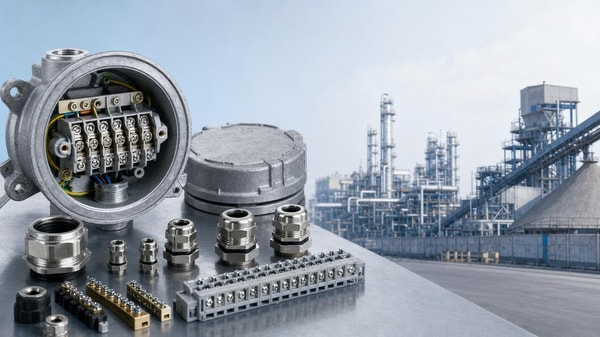
[[IMG:img_01]]An ATEX enclosure is not a single safety solution. It is part of a broader protection strategy used in potentially explosive atmospheres, typically across Zones 1, 2, 21, or 22, depending on whether the hazard involves gas or dust and whether the risk is continuous, occasional, or abnormal. Comparing safety protocols starts with identifying the exact hazardous area classification and matching it to the enclosure’s permitted use.
A common mistake in industrial sourcing is to compare enclosure models by external form factor, price, or nominal certification label alone. In practice, the more meaningful differences are found in protection method, allowable surface temperature, sealing performance, cable entry design, earthing provisions, mechanical impact resistance, and the inspection burden required after installation. Two enclosures can both be compliant yet differ significantly in operational suitability.
For mixed industrial operations such as semiconductor support utilities, petrochemical skids, offshore systems, and dust-prone processing lines, the comparison should also consider cross-standard alignment. While ATEX remains central for European market compliance, many multinational buyers also review IECEx compatibility, selected UL references for export projects, and site-specific engineering standards. This is especially relevant where equipment packages move across multiple jurisdictions within a 12- to 36-month project cycle.
A disciplined review usually covers at least 6 dimensions: hazardous zone suitability, type of protection, thermal behavior, enclosure integrity, maintenance accessibility, and documentation quality. For larger industrial owners, a seventh dimension is lifecycle support, including spare parts continuity over 5 to 10 years. When these dimensions are not reviewed together, the enclosure may pass procurement but fail practical deployment efficiency.
Core protocol elements to benchmark
- Protection concept, such as flameproof, increased safety, pressurization, or protection by enclosure for dust.
- Gas group or dust suitability, including whether the unit is acceptable for higher-risk groups with tighter design constraints.
- Temperature class and maximum surface temperature under rated load and worst-case ambient conditions.
- Ingress protection, often evaluated at IP54, IP65, or IP66 depending on exposure to washdown, particulate load, or outdoor use.
- Inspection and maintenance complexity, including torque checks, sealing replacement intervals, and cable gland verification.
Why protocol comparison is more important than label comparison
In many facilities, enclosure safety performance is influenced by real-world operating conditions more than catalog presentation. An enclosure approved for a standard ambient range may behave differently when installed near process heat, vibration, chemical washdown, or frequent opening cycles. If a panel is opened 2 to 4 times per month for inspection or control adjustment, the sealing and reassembly requirements become part of the safety protocol, not a minor maintenance note.
That is why buyers should request detailed technical files, not just certificates. Assembly instructions, permitted cable entries, torque values, terminal limits, and maintenance restrictions often determine whether the product remains compliant after field installation. In short, the comparison should focus on safe use conditions, not only approved use claims.
Compare enclosure protection types, thermal limits, and installation risk
The most reliable way to compare ATEX enclosure safety protocols is to break the evaluation into technical categories that affect ignition control. Different protection methods are suitable for different equipment architectures and maintenance models. A flameproof concept may be appropriate for certain electrical assemblies, while increased safety or pressurization can be better suited to applications prioritizing lower maintenance disruption or easier integration with instrumentation systems.
Thermal performance should be reviewed with equal rigor. Buyers should compare the maximum surface temperature against the site’s ignition characteristics and the expected ambient temperature range, often from -20°C to +40°C or up to +60°C in demanding installations. If internal heat load rises because of drives, power supplies, or terminal density, the enclosure’s thermal margin can shrink quickly. This is a key point for engineering teams managing dense control panels or compact field junction boxes.
Mechanical and environmental conditions also change the ranking of safety protocols. An enclosure installed indoors in a relatively clean utility area may only need modest ingress protection and basic corrosion resistance. The same enclosure could be a poor choice in coastal energy infrastructure, dust-heavy handling lines, or solvent-exposed processing areas. In those settings, impact resistance, seal stability, stainless or coated construction, and long-term gland retention become far more important.
The comparison table below provides a practical way to benchmark common protocol factors during technical review and supplier screening. It is particularly useful in early-stage tender evaluation, where 3 to 5 vendors may appear equivalent until protocol details are examined.
The key conclusion is that enclosure safety protocols are multidimensional. A product with stronger ingress protection may still create a thermal management challenge. A lower-maintenance design may require stricter installation discipline. Technical teams should therefore score each factor rather than treating certification as a pass-or-fail purchase shortcut.
Installation questions that change protocol suitability
Cable entries and gland systems
Cable entry points are frequent sources of protocol weakness. Even where the enclosure itself is compliant, unsuitable glands, poor thread engagement, or field drilling outside approved conditions can compromise protection. Procurement specifications should clearly state the number of entries, thread types, blanking element requirements, and whether future expansion is expected within 12 to 24 months.
Opening frequency and maintenance access
An enclosure that performs well in a static installation may be inefficient in a service-intensive environment. If technicians need repeated access, compare reassembly controls, fastener retention, gasket wear rate, and inspection checklists. A protocol that reduces rework by even 10 to 15 minutes per maintenance event can create meaningful labor savings over hundreds of field visits.
Assess documentation, verification steps, and supplier readiness
When comparing safety protocols for ATEX enclosures, documentation quality is often the dividing line between a smooth project and an expensive delay. Procurement teams should not limit review to the certificate itself. The supporting dossier should include marking details, installation instructions, limitations of use, material data where relevant, terminal schedules if assembled, and maintenance guidance aligned with the enclosure type.
For enterprise-level projects, supplier readiness also matters. A technically sound enclosure can still create project risk if the vendor cannot support document turnaround, revision traceability, export paperwork, or factory acceptance questions. In large industrial programs, 7 to 15 days of approval delay during package integration can affect electrical completion, commissioning sequence, and broader project milestones.
A practical comparison method is to map the verification workflow from specification through installation. This helps quality managers and project leaders identify where protocol compliance may break down, especially when panel builders, EPC contractors, maintenance teams, and end users all interact with the same asset. The process should be documented in 4 stages: design review, procurement verification, installation control, and operational inspection.
The following table can be used as a documentation screening tool during vendor qualification or bid clarification rounds.
This document review approach helps buyers compare not only product safety, but supplier discipline. In many B2B environments, better traceability and clearer instructions reduce lifecycle risk more effectively than chasing marginal unit-price savings. For regulated or multinational projects, that tradeoff is often justified.
A 4-step verification workflow
- Define zone classification, ambient conditions, and operational duty before vendor comparison begins.
- Verify that protection type, temperature class, and ingress level align with both process risk and maintenance practice.
- Audit vendor documents, accessory compatibility, and installation limitations before final technical approval.
- Confirm post-installation inspection steps, record retention, and maintenance intervals for the first 12 months of operation.
Where organizations manage multiple sites, this workflow should be standardized into procurement templates and FAT or SAT checklists. It improves consistency, especially when teams in different countries apply slightly different review habits.
Match safety protocols to procurement goals, lifecycle cost, and operating conditions
A technically compliant enclosure is not always the best commercial decision. Procurement and executive teams should compare ATEX enclosure safety protocols against lifecycle cost, project schedule, site maintenance capability, and future expansion plans. For example, a more rugged material specification may carry a higher upfront cost but reduce corrosion-related replacement during a 5- to 8-year service window.
Similarly, a protection concept that lowers opening complexity can improve uptime if the enclosure requires regular inspection. This is especially relevant in industrial facilities where maintenance labor is tightly scheduled, or where hazardous area access permits increase intervention cost. The “best” safety protocol is often the one that preserves compliance while fitting the operating model of the plant.
Project managers should also factor delivery and standardization. If a site needs 20, 50, or 200 enclosures across similar skids or line sections, commonality of accessories, gland interfaces, mounting patterns, and spare parts can improve commissioning speed and simplify technician training. In these cases, protocol comparison should include supply-chain stability and not just technical equivalence.
The procurement matrix below helps align safety protocol selection with industrial decision priorities.
The main takeaway is that protocol comparison should support operational priorities, not just regulatory clearance. Safety, maintainability, and procurement efficiency need to be evaluated together. For organizations with cross-border assets, this integrated approach also improves consistency across engineering teams, auditors, and service providers.
Common sourcing mistakes to avoid
- Selecting by price without reviewing maintenance labor impact over the first 3 years.
- Ignoring accessory compatibility, especially glands, stopping plugs, hinges, or mounting kits.
- Assuming indoor-rated materials will perform adequately in humid, saline, or chemical atmospheres.
- Overlooking document clarity, which can slow approval and create compliance gaps during installation.
- Failing to standardize specification language across multiple sites or project packages.
FAQ: practical questions buyers and engineers often ask
How do you compare two ATEX enclosures that both appear certified?
Start with the zone, hazard type, and ambient conditions. Then compare protection method, temperature performance, ingress protection, material suitability, and installation restrictions. Request the full technical file and compare safe-use limitations line by line. In many cases, the difference is not the certificate headline but the conditions attached to compliant use.
Which parameters matter most for dusty industrial environments?
Dust-prone environments usually require close attention to enclosure sealing, IP rating, surface temperature control, and cleaning or inspection routines. If dust layers can accumulate, thermal behavior becomes especially important. Buyers should also evaluate gasket integrity over repeated opening cycles and confirm whether the enclosure is intended for Zone 21 or Zone 22 operating conditions.
What is a reasonable review checklist before purchase approval?
A strong checklist typically covers 8 items: hazardous area classification, protection concept, temperature class, ingress rating, material and corrosion resistance, cable entry compliance, document completeness, and maintenance demands. For critical projects, add delivery lead time, spare part continuity, and post-installation inspection expectations.
How long does technical evaluation usually take in B2B projects?
For straightforward applications, an internal comparison may take 3 to 7 business days if documentation is complete. For engineered packages, multi-country reviews, or custom assemblies, technical clarification can extend to 2 to 4 weeks. Delays usually come from incomplete installation details, ambiguous markings, or unclear accessory compatibility.
Comparing safety protocols for ATEX enclosures is most effective when engineering, procurement, quality, and operational teams evaluate the same risk picture. The strongest decisions come from balancing regulatory fit, installation practicality, lifecycle cost, and supplier documentation discipline rather than relying on a single compliance label.
For organizations managing critical assets in high-tech manufacturing, energy, aerospace, or other extreme industrial environments, a structured benchmarking approach reduces uncertainty and strengthens long-term resilience. If you need support assessing ATEX enclosure options, benchmarking supplier documentation, or building a procurement-ready technical comparison framework, contact us to discuss your project, request a tailored evaluation method, or explore broader industrial safety solutions.
Recommended News
 Apr 30 2026Explosion Proof Junction Box Wholesale: Common Spec Mistakes That Cause Installation DelaysExplosion proof junction box wholesale buyers: avoid spec mistakes that delay installation. Learn key checks for certification, material, cable entries, and fast project approval.
 Apr 30 2026How to Choose a Wholesale ATEX Explosion Proof Enclosure That Fits Hazardous Area RatingsWholesale ATEX explosion proof enclosure selection starts with Zone ratings, certification scope, and materials. Learn how to compare compliant options and reduce sourcing risk.
![]() Apr 24 2026How to compare safety protocols for ATEX enclosuresSafety protocols for ATEX enclosures: learn how to compare options for volatile environments, regulatory compliance, and industrial safety with a practical, risk-based framework.
Apr 24 2026How to compare safety protocols for ATEX enclosuresSafety protocols for ATEX enclosures: learn how to compare options for volatile environments, regulatory compliance, and industrial safety with a practical, risk-based framework.

All Categories
Hot Articles
- Emergency Shutdown System Factory Shortlist: The Red Flags That Matter Before ApprovalApr 30 2026Emergency shutdown system factory approval starts with the right red flags. Learn what buyers must verify on safety, FAT depth, traceability, and lifecycle support before shortlisting.
- Automatic Fire Sprinkler OEM Selection: Wet, Dry, or Pre-Action for Different Facility RisksApr 30 2026Automatic fire sprinkler OEM selection made practical: compare wet, dry, and pre-action systems by facility risk, compliance, uptime, and false discharge exposure.
- When Wholesale Explosion Proof Lighting Is Worth It for Plant Expansion ProjectsApr 30 2026Explosion proof lighting wholesale makes sense for plant expansions when you need compliance, faster installation, and lower lifecycle cost. Learn when bulk sourcing adds real project value.